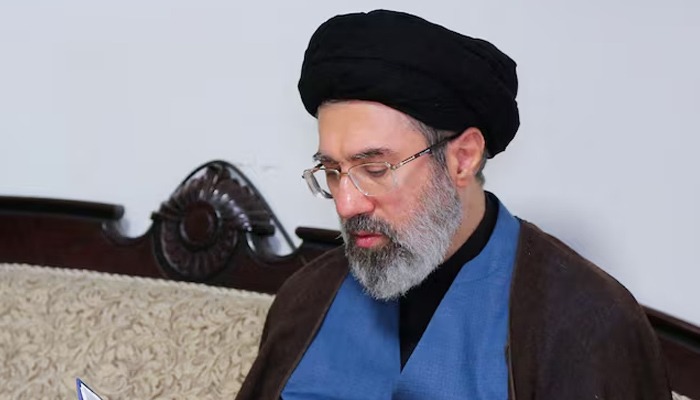
Iran’s powerful Assembly of Experts has chosen Mojtaba Khamenei, the son of the late Supreme Leader Ayatollah Ali Khamenei, as the country’s new supreme leader, according to Iranian media reports. The decision was announced more than a week after Ali Khamenei was killed in an air strike during a period of heightened tensions and conflict involving the United States and Israel.
Read More: How Iran will choose a new supreme leader after Khamenei
Mojtaba Khamenei, a 56-year-old cleric, was selected by the influential clerical body responsible for appointing Iran’s supreme leader. Ayatollah Mohsen Heidari Alekasir, a member of the council, confirmed in a video statement that the candidate had been chosen in line with guidance previously given by Ali Khamenei that Iran’s leader should be someone strongly opposed by the country’s enemies.
Heidari Alekasir noted that even US leaders had spoken about Mojtaba Khamenei in critical terms, referencing remarks by US President Donald Trump who reportedly described the potential succession as unacceptable. Supporters of the decision argue that such criticism reinforces the idea that Mojtaba fits the criteria outlined by the late leader.
Over the years, Mojtaba Khamenei built considerable influence within Iran’s political and security circles, particularly through close ties with the Islamic Revolutionary Guard Corps (IRGC). Analysts say those connections have strengthened his position inside the country’s power structure. Although he has never held an official government role, he was widely viewed as a key behind-the-scenes figure and often described as his father’s trusted gatekeeper.
Read More: How Iran will choose a new supreme leader after Khamenei
Born in 1969 in the holy Shi’ite city of Mashhad, Mojtaba grew up during the revolutionary era that brought Iran’s Islamic leadership to power. He later served as a young volunteer during the Iran-Iraq war and pursued religious studies in the seminaries of Qom, the centre of Shi’ite scholarship.
Despite his growing authority, observers say his leadership may face challenges at home, as segments of Iranian society have previously staged protests demanding greater freedoms and political reform.