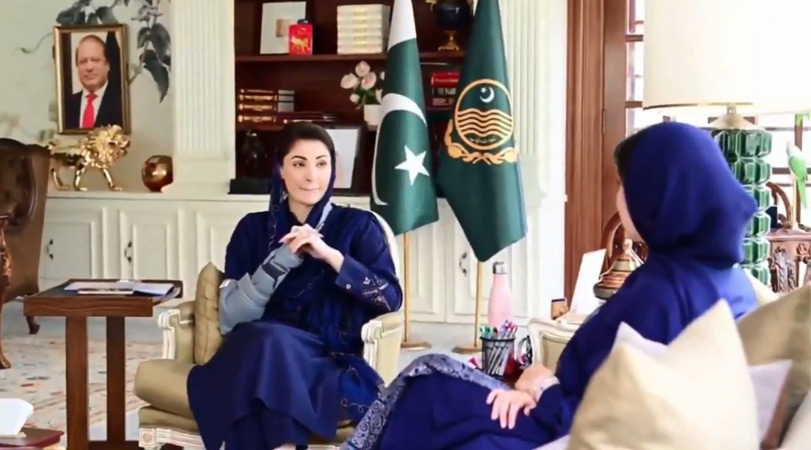
 Punjab Chief Minister Maryam Nawaz Sharif has ordered a grand crackdown against hoarders and profiteers involved in stockpiling petroleum products.
On the directives of the chief minister, the Punjab Enforcement and Regulatory Authority has been mobilised across the province. Authorities have been instructed to take strict action against elements creating artificial shortages in order to earn illegal profits.
According to the directives, petrol pumps found involved in hoarding or profiteering will be sealed immediately and their licences will be cancelled.
Maryam Nawaz Sharif has directed PERA to adopt a zero-tolerance policy against hoarders and instructed field officers to ensure strict monitoring of petrol pumps throughout the province.
The government stated that the Punjab administration has prepared a strong enforcement mechanism against the so-called “petrol mafia.” It has also made it clear that no one will be allowed to exploit the public by creating panic or artificial shortages under the pretext of tensions in the Gulf region.
The Punjab government emphasised that sufficient petroleum products are available in the province and urged citizens not to pay attention to rumours.
A strong warning has also been issued against speculation and false claims regarding petroleum shortages, stating that those spreading rumours of artificial scarcity will face strict consequences.
Meanwhile; Chief Minister Maryam Nawaz Sharif has approved the launch of Punjab’s first-ever major project to build 358 underground water storage tanks across the province, aimed at improving rainwater drainage and recharging groundwater.
The decision was taken during a special video-link meeting chaired by the chief minister to review the Punjab Development Programme, clean water initiatives, and the Model Village Project. Officials also presented a pictorial review of ongoing projects.
Under the plan, 34 large underground tanks will be constructed in urban areas to ensure timely rainwater drainage, while 324 roadside tanks will be built to remove water accumulated on streets. Recharge wells alongside the tanks will help restore groundwater levels, and the stored water will be treated at water treatment plants for irrigation purposes. Additionally, 328 wastewater treatment plants will be established across the province.
The meeting was informed that 6,100 kilometres of streets will be paved, 3,498 kilometres of sewerage lines laid, 14,679 streetlights installed, and 33 million square feet of tuff tiles placed in streets and pathways. To improve drainage and municipal services, 526 modern machines and tractors will be deployed. A factory in Lahore for producing sewerage pipelines with a 100-year lifespan has also been installed and is expected to begin production soon.
Punjab Development Programme projects have been initiated in Sargodha, Dera Ghazi Khan, Gujrat, Okara, Jhang, Multan, and Sialkot, while projects in Jhelum, Hafizabad, Sahiwal, Faisalabad, Gujranwala, Sheikhupura, Nankana Sahib, and Rawalpindi will start shortly. Under the Punjab Rural Sanitation Improvement Programme, drainage systems will be developed in rural areas, and Rs59 billion will be spent on 485 villages under the Model Village Project, with work already started in 200 villages. Wastewater ponds will be cleaned, treatment plants installed, and treated water supplied for irrigation.
The chief minister directed authorities to ensure proper functioning of filtration plants for clean drinking water, prioritise paved streets in villages, and complete drainage projects before the monsoon season, with Gujrat and Sialkot given special attention.
CM Maryam Nawaz said that the scale of development work being undertaken in Punjab today had not been seen in the past 70-80 years, and predicted that within five years, a modern, transformed, and beautiful Punjab would emerge.