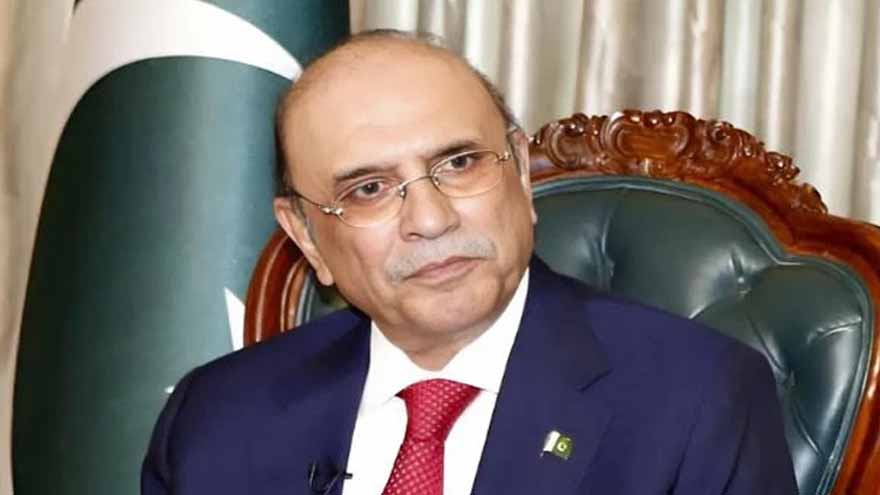
President Asif Ali Zardari has summoned a joint session of Parliament for tomorrow at 10:30 a.m. to deliver his constitutional address. He called the meeting under Articles 54(1) and 56(3) of the Constitution, which empower the President to convene parliamentary sessions. Officials confirmed that preparations are underway at the Parliament House in Islamabad. Meanwhile, authorities have strengthened security arrangements due to the tense regional environment.
Read more : Net-metering shift sparks debate in National Assembly –
The National Assembly Secretariat stated that the joint session traditionally takes place at the beginning of each parliamentary year. Therefore, the President’s address fulfills a constitutional requirement and marks an important formal event in the legislative calendar. This will be President Zardari’s ninth address to a joint parliamentary session. Consequently, lawmakers from both houses are expected to attend in large numbers.
Security agencies have deployed additional personnel around the Parliament House to ensure smooth proceedings and public safety. Roads surrounding the area may experience temporary restrictions to manage traffic and prevent disruptions. Officials are coordinating closely with law enforcement units to maintain order throughout the session. In addition, entry protocols have been tightened for guests and media representatives.
Read more : National assembly moves to modernize leadership across all three …
During his speech, the President is expected to highlight recent regional developments and their impact on national stability. He may address ongoing tensions involving neighboring countries as well as broader international conflicts affecting security in the Gulf region. Furthermore, observers anticipate remarks on Pakistan’s foreign policy approach and diplomatic efforts during the current crisis. Therefore, the address could outline the government’s strategic response to evolving challenges.
The President is also likely to review the government’s two-year performance, including progress on economic reforms and governance priorities. In addition, he may discuss democratic consolidation, constitutional supremacy, and sustainable development goals. Officials indicate that counterterrorism efforts and actions against externally supported militant networks will feature prominently. Ultimately, the session will provide a comprehensive overview of national priorities and future policy direction.