 India under the watch of Narrinder Modi is presenting a live demonstration of how hateful fascist leaders can plague the whole society. Few months back, his infinite jingoism, known as operation Sindoor, pushed the entire region to the brink of nuclear war. This all started from IIOJK where stage managed terrorist attack at tourists in Phelgam was used to malign Pakistan. Though, Pakistan successfully defeated the evil designs with well-calibrated mature response, however, situation in IIOJK and itch in decision making quarters of New Delhi has not settled yet. State sponsored violence in IIOJK seems touching its vertex as the reports about use of chemical weapons in Kashtawar have recently surfaced.
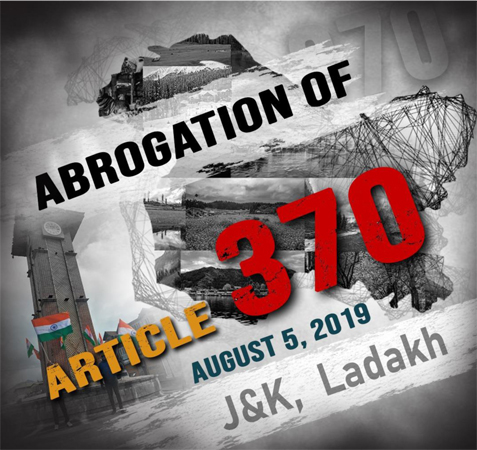
Independent observers and international human rights organizations have frequently documented allegations of systematic state-sponsored violence in Indian Illegally Occupied Jammu and Kashmir (IIOJK) . Reports from Human Rights Watch and Amnesty International detail various forms of violence. International bodies like the UN Office of the High Commissioner for Human Rights (OHCHR) have repeatedly called for independent investigations into these abuses, noting that repression has intensified since the 2019 abrogation of Article 370.
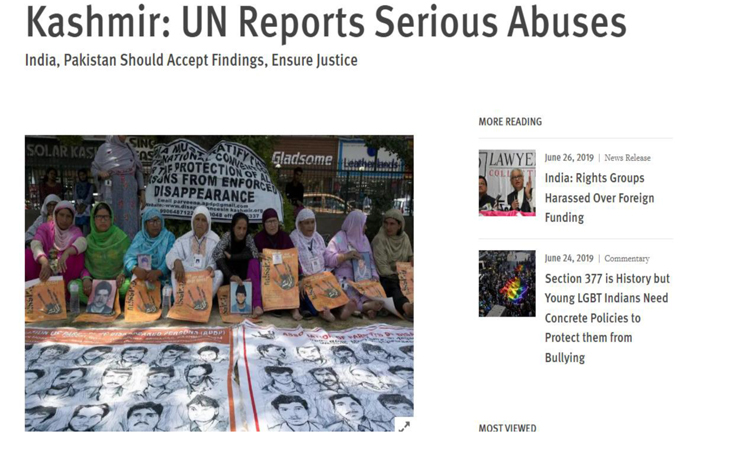
The Indian government typically dismisses these reports as “baseless” or “motivated” by external propaganda. Recent inhuman killing of three local residents in Kishatwar has sparked public sentiments amid brutal nature of extra-judicial encounter.
Kishtawar Chemical Brutality:
Reportedly Indian Army has used a chemical weapon targeting innocent civilians in IIOJK, destroying homes and causing severe burns to residents during Operation Trashi-1. Fake encounters led to brutal killing of 3 local persons in Kishtawar. International laws and conventions clearly bar use of chemical weaponry on the pretext of domestic security.
Following aspects reflect the blatant violation of international laws by Indian security forces-:
4 The use of chemical weapons is a violation of the Geneva Conventions and UN human rights laws.
4 Under the Geneva law framework, the relevant foundation is the 1925 Geneva Protocol, formally known as the Protocol for the Prohibition of the Use in War of Asphyxiating, Poisonous or Other Gases and of Bacteriological Methods of Warfare.
4 It prohibits the use of chemical and biological weapons in international armed conflict.
4 Common Article 3 prohibits violence to life and person, cruel treatment and outrages upon personal dignity in non-international armed conflicts.
4 Additional Protocol I (1977), Article 35(2), prohibits weapons of a nature to cause superfluous injury or unnecessary suffering. Additional Protocol I, Article 51, prohibits indiscriminate attacks against civilians.
The most comprehensive and specific prohibition is found in the 1993 Chemical Weapons Convention (CWC).
4 Article I of the CWC obligates States Parties never to develop, produce, acquire, stockpile, transfer or use chemical weapons under any circumstances. This is the primary modern treaty banning chemical weapons completely.
4 From the human rights perspective, the use of chemical weapons violates core rights under the International Covenant on Civil and Political Rights (ICCPR), particularly:
4 Article 6, recognizes the right to life for every human being.
4 Article 7, imposes prohibition of torture or cruel, inhuman or degrading treatment or punishment.
4 It also contravenes customary international law, which now considers the prohibition on chemical weapons to be a dictatorial norm in many legal interpretations.
Forms of State Sponsored Violence in IIOJK
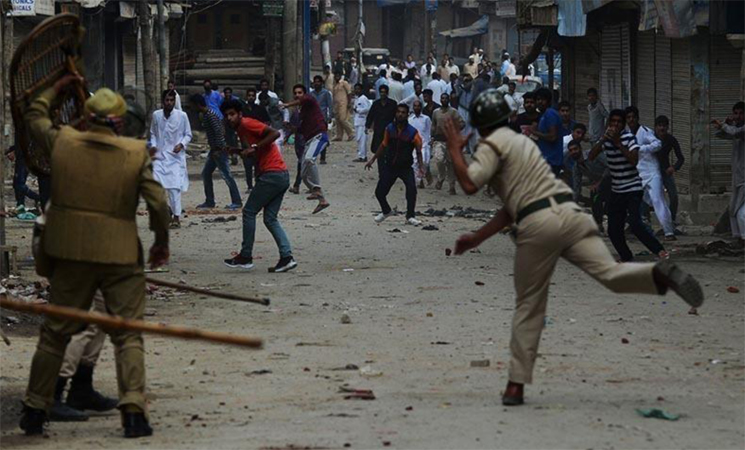
* Extrajudicial Killings and Enforced Disappearances: Indian forces are accused of widespread extrajudicial killings and enforced disappearances. Human rights activists estimate thousands of Kashmiris have disappeared, with some believing they are in unmarked mass graves across the region.
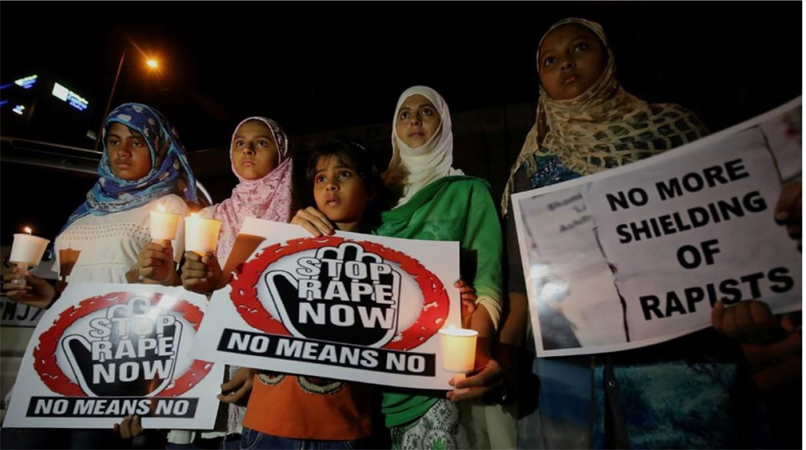
* Torture and Sexual Violence: Reports from organizations like Amnesty International and Human Rights Watch suggest the systematic use of torture and sexual violence (including rape as a weapon of war) by security forces to punish and intimidate the local population. A 2006 report from the Nobel Prize winning group Medecins Sans Frontiers found high incidences of sexual violence and torture among conflict-ridden regions.
* Use of Force against Civilians: Security forces have been accused of using disproportionate and lethal force against peaceful demonstrators, including the use of pellet guns which have caused permanent eye injuries and deaths.
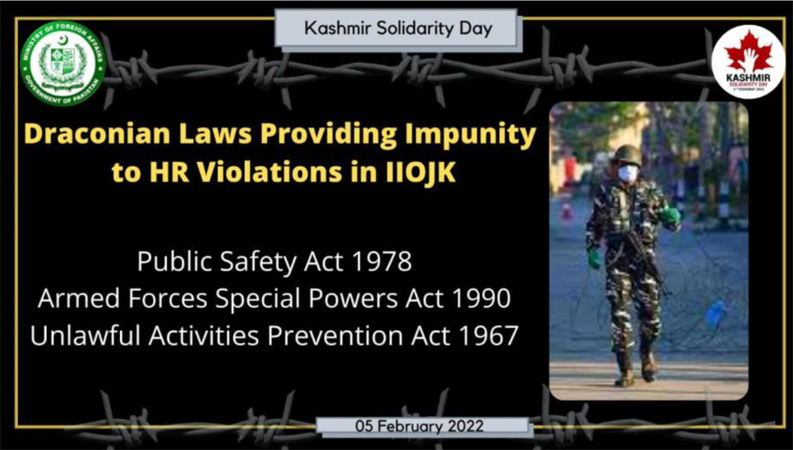
* Impunity and Draconian Laws: The Armed Forces (Special Powers) Act (AFSPA) and other laws like the Public Safety Act are widely criticized by human rights groups for granting security forces virtual immunity from prosecution, thus facilitating human rights abuses. As of June 2015, no member of the Indian military deployed in the region has been tried for human rights violations in a civilian court, according to Amnesty International.
* Political Repression and Restrictions: Post the 2019 revocation of Jammu & Kashmir’s special status, repression has reportedly intensified with communication blackouts, mass arrests of political leaders, and restrictions on media freedom and movement.
Indian Diversionary Strategy
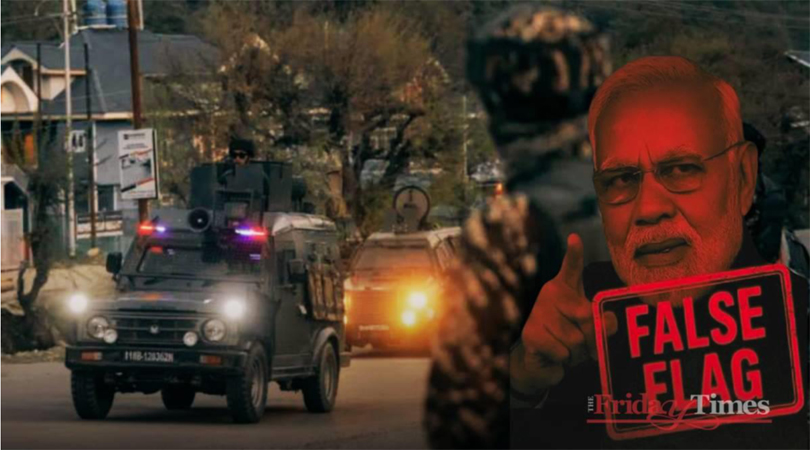
India is following a pattern of diversion to downplay the state sponsored human rights violations in IIOJK. Fabricated accusations of cross-border terrorism are used against Pakistan to divert international and domestic attention from severe security failures, human rights issues, and internal unrest in IIOJK. By labeling local uprisings as cross-border terrorism, India attempts to shift responsibility and justify its military presence as pointed out at numerous credible regional and international platforms. While India consistently accuses Pakistan of supporting militant groups, Pakistan denies these charges and characterizes them as propaganda. Indian diversionary strategy comprises following inter-connected actions-:
* Deflecting from Internal Failure: It is now an established fact that India quickly blames Pakistan for attacks in IIOJK to cover up its own intelligence and security failures, especially given the high density of troops in the region.
* Narrative Control: The blame is often used to frame the conflict as exclusively a terrorism issue rather than a political dispute over self determination.
* Geopolitical Tactics: Blaming Pakistan is used to influence international opinion and avoid accountability for the human rights situation in IIOJK.
* False Flag Accusations: Pakistani officials and commentators have described many incidents in IIOJK as “false flag” operations designed to serve India’s political agenda and demonize Pakistan. Post Pehlgam war rhetoric against Pakistan launched in the form of ‘Operation Saindoor’ is the one most recent and relevant example of Indian jingoism which threatened the peace of entire region on the self-style pretext of terrorism by Modi regime.
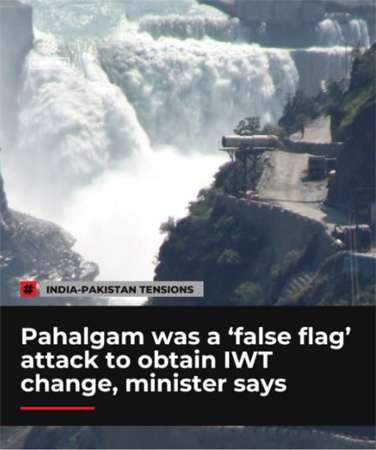
* Escalation and Pressure: India has used these accusations to increase pressure on Pakistan, such as suspending the Indus Waters Treaty and intensifying border, as reported by News On AIR and International Crisis Group.