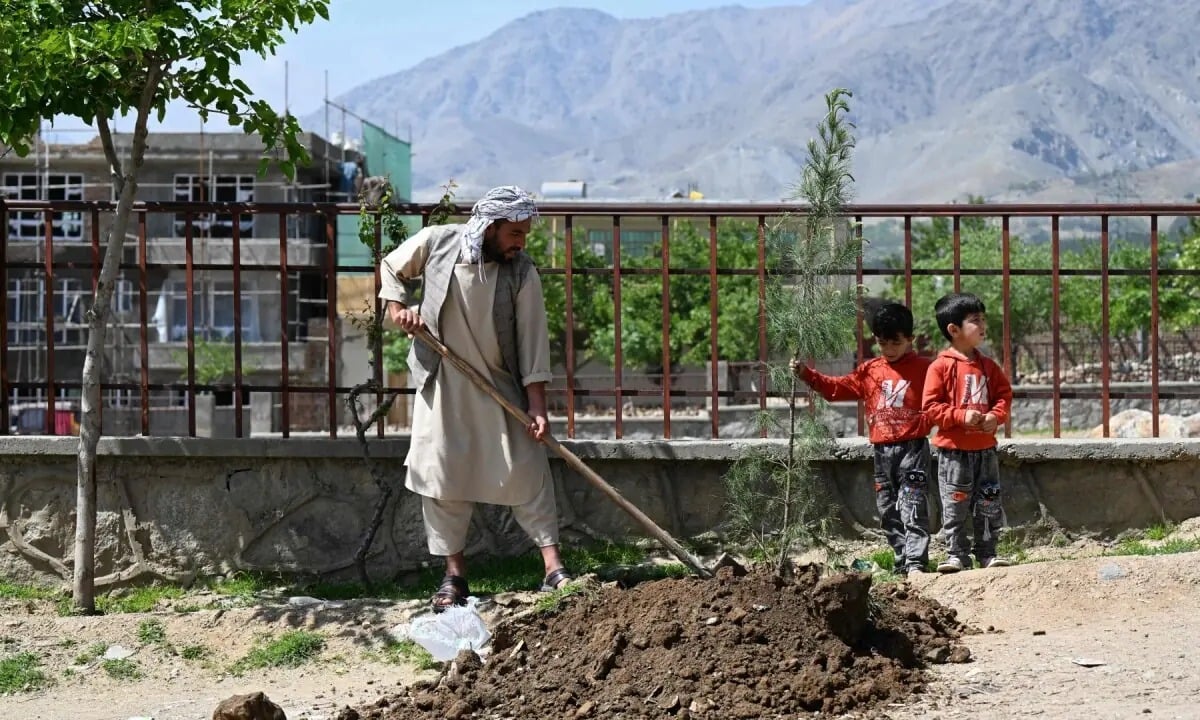
Communities across Afghanistan are increasingly embracing tree planting and forest restoration after decades of conflict-driven deforestation that severely damaged the country’s natural landscape. Local residents, environmental groups and authorities are working together to restore green spaces, improve livelihoods and strengthen resilience against climate-related challenges in both rural and urban areas.
Experts estimate that Afghanistan lost nearly half of its forest cover between the 1979 Soviet invasion and the fall of the first Taliban government in the early 2000s. However, deforestation has slowed considerably in recent years, while official data shows forest cover has increased by 35 percent since 2011, despite forests covering only 2.5 percent of the country in 2025.
Read more : Two Afghans among eight more militants killed in Darra Adamkhel
The government has set a target of planting 200 million trees between 2023 and 2030 with support from international organizations, the private sector and local communities. Last year alone, authorities exceeded expectations by planting 17 million trees against a target of eight million, while the goal for this year stands at nine million trees.
Meanwhile, innovative projects such as micro-forests are gaining popularity in several provinces. These densely planted green spaces include local species such as poplars, pomegranates, persimmons and paulownias, helping improve soil quality, reduce erosion, provide livestock feed and create cooler environments. Many communities now view these projects as practical models for environmental recovery and sustainable development.
Read more : Taliban urges Afghan refugees in Qatar to return home safely
Environmental officials acknowledge that challenges remain, including water shortages, drought conditions, livestock damage and the need to select tree species suited to local climates. Nevertheless, community-led conservation efforts, village forest management groups and stricter protections against illegal logging are helping improve the survival rates of newly planted trees.
Conservationists also report encouraging signs of ecological recovery, including the return of bird species to areas where forests have been restored. While experts stress that greater efforts are still needed to protect existing forests and address climate change, they believe Afghanistan’s growing commitment to reforestation is creating a more sustainable future for both people and the environment.