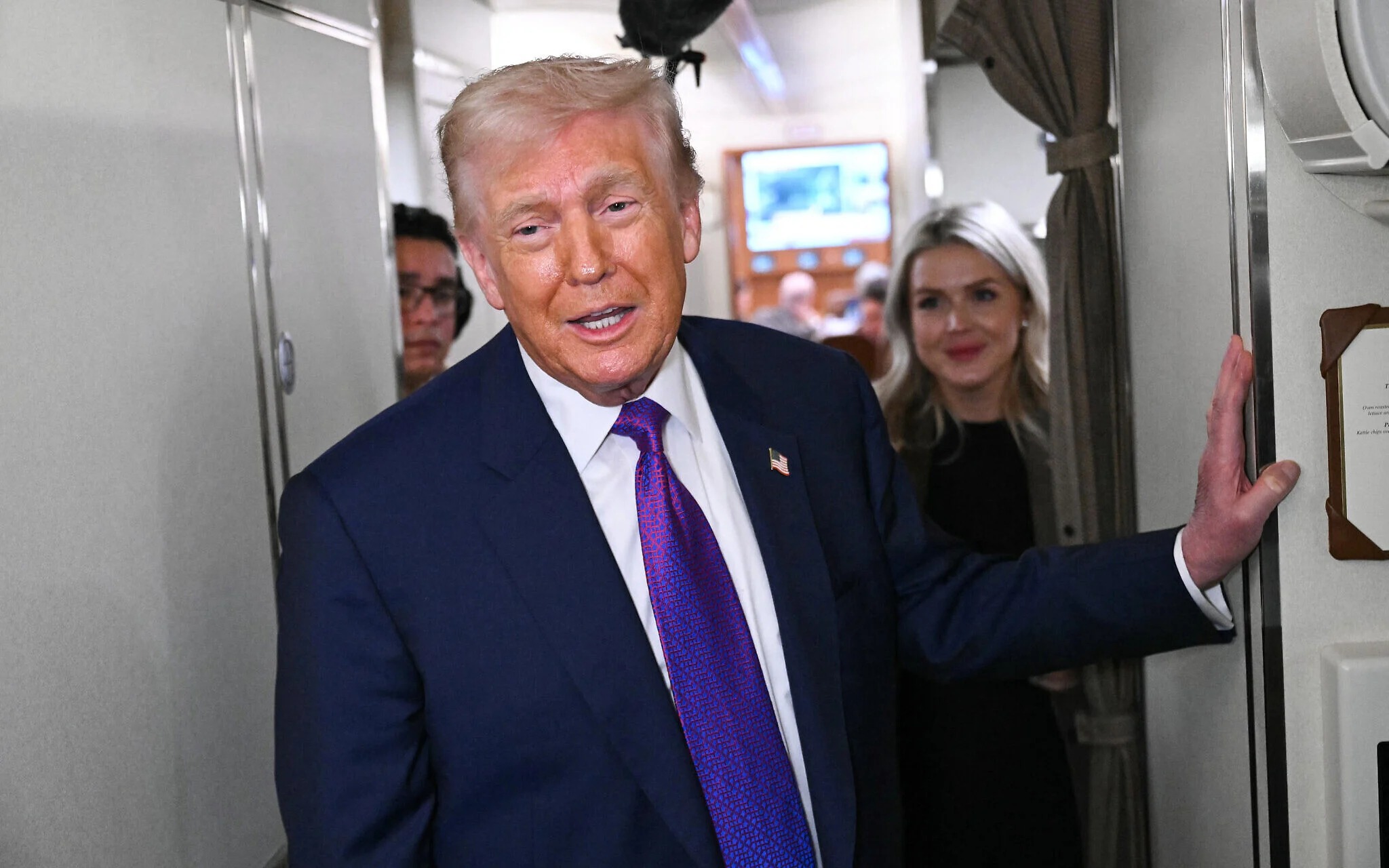
President Donald Trump warned Iran on Thursday that it must reach a deal on its nuclear program within 10 to 15 days, or face “really bad things,” escalating tensions in the Middle East. He insisted that negotiations were ongoing but demanded a “meaningful” agreement from Tehran to prevent further conflict and maintain regional stability.
Trump highlighted that U.S. airstrikes last June had “decimated” Iran’s nuclear capabilities and hinted at possible additional action if no deal is reached. He emphasized that time is short, saying the upcoming 10 to 15 days would be “pretty much maximum” to resolve differences.
Read more : PM hails Trump as ‘saviour of South Asia’ at Board of Peace launch
Iran responded by notifying the United Nations that it would not start a war but warned that any military aggression would be met with decisive and proportional retaliation. Tehran stated that all U.S. bases and assets in the region could be considered legitimate targets, holding Washington fully responsible for potential consequences.
The standoff has intensified amid a massive U.S. military buildup in the Gulf, with aircraft carriers, jets, and warships deployed, prompting Iran and Russia to conduct joint naval exercises in the Gulf of Oman. Satellite imagery shows both nations fortifying nuclear and missile sites while U.S. bases prepare for potential conflict.
Read more : Trump warns Iran of consequences in Geneva talks
Despite the heightened rhetoric, Trump described talks with Iran as “good,” noting that negotiators had agreed on guiding principles while differences remain. The U.S. seeks full Iranian renunciation of uranium enrichment, long-range missiles, regional influence, and internal use of force, which Tehran has rejected beyond the nuclear issue.
Amid growing tensions, European countries including Poland have advised citizens to leave Iran quickly, citing safety concerns. Analysts warn that the next two weeks are critical, as both sides weigh diplomacy against potential military escalation, with global energy routes and regional stability at stake.