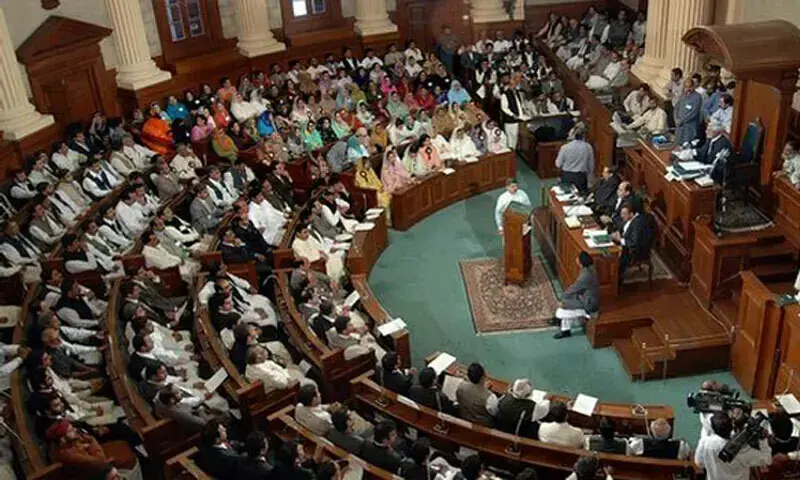
The Punjab Assembly on Wednesday passed the Suthra Punjab Authority Bill 2025, introducing strict penalties aimed at curbing environmental pollution, improper waste disposal and obstruction of sanitation operations across the province.
Read More: Punjab Assembly backs 27th Constitutional Amendment
The bill, which will become law after receiving the governor’s assent, lays down stringent punishments under Schedule B for serious violations. Burning solid waste at public places or inside or outside private premises by individuals, businesses or factories will be punishable with a fine of up to Rs500,000, imprisonment for up to two years, or both.
Obstructing or hindering a waste management inspector or any authorised official while performing duties under the Act will also attract severe penalties, including a fine of up to Rs500,000, imprisonment of up to one year, or both. The law further criminalises the burning of tyres as fuel by individuals or commercial entities.
Schedule A of the Act covers a wide range of civic and sanitation-related offences, prescribing fines of varying amounts. These include throwing or dumping garbage, litter or refuse on streets, roads or at locations not designated for waste disposal by the authority. Property owners and occupiers will be penalised for failing to arrange proper disposal of waste within or around their premises as directed by the authority.
The law makes it mandatory for owners and occupiers of houses, shops, offices and factories to ensure cleanliness in front of their properties, extending to adjoining public streets or roads. Failure to properly clean, disinfect, repair or manage latrines, drains, cesspools and other waste receptacles will also be punishable.
Read More: Punjab speaker rejects disqualification petitions for 26 MPAs
Additionally, neglecting the removal of plastic bags and other non-biodegradable materials from premises, shops, houses and cultivated lands has been declared an offence. The Act also prohibits the collection, lifting or sorting of solid or domestic waste without a licence from the authority and penalises violations of directives issued under the law.
The passage of the bill reflects the provincial government’s stated commitment to improving sanitation, environmental protection and public health through stricter enforcement and accountability.