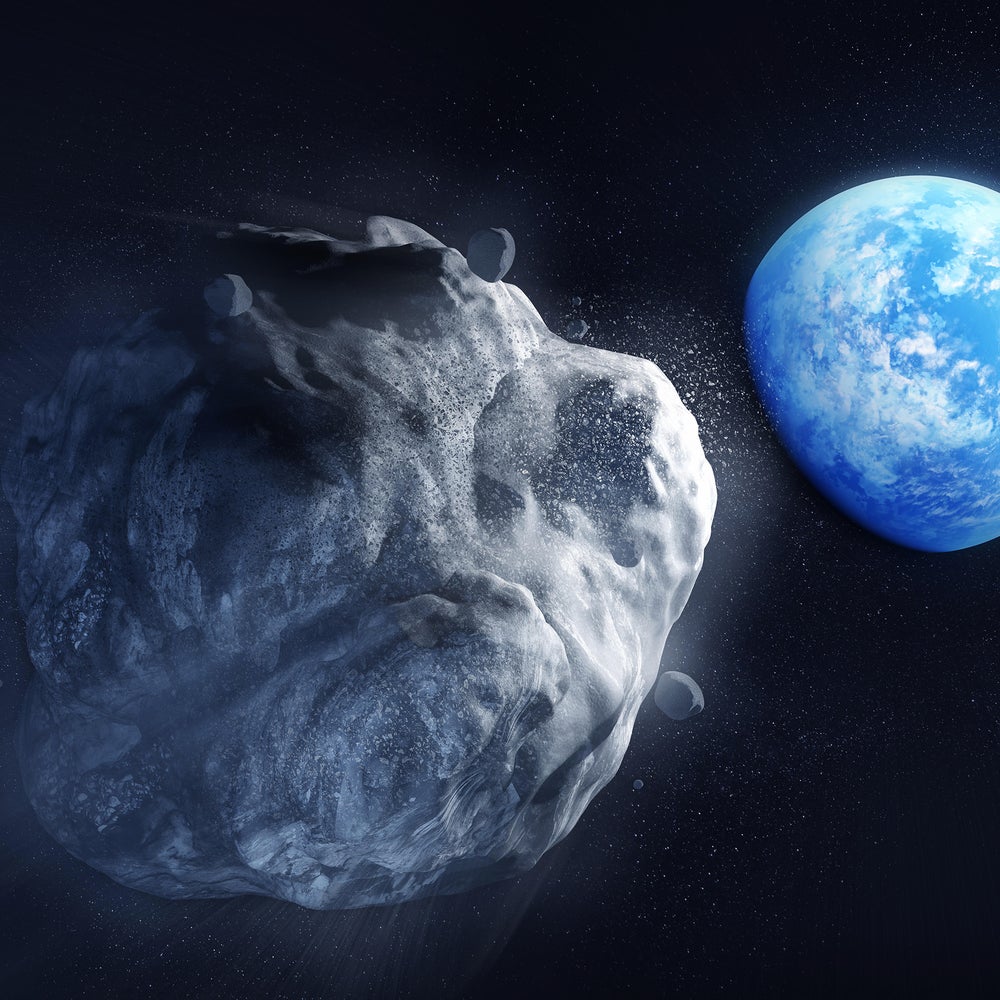
WASHINGTON/ISLAMABAD: An asteroid that once posed a threat to Earth, 2024 YR4, now has a potential to collide with the Moon in 2032, scientists have warned, calling it a rare opportunity to study the effects of a high-energy lunar impact.
Read More: Moon May Hold Hidden Treasure, Scientists Say
According to a new study, “Observation Timelines for the Potential Lunar Impact of Asteroid 2024 YR4,” such a collision could create a crater approximately 1 km in diameter on the Moon’s surface. The impact would also produce an “unusual illumination phenomenon”, creating a bright flash visible from Earth for several hours, with brightness comparable to Mars or Jupiter.
The impact probability of asteroid 2024 YR4 has dropped to 0.004%. It’s expected to safely pass Earth in 2032.
Read the full update: https://t.co/wirnWv6FYE pic.twitter.com/AKXma5eVoT
— NASA (@NASA) February 24, 2025
Scientists predict that the event could trigger a worldwide Moonquake, registering a magnitude of about 5.0 on lunar seismometers, and could generate a meteor shower, with some debris potentially reaching Earth over the next century. The impact is expected to eject roughly 100 million kilograms of lunar debris, a small fraction of which may escape lunar gravity.
Asteroid 2024 YR4, first discovered in December 2024, is traveling at more than 38,000 miles per hour and was the first asteroid to prompt a coordinated international planetary defense response due to its initial risk of colliding with Earth. Scientists now estimate the probability of a lunar strike at only 4.3 percent, and its Earth impact risk has been dismissed.
Experts believe the asteroid consists of silicate rock and nickel-iron, originating from the central Main Belt between Mars and Jupiter. While the Moon collision remains unlikely, researchers note it presents a rare scientific opportunity to study the dynamics of lunar impacts, ejecta behavior, and potential meteor events observable from Earth.
Read More: A slice of the moon for sale: just $2.5 million
The study emphasizes that the scenario is being closely monitored by astronomers worldwide, offering a chance to enhance understanding of asteroid trajectories and planetary defense strategies.