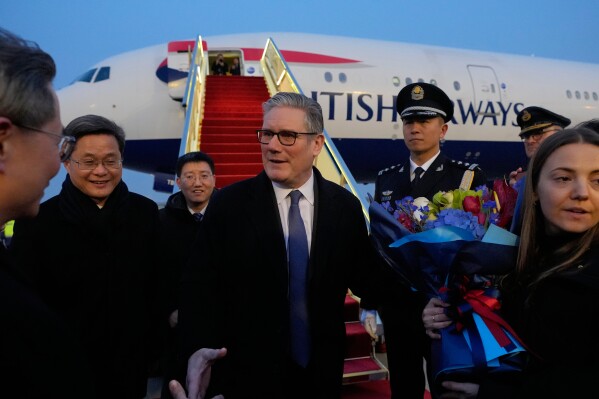
British Prime Minister Keir Starmer arrived in Beijing on Tuesday for a three-day official visit, the first by a British PM since 2018. He is accompanied by an 80-member delegation. The trip aims to strengthen political and trade ties while benefiting British citizens. Starmer emphasized that his visit will balance diplomacy and human rights advocacy.
During the visit, Starmer is scheduled to meet Chinese President Xi Jinping on Thursday to discuss bilateral relations and mutual interests. The talks will focus on trade, investment, technology, energy, and infrastructure opportunities. Officials said both sides hope the meetings will create long-term cooperation frameworks. Starmer also plans to highlight human rights and shared global responsibilities.
Read more: Starmer seeks China ties amid US tensions
The British delegation includes senior government officials and business representatives to expand economic engagement and explore partnerships. The UK hopes to enhance people-to-people ties while promoting sustainable trade agreements. China welcomes the visit as an opportunity to strengthen bilateral dialogue and attract foreign investment. Both governments are optimistic about tangible outcomes in commerce and collaboration.
Observers noted the visit is significant amid global attention on UK-China relations. Analysts expect it to set the tone for future high-level diplomatic engagements in Asia. The discussions could influence trade policies, strategic cooperation, and cultural exchanges between the two nations. Starmer’s visit reflects the UK’s interest in balancing diplomacy, trade, and ethical engagement abroad.
Read more: Starmer calls Trump’s Afghanistan comments “appalling”
The three-day trip will conclude with a press briefing outlining agreements and future cooperation plans. British and Chinese officials aim to formalize commitments in trade, investment, and technology. The visit underscores the importance of sustained dialogue and high-level diplomacy in global affairs. Both countries expressed hope for continued collaboration on regional and international issues.