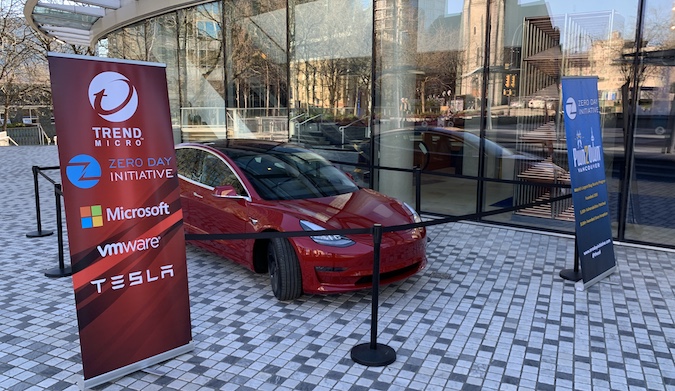
At this week’s Pwn2Own Automotive conference in Tokyo, a team of cybersecurity researchers successfully hack a Tesla infotainment system, earning a $35,000 reward. The Synacktiv Team executed a USB-based attack, linking several zero-day exploits to gain access to the vehicle’s system.
Read More: Will artificial intelligence be the end of mankind?
The conference, now in its third year and organized by the Zero Day Initiative, features 73 security teams competing to exploit vulnerabilities in vehicles and automotive systems. The Synacktiv Team also targeted the Sony XAV-9500ES digital media receiver, earning an additional $20,000 for demonstrating its vulnerabilities.
‼️Tesla was hacked by researchers who chained two vulnerabilities resulting in total control of Tesla’s infotainment system
Researchers earned a total of $516,500 after exploiting 37 zero-days on the first day of the Pwn2Own Automotive 2026 competition. pic.twitter.com/iUlEZGskaK
— International Cyber Digest (@IntCyberDigest) January 21, 2026
Tesla electric vehicles remain a primary target for hackers at the event, highlighting the security challenges faced by leading infotainment systems despite high-end protections. Other participants exploited car chargers and smart devices, showing how connected automotive technology can be at risk. For instance, the Fuzzware.io team took control of an Autel MaxiCharger and secured a $50,000 reward, while other teams demonstrated exploits on Phoenix Contact charging connectors and Grizzl-E Smart chargers.
In total, more than $516,500 in prizes was awarded within the first 24 hours of the conference, according to reports from BleepingComputer and PCMag. Fuzzware emerged as the top team on the first day, taking home $118,000. While the prize payouts so far in 2026 fall short of the $1.3 million awarded in 2024, they surpass the $886,000 handed out in 2025.
Read More: Crypto hacks hit record high as losses reach $2.7bn in 2025
The Pwn2Own Automotive competition serves as both a high-stakes contest and a mechanism to improve vehicle cybersecurity. By exposing vulnerabilities in infotainment systems, charging equipment, and other connected automotive devices, the event encourages manufacturers to patch weaknesses and bolster digital defenses, safeguarding drivers and passengers against potential cyber threats.