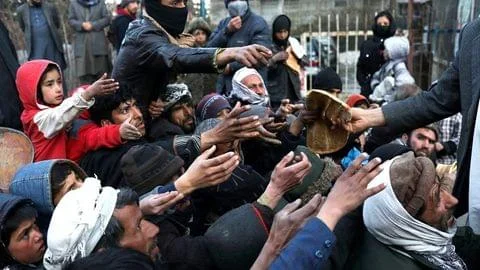
Afghanistan’s worsening hunger crisis is being sharply exacerbated by winter and a wave of mass deportations, as millions struggle to secure even a single daily meal. The World Food Programme (WFP) estimates that 17 million Afghans face acute hunger this season — and the numbers continue to climb amid shrinking international aid.
Read More: Millions of Afghans face hunger as aid cuts deepen humanitarian crisis
In a makeshift tent on the outskirts of Kabul, Samiullah, 55, sits with his wife, five children and infant grandchild. Deportation from Iran thrust the family abruptly from relative stability into hardship. “We have reached a point where we are content with death,” he said, reflecting the despair shared by many recently returned migrants.
Many Afghans expelled by Pakistan and Iran are facing a food crisis which has only worsened in winter. Work opportunities have dried up, while the wave of returning Afghans has swelled the population by a tenth https://t.co/raEC6oKaU7 pic.twitter.com/Poj33WTm4n
— Reuters (@Reuters) January 20, 2026
Pakistan and Iran have expelled more than 2.5 million Afghans over the past year, according to the WFP, swelling the country’s population by nearly 10% and placing fresh pressure on fragile support systems. Afghan officials insist they are assisting returning families as much as resources allow, but say decades of conflict and the loss of state revenue have limited recovery.
Work opportunities typically decline during winter, but the current season has been especially severe. Aid organisations warn that cuts to global humanitarian funding — aggravated by shifting donor priorities following Donald Trump’s return to the White House — have reduced the capacity to meet basic nutritional needs. WFP officials estimate 200,000 additional Afghan children could suffer acute malnutrition in 2026.
Queues for food distribution in Bamiyan stretch long, while clinics in Kabul report a surge in cases. “Compared to the time when there were no migrants, the number of our patients has now doubled,” said physician Rabia Rahimi Yadgari.
Read More: WFP warns of worsening hunger crisis in Afghanistan
For families like Samiullah’s, survival is measured one fire, one meal, and one frigid night at a time. “Here, there is neither work nor livelihood,” he said. “But what choice do we have?”