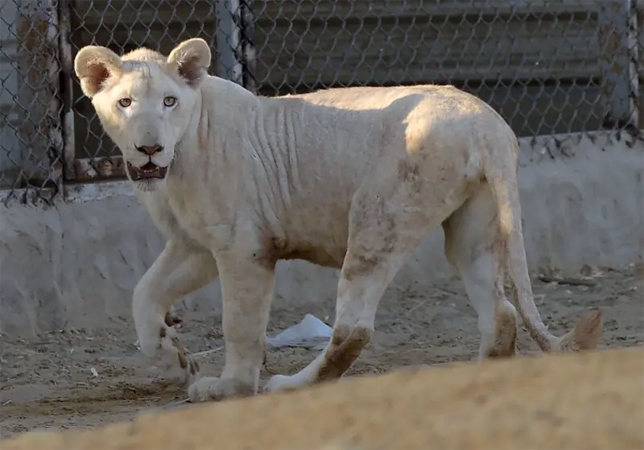
 In line with the Government of Sindh’s policy regarding the protection and regulation of exotic animals, Chief Secretary Sindh Asif Hyder Shah has directed the Karachi Metropolitan Corporation and Karachi Zoo authorities to immediately take concrete steps to stop the breeding of exotic species, with particular emphasis on big cats, within the premises of Karachi Zoo. The directive was issued during a meeting chaired by the Chief Secretary Sindh, which was attended by senior officials of the Karachi Metropolitan Corporation, zoo management, and relevant departments. The meeting reviewed the existing conditions, management practices and future planning related to exotic animals housed at the zoo.
Chief Secretary Sindh emphasized that the government is committed to ensuring animal welfare, ethical management and compliance with international best practices concerning captive wildlife. He stated that uncontrolled breeding of exotic species, especially big cats, poses serious challenges in terms of animal welfare, space constraints, safety and long-term management, and therefore must be addressed without delay. During the meeting, the KMC and Karachi Zoo authorities were directed to initiate immediate measures to halt the breeding of exotic animals and to develop a clear, time-bound plan in consultation with qualified wildlife experts. The Chief Secretary underscored the need for expert guidance to ensure that all actions taken are scientifically sound, humane and aligned with conservation principles.
The Chief Secretary further instructed that a comprehensive assessment of existing exotic animals at Karachi Zoo be carried out, including their health, habitat conditions and future care requirements. Reiterating the Sindh government’s stance, the Chief Secretary noted that the focus should remain on responsible wildlife management, discouraging the unnecessary captivity and breeding of exotic animals, and promoting practices that prioritize animal well-being and public safety.
Meanwhile, Sindh Chief Secretary Asif Hyder Shah chaired a high-level meeting on the Rabies Control Programme Sindh (RCPS), attended by all Divisional Commissioners, representatives of Health, the Local Government Department, Indus Hospital and other key stakeholders.
The Chief Secretary said that the Government of Sindh has adopted a comprehensive and proactive approach to address the challenge of rabies across the province.
Through sustained policy focus and strong administrative oversight, rabies prevention has been prioritized as a key public health objective.
A province-wide network of treatment and prevention facilities has been developed to ensure a timely medical response for bite victims. Preventive strategies, including mass dog vaccination and sterilization, are being implemented to control the spread of the disease at its source.
Officials informed the meeting that the Government of Sindh has established 250 rabies treatment and prevention centers across the province, providing immediate post-exposure prophylaxis and emergency response services to bite victims. In addition, 20 more rabies centres are currently in the process of being established, which will further strengthen access to life-saving treatment at the district and sub-district levels. It was further shared that these centres will be upscaled in a phased manner, with enhanced facilities, standardized protocols and improved service delivery.
The meeting was further informed that the manpower of Rabies Control Program Sindh (RCPS) units will undergo structured training in collaboration with Indus Hospital ARU.