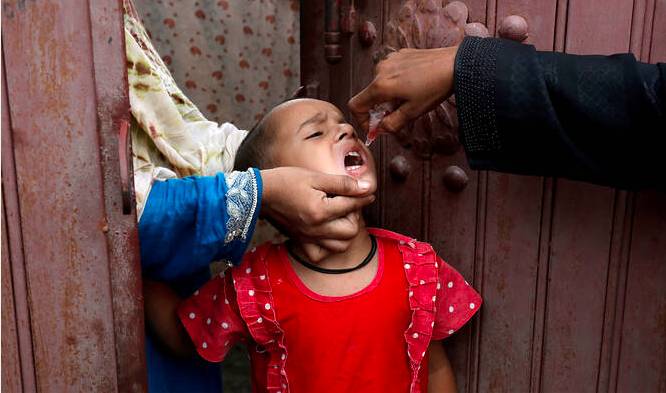
PESHAWAR: The final polio vaccination campaign of 2025 in Khyber Pakhtunkhwa (KP) began on Monday, with health authorities aiming to reach every child under five years of age across the province. The drive will continue until December 18.
Read More: Nationwide polio drive launches tomorrow to protect children
Despite high coverage rates of over 98 percent in previous campaigns, challenges remain. Less than two percent of children are routinely missed, either because they are not at home or due to parental refusal. Experts say this small fraction, while numerically minor in a target population of 6.5 million, poses a significant obstacle to eradicating poliomyelitis in the province.
Provincial Minister for Health Khaliq-ur-Rehman, Chief Secretary Khyber Pakhtunkhwa Shahab Ali Shah, and Secretary Health Shahidullah Khan administering polio drops to children at the inauguration of the provincial polio campaign. The government has made comprehensive… pic.twitter.com/4UbedCEWYz
— Chief Secretary Khyber Pakhtunkhwa (@CSKPOfficial) December 14, 2025
Parents refusing the oral polio vaccine often cite unfounded claims, including concerns over infertility or religious objections. Health authorities and international Islamic scholars have repeatedly affirmed the vaccine’s safety and compatibility with Islamic teachings, urging parents to protect their children.
The campaigns are resource-intensive, with around 35,000 vaccination teams deployed under the protection of 50,000 policemen to ensure the safety of both workers and recipients. However, security risks persist. Since 2012, a total of 96 people—including 61 policemen and 27 health workers—have been killed in attacks targeting vaccination campaigns.
Additionally, 283 men and 18 women have been injured, and several health workers and civilians have been kidnapped during immunisation drives.
Read More: Health minister launches last nationwide polio drive of 2025
Experts warn that repeated refusals and missed vaccinations allow poliovirus to persist, endangering entire communities. They urge authorities to adopt administrative measures to address vaccine hesitancy and ensure full coverage. With 19 of Pakistan’s 30 polio cases recorded in KP this year, the stakes remain high for the province’s public health efforts.