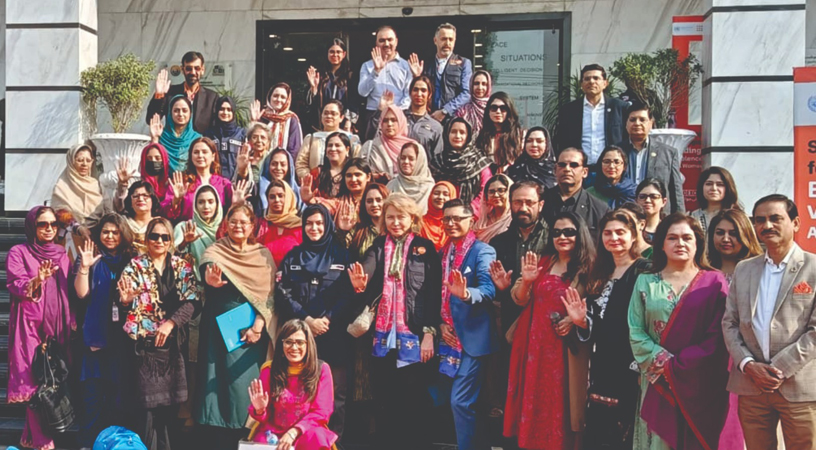
 The Punjab Safe Cities Authority (PSCA) and United Nations agencies jointly launched the global 16 Days of Activism Against Gender-Based Violence campaign with a dynamic high-level event on “Smart Cities and Technology for Digital Safety: Ending Digital Violence Against Women and Girls.” In line with this year’s 16 Days theme, which shines a spotlight on the urgent rise of digital violence against women and girls, the event underscored how technology can be both a site of harm and a powerful tool for protection and empowerment.
This year’s 16 Days theme places a sharp spotlight on digital violence against women and girls, recognising it as one of the fastest-growing and most pervasive forms of gender-based violence. As Pakistan becomes increasingly connected, women and girls face heightened risks of cyberstalking, online harassment, non-consensual sharing of personal information, misinformation campaigns, and AI-enabled abuse that can destroy reputations and silence voices. Digital violence not only undermines women’s safety-it restricts their freedom of expression, limits economic opportunities, and reinforces harmful gender norms in both online and offline spaces. The campaign calls for urgent action to strengthen legal protections, promote responsible digital governance, expand access to safe reporting mechanisms, and ensure that all technology-from AI tools to mobile apps-is designed with women’s rights, privacy, and dignity at the centre.
Bringing together government leaders, lawmakers, technology innovators, youth, and women’s rights advocates, the event transformed the PSCA Headquarters into a living demonstration of how AI, data, and digital innovation can reshape safety for millions of women and girls across Pakistan. From real-time surveillance tools to cutting-edge safety apps, the event showcased how technology is no longer just part of Pakistan’s digital future-it is central to building safer, more inclusive cities today.
The launch began with a guided tour of the Safe City Operations Center, showcasing advanced monitoring systems and real-time data tools used to support gender-responsive policing. During the Opening Session, key leaders underscored the urgency of tackling online and offline violence in an increasingly digital age.
Mr. Jamshed Kazi, UN Women Country Representative, emphasized the need for responsible, inclusive innovation, stating, “Digital safety is now an integral part of women’s rights. As technology evolves, we must ensure it empowers rather than endangered. Today’s launch reinforces our shared commitment to placing women’s voices, experiences, and leadership at the heart of Pakistan’s digital transformation.”
Begum Ishrat Arshad, Convener of the Punjab Women Parliamentary Caucus, highlighted the role of legislation and governance in safeguarding women’s digital freedoms, “Technology is reshaping our lives-and our laws must keep pace. Ensuring safe digital environments is not optional; it is essential for women’s mobility, participation, and economic empowerment. Parliament stands ready to strengthen the policies that protect women in every space-public, private, and digital.”
Rana Muhammad Iqbal Khan, Minister of Law, reaffirmed the legislature’s role in responding to emerging digital threats, “The nature of violence has changed, and our laws and institutions must evolve with it. Digital violence is real violence. Through stronger legislation, effective oversight, and citizen-centered digital protections, we are working to ensure that every woman in Pakistan knows she will be heard, protected, and supported when she seeks help.”
The centerpiece of the launch was a compelling panel discussion on harnessing AI, data, and digital applications to build safer online and offline spaces for women and girls.The discussion brought together Mr. Ahsan Younas, Managing Director of the Punjab Safe Cities Authority; Dr. Shehla Javed Ikram, STEM Founder at the Chamber of Commerce and Industry; and Ms Sehr Qizalbash, Education Specialist & Gender Focal Person, UNICEF. Panelists highlighted the need to scale women-centered innovation, expand digital literacy and safety awareness for girls, and establish robust safeguards to address rapidly emerging AI-driven risks.
This year’s national campaign opens in Lahore, marking the United Nations’ official commemoration of the International Day for the Elimination of Violence against Women. Over the next two weeks, events will be held across Quetta, Peshawar, and Islamabad, culminating in a national closing ceremony in Karachi. Jointly led by RCO, UN Women, UNFPA, UNICEF, and UNHCR, the campaign aims to accelerate collective action for safe, inclusive, and empowering digital spaces for women and girls.