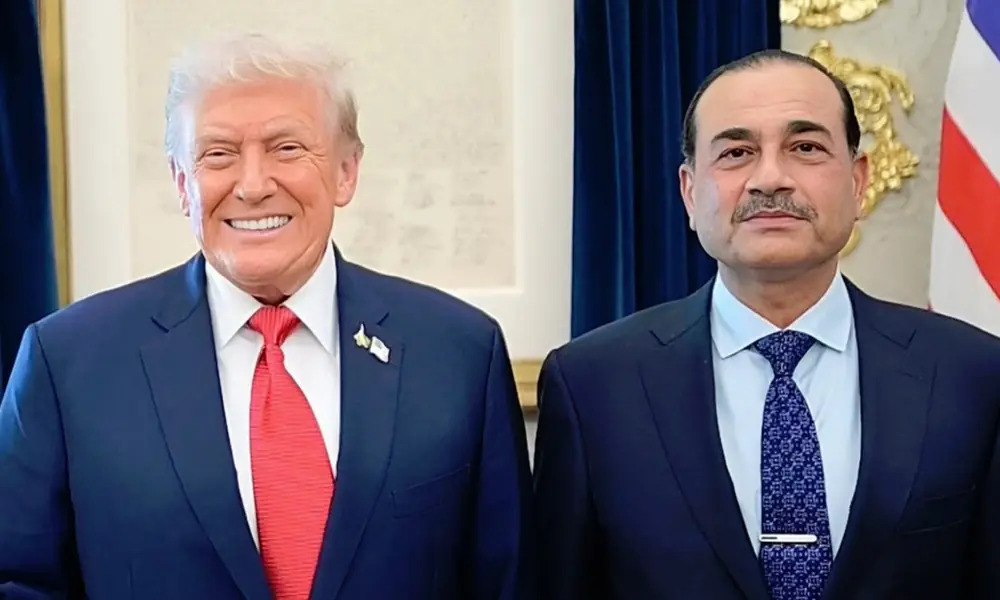
Pakistan’s global standing is rising after US President Donald Trump publicly embraced Army Chief Asim Munir. Trump said he helped broker a ceasefire that prevented a South Asian crisis. His shift has boosted Islamabad’s confidence and unsettled long-held assumptions in Washington.
Bloomberg reports that Trump’s ties with Indian Prime Minister Narendra Modi have deteriorated as the US imposed steep tariffs on India. As a result, Washington is moving closer to Pakistan after years of prioritising India to counter China. Trump now places Munir on equal footing with Modi and often praises him during remarks on regional tensions. This surprise pivot has revived Pakistan’s influence and disrupted bipartisan consensus in the US.
Read more: Trump hails Pakistan’s Field Marshal as a ‘powerful fighter’ at global
However, senior American officials warn that the shift may harm long-term US interests. Kurt Campbell said most US strategic goals still align with India and noted potential lasting damage from the Trump-Modi split. Yet other experts argue that a stronger US-Pakistan partnership could give Washington leverage over India. They also stress that the US must retain influence in Islamabad during future crises.
Meanwhile, Munir’s stature in Pakistan has surged after the May clash that officials frame as a victory. Pakistani leaders credit strong diplomacy for warmer ties with Washington. Analysts say the confrontation strengthened unity between Pakistan’s civilian and military leadership. Islamabad has also advanced US priorities in cryptocurrency and counterterrorism, while benefiting from lower US tariffs on its exports.
Read more: Trump Hosts PM Shehbaz, Field Marshal Munir in Oval Office
Pakistan is also deepening relations with Saudi Arabia and balancing ties with China, its long-term defence and infrastructure partner. US firms are showing interest in Pakistan’s mineral wealth, including a recent rare earth MoU signed after meetings with Munir. Officials on both sides hope these developments deliver political and economic gains as regional dynamics shift rapidly.