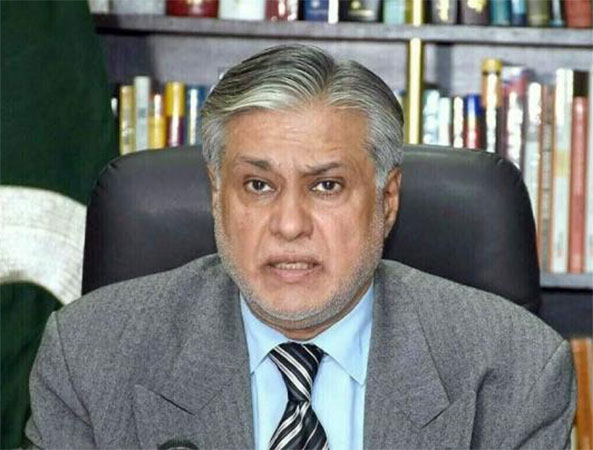
 Deputy Prime Minister and Foreign Minister (DPM/FM), Senator Mohammad Ishaq Dar on Monday called for renewed global commitment to multilateralism and urgent reforms in the international financial and governance systems, as he inaugurated the Sixth Margalla Dialogue 2025 hosted by the Islamabad Policy Research Institute (IPRI).
Speaking at the opening session themed “The Future of Global Order: Cooperation or Confrontation,” Senator Dar said the topic was extremely relevant amid the erosion of multilateral values, the rise of bloc politics, trade wars, and widening global inequalities. The forum, described as a galaxy of seasoned professionals, brought together leading thinkers, diplomats, and scholars to deliberate on the most pressing challenges confronting global peace and prosperity.
“In my recent addresses at multilateral forums, including the United Nations Security Council, I have repeatedly warned that humanity is facing unprecedented challenges that threaten to disrupt global peace, prosperity, and security,” Dar stated.
He cautioned that the very foundations of multilateralism and international cooperation especially those represented by the United Nations were under strain, as skepticism and ongoing conflicts questioned their effectiveness. “Multilateral institutions are weakening, and I mean it. The UNSC remains deadlocked due to political divisions, while in many cases, there is no meaningful mechanism to act against those who defy its resolutions,” the DPM remarked. ”
Citing the examples of Palestine and Jammu and Kashmir, Dar said there was a growing perception that the Security Council was failing to fulfill its primary responsibility of maintaining global peace and security. He also drew attention to deepening global inequalities and debt distress that now afflict over 100 countries, undermining the achievement of the Sustainable Development Goals (SDGs).
“Developing countries like Pakistan are bearing the brunt of climate change despite contributing negligibly to global emissions. Yet we remain among the top ten most climate-vulnerable nations,” Dar noted. “In this backdrop, cooperation not confrontation must define our international approach.”
Reaffirming Pakistan’s “firm belief in the enduring relevance of multilateralism,” the Foreign Minister said the United Nations remains the world’s most representative platform for addressing shared challenges. He emphasized Pakistan’s consistent support for the principles of the UN Charter, including self-determination, non-use of force, and the peaceful settlement of disputes.
Referring to Pakistan’s presidency of the UN Security Council earlier this year, Dar highlighted the unanimous adoption of Resolution 2788, which he chaired, as a testament to Pakistan’s commitment to effective multilateralism and the UN Charter. He also mentioned Pakistan’s initiative to strengthen institutional linkages between the UN and the Organization of Islamic Cooperation (OIC), the second-largest multilateral body in the world.
“It is hard to imagine a world without such institutions. In the same spirit, Pakistan supports other initiatives aimed at increasing multilateral cooperation, including China’s Global Governance Initiative, of which we are a signatory. It seeks to make the global governance system more responsive to the needs of developing countries,” he said.
Dar stressed that to truly strengthen multilateralism, all states, large or small, must adhere to the principles of the UN Charter and international law. “To break the vicious cycle of poverty and inequality, we must address the imbalances in the international economic system,” he said, calling for comprehensive reforms of the global financial architecture to promote development and equity.
He urged concrete measures to assist developing countries caught in liquidity and debt crises through concessional financing, rechanneling of unused Special Drawing Rights (SDRs), and enhanced lending capacity of multilateral development banks.