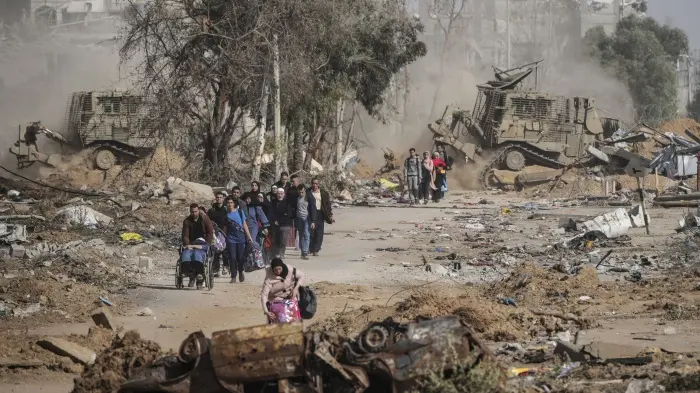
UNITED NATIONS – The United Nations announced that over 24,000 tons of humanitarian aid have entered Gaza since the ceasefire took effect earlier this month, marking a significant increase in relief efforts. UN officials, however, stressed the urgent need for greater NGO access to ensure effective distribution of life-saving supplies. Despite progress, they warned that ongoing funding shortfalls and bureaucratic barriers continue to slow down critical humanitarian operations.
Deputy Special Coordinator for the Occupied Palestinian Territories, Ramiz Alakbarov, confirmed that aid deliveries through multiple crossings have resumed, including both community-based and household-level distributions. He highlighted that looting incidents in Gaza have significantly decreased, allowing smoother delivery of food and medical supplies. In addition, UNICEF has reopened 15 outpatient therapeutic sites, including eight new centers in northern Gaza, providing crucial healthcare support to thousands of displaced families.
Read more : UN urges restraint after Pakistan-Afghanistan talks collapse in Istanbul
The World Food Programme’s regional director, Samer AbdelJaber, stated that in just 20 days of intensified operations following the ceasefire, over 20,000 metric tons of food had been distributed inside Gaza. He added that while the increase in aid marks an important milestone, the scale of devastation in Gaza requires sustained international support. Tens of thousands remain homeless, and essential infrastructure like hospitals, schools, and water facilities continue to face severe damage.
Moreover, UN humanitarian chief Tom Fletcher praised the progress achieved since the US-brokered ceasefire, which enabled larger aid inflows and improved coordination across entry points. However, he emphasized that this progress remains “a drop in the ocean,” as only one-third of the $4 billion humanitarian appeal has been funded so far. He reiterated that continued global support is vital to prevent further humanitarian collapse in the war-torn enclave.
Read more : UN warns global climate adaptation funds critically off track
Alakbarov also urged Israel to allow NGOs and national organizations to participate more actively in aid distribution, describing the ongoing registration restrictions as a “major bottleneck.” He noted that NGO involvement is essential to reach remote areas and vulnerable populations efficiently. Meanwhile, Israel continues to control nearly half of Gaza’s territory and has limited aid access through the Rafah border crossing, restricting the full implementation of the 20-point US peace plan designed to stabilize the region.
Despite the challenges, the UN reaffirmed its commitment to scaling up life-saving assistance and rebuilding essential services for Gaza’s people. Officials expressed cautious optimism that continued cooperation between international agencies, regional partners, and local NGOs could accelerate recovery and help restore hope in a region devastated by months of conflict.