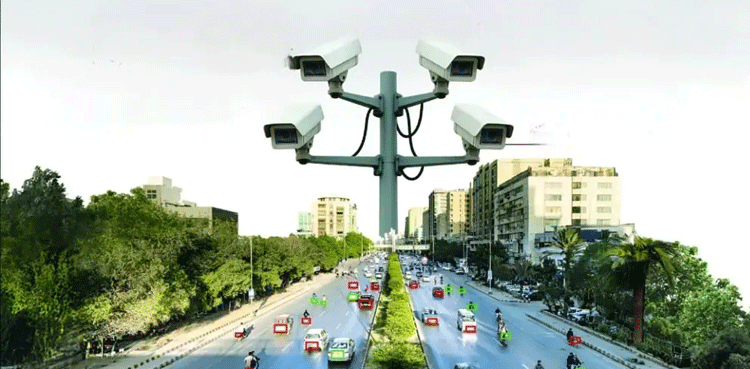
Karachi’s newly introduced e-challan system made a strong start on Tuesday, with traffic police issuing fines worth over Rs12 million within just six hours of enforcement. The digital system, aimed at promoting transparency and accountability, recorded 2,662 traffic violations across the city, signaling widespread disregard for road safety rules despite repeated awareness campaigns. Officials said the move marks a major step toward modernizing traffic management in Pakistan’s largest metropolis.
According to the traffic police report, the majority of challans — 1,535 in total — were issued for drivers failing to wear seatbelts. Additionally, 507 motorcycle riders were fined for not wearing helmets, while 166 motorists were penalized for running red lights. The report further noted 419 cases of overspeeding, four for stop-line violations, seven for tinted windows, and five for parking in no-parking zones. Moreover, 32 motorists were fined for mobile phone use while driving, three for wrong-way driving, and another three for lane violations.
Read more : Pakistan Closes Airspace Near India for Two Days Over Security Concerns
Authorities explained that the violations were captured through high-resolution cameras installed across major intersections and highways as part of the city’s new automated e-challan network. Despite prior warnings, the overwhelming number of fines issued in just a few hours has raised serious questions about public discipline on Karachi’s roads. Officials emphasized that all fines are now automatically registered and directly linked to the violator’s vehicle registration details.
Furthermore, traffic police officials stated that the e-challan system is being expanded to more areas in the coming weeks to ensure consistent monitoring without human interference or bribery. They said that by using a fully digital approach, the system not only ensures fair law enforcement but also helps collect accurate data on traffic behavior to guide future safety measures. The initiative aims to make Karachi’s roads safer while holding habitual offenders accountable.
Officials urged citizens to adhere to traffic laws, wear helmets and seatbelts, and avoid mobile phone use while driving. They stressed that compliance is not only a legal duty but a matter of personal and public safety. As the system continues to expand, authorities hope to reduce traffic accidents, improve driving behavior, and establish a culture of accountability across Karachi’s increasingly congested streets.