 Secretary of State Marco Rubio has said that the US sees an opportunity to expand its strategic relationship with Pakistan and that the recent strengthening of ties between the two countries does not come at the expense of Washington’s relationship with New Delhi.
He made these remarks during a press briefing on Saturday, during which he was asked whether India had raised any concerns about the “stronger relationship” between the US and Pakistan.
“They really haven’t – I mean, we know they’re concerned for obvious reasons because of the tensions that have existed between Pakistan and India historically. But, I think they have to understand, we have to have relations with a lot of different countries,” he said, according to a transcript of the briefing on the State Department’s website.
He continued, “We see an opportunity to expand our strategic relationship with Pakistan, and I think we’ve made – that’s our job, is to try to figure out how many countries we can find how we can work with on things of common interest.
“So, I think the Indians are very mature when it comes to diplomacy and things of that nature. Look, they have some relationships with countries that we don’t have relationships with. So, it’s part of a mature, pragmatic foreign policy. I don’t think anything we’re doing with Pakistan comes at the expense of our relationship or friendship with India, which is deep, historic, and important.”
Rubio was also asked whether the recent improvement in ties between the US and Pakistan was based on Islamabad’s “recognition of the US role and President [Donald Trump’s] role in resolving and in avoiding potential war between India and Pakistan?”
“What do you think was the turning point?” a reporter asked him, according to the transcript on the State Department’s website.
To that, Rubio began his response with, “I think they appreciated.”
He then went on to say that “anytime you work with someone, you get to know them and you interact with them, and so I do think there was some sense of happiness about it. But even before that conflict had started, I had already reached out to them and said look, we are interested in rebuilding an alliance, a strategic partnership with you. We think there are things we can work together with them on”.
The secretary of state reiterated that the US was “fully aware of the challenges with regards to India and everything else, but our job is to try to create opportunities for partnerships with countries where it’s possible. And we’ve had a long history of partnering with Pakistan on counterterror and things of that nature. We’d like to expand it beyond that, if possible, understanding that there’ll be some difficulties and some challenges”.
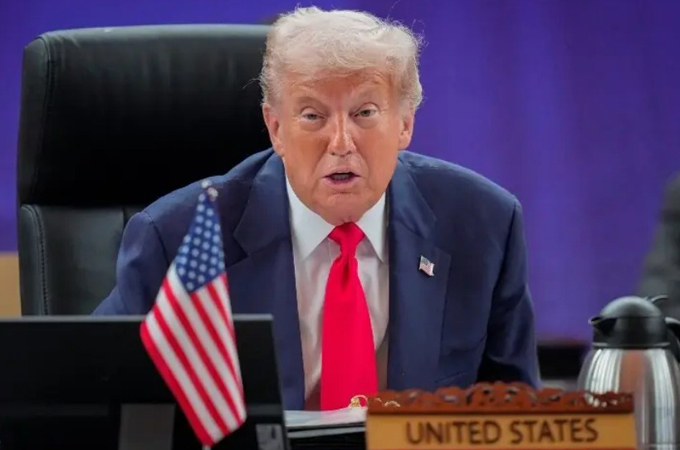
Separately, US President Donald Trump said on Sunday that he would get the conflict between Pakistan and Afghanistan “solved very quickly”, calling Prime Minister Shehbaz Sharif and COAS Field Marshal Asim Munir “great people”.
Addressing the border dispute on the sidelines of an ASEAN summit, Trump referred to it as “one of eight wars that my administration has ended in just eight months”.
“We’re averaging one a month. There’s only one left,” he said. “Although I heard that Pakistan and Afghanistan have started up, but I’ll get that solved very quickly.”
He added, “I know them both … the Pakistan field marshal and the prime minister are great people, and I know we’re gonna get that done quickly. That one started up a few days ago.”
Referring to his own role in halting wars around the world, the US president said, “I just feel it’s something I can do. I do it nicely.
“I don’t need to do it, I guess,” he added. “But if I can take time and save millions of lives, that’s really a great thing. I can’t think of anything better to do.”
Trump had previously thanked both Shehbaz and “my favourite” Munir for their efforts in securing the ceasefire deal in Gaza, while Shehbaz praised Trump’s “exemplary [and] visionary leadership” and reconfirmed Pakistan’s plan to nominate him for the Nobel Peace Prize 2026.
When the fighting broke out between Pakistan and Afghanistan, the US president was quick to express interest in assisting with establishing peace, although he was at the time occupied with overseeing a hostage exchange between Hamas and Israel.
“I said, ‘I’ll have to wait till I get back. I am doing another one,'” he told reporters at the time. “Because I’m good at solving wars, I’m good at making peace, and it is an honour to do it.”