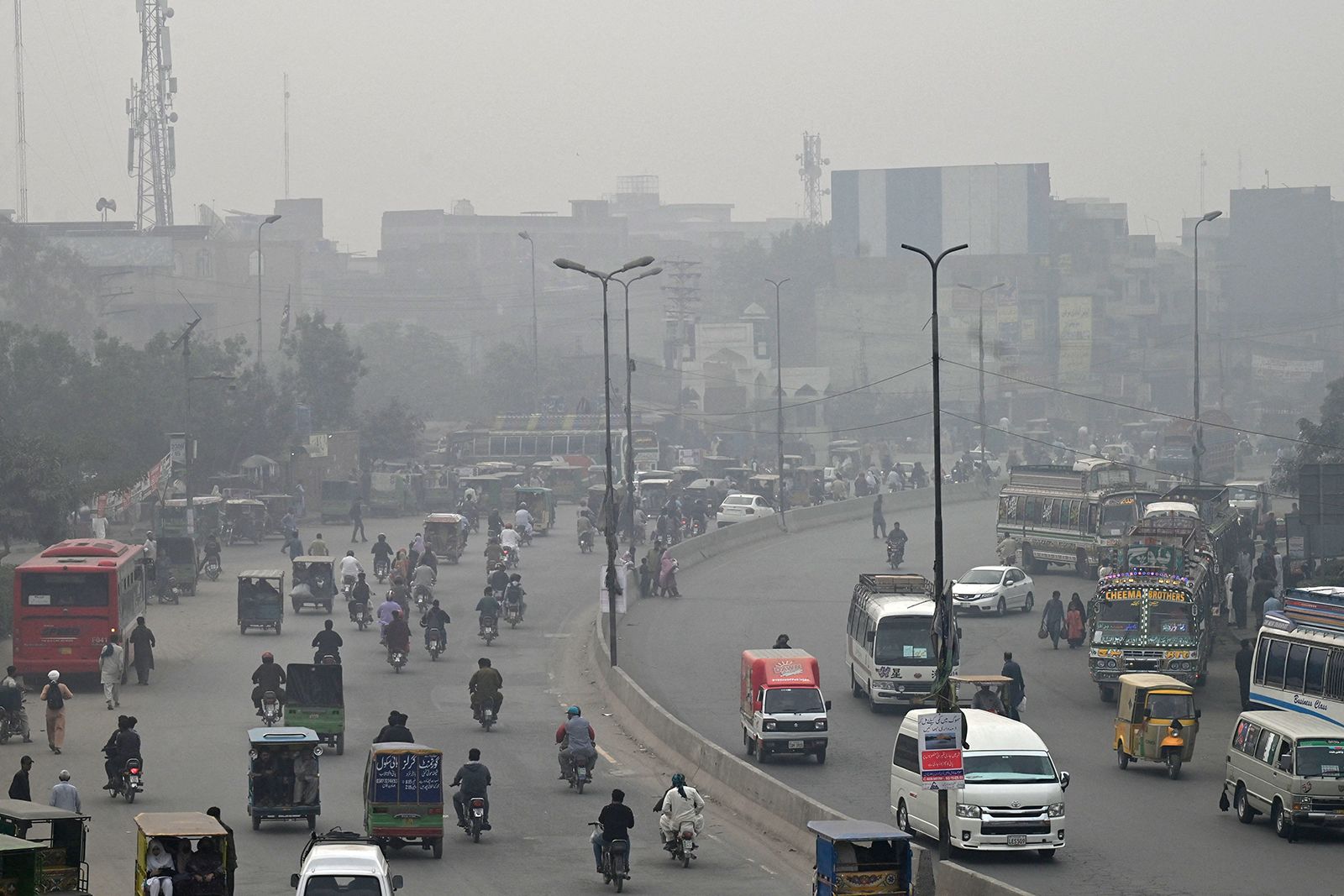
Lahore has once again topped the list of the world’s most polluted cities as heavy winds carrying toxic particles from India sweep across Punjab. Winds moving at around 5 km/h from New Delhi and nearby regions have intensified smog levels, severely impacting visibility and air quality. Environmental experts report that this cross-border pollution has raised Lahore’s Air Quality Index (AQI) to an alarming 332 on Monday morning, making breathing conditions extremely hazardous.
Officials revealed that polluted winds from Chandigarh, Gurdaspur, Ludhiana, and Patiala are now spreading toward Gujranwala, Multan, and Bahawalpur. Winds from Suratgarh, Bikaner, Jodhpur, and Jaipur are also drifting into Pakistan, worsening the smog situation. This influx of toxic air has caused a widespread health risk, especially for children, the elderly, and people suffering from respiratory issues. Many areas of Punjab are now enveloped in a dense haze that shows little sign of clearing soon.
Read more : /from-smog-to-floods-pakistani-families-face-disaster/
Experts have linked the sharp rise in air pollution to Diwali celebrations in India, during which large-scale fireworks cause thick smoke and chemical-laden dust to spread into the atmosphere. The polluted winds from these festivities are carried westward, significantly reducing air quality in Pakistan’s border regions. Consequently, Lahore and nearby cities have experienced a dramatic decline in visibility, leading to traffic slowdowns and an increase in respiratory complaints among residents.
In response, the Punjab government has launched immediate anti-smog operations across the province. Since last night, teams have been conducting water-spraying drives and using anti-smog guns in high-risk areas to reduce harmful particles. These operations are currently active in several parts of Lahore, including Iqbal Town, Multan Road, Ravi Road, Nishter Colony, Upper Mall Scheme, Shahdara Flyover, and Thokar Niaz Baig. Authorities have urged citizens to wear masks and limit outdoor activities to protect their health.
Read more : /un-warns-wildfires-and-pollution-crisis-growing-fast/
Despite the thick layer of smog, meteorological experts predict a slight improvement in air quality between 1 pm and 5 pm as wind speeds increase. However, they warn that the situation may worsen again during nighttime when temperature drops trap pollutants closer to the ground. Other cities in Punjab are also struggling, with Faisalabad’s AQI recorded at 325, Sheikhupura at 311, Dera Ghazi Khan at 239, Gujranwala at 233, and Multan at 224 — all exceeding safe limits for human health.
The alarming rise in air pollution highlights the urgent need for regional cooperation and long-term environmental strategies. Experts emphasize that both Pakistan and India must coordinate efforts to control cross-border smog by regulating industrial emissions, banning crop burning, and encouraging cleaner energy solutions before the situation spirals further out of control.