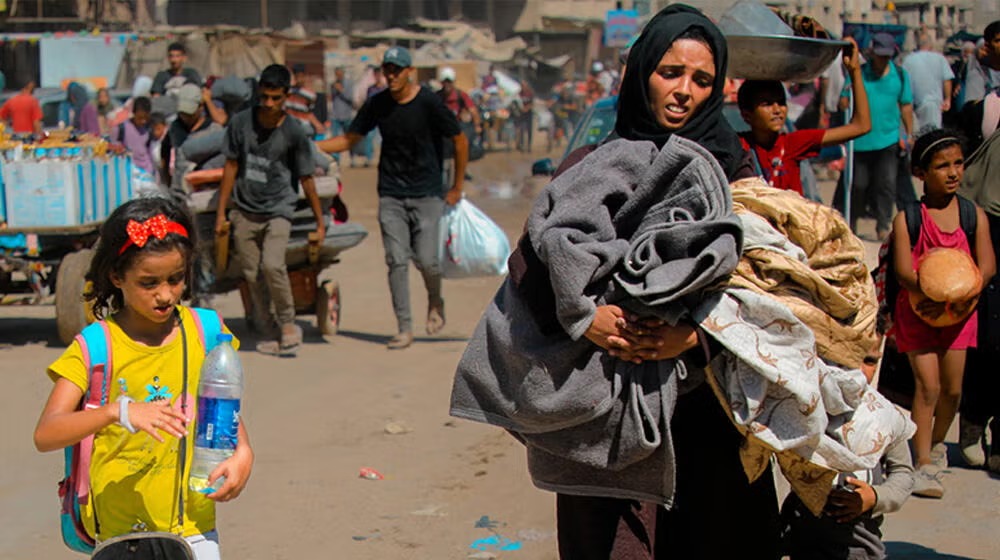
A Palestinian family in Gaza has been forced to move for the 11th time since the war began, highlighting the severe toll on civilians enduring constant bombardment, hunger, and uncertainty. Ne’man Abu Jarad, his wife Majida, their six daughters, and a young granddaughter have repeatedly uprooted their lives to escape Israel’s escalating attacks, yet each new refuge offers little security or comfort. After packing their tent in Gaza City to flee intensified bombardment, they settled outside Khan Younis on barren farmland, unsure how to secure water, food, or safety.
The Abu Jarads’ ordeal began soon after Israel’s military response to Hamas’ October 2023 assault. Like thousands of others, they have crisscrossed Gaza for nearly two years, returning briefly to a damaged home during January’s ceasefire, only to flee again when violence resumed. The family’s attempts to create stability for their children—finding schools, friends, and basic amenities—have been crushed by repeated evacuations. “It’s a renewal of the torture,” Ne’man said, voicing despair over a future where displacement or death seems inevitable.
Their youngest daughter, Lana, only eight, has grown up amid tents, airstrikes, and instability. Recently enrolled in a school in Gaza City, she attended just three days of classes before another evacuation order forced her to say goodbye to her best friends. Dressed in pink pajamas at the new camp, Lana spoke with determination not to cry, yet her parents worry about the psychological scars forming during her formative years. Majida fears the constant disruptions will permanently affect their daughters’ sense of security and belonging.
Life in the new encampment near Khan Younis is harsh and isolating. The family spent their last savings on a tent and truck rental to move, only to find themselves on desolate land without markets, schools, or nearby water. They now walk long distances for internet access or to catch water trucks that sometimes run dry before reaching them. Surrounded by strangers and under the shadow of Israeli tanks nearby, the family feels unsafe and adrift, clinging to routine tasks like cooking or washing to create a fragile sense of normalcy.
Four days after resettling, the situation worsened. With almost no money and no aid arriving, Ne’man reported they could not afford food. An armed man claiming ownership of the land demanded rent they cannot pay, threatening yet another displacement. “Soon we’ll die of starvation,” Ne’man said in a voice message. Drained physically, mentally, and financially, the family’s plight underscores the deepening humanitarian crisis in Gaza, where relentless war has shattered lives and left countless families teetering on the brink of survival.