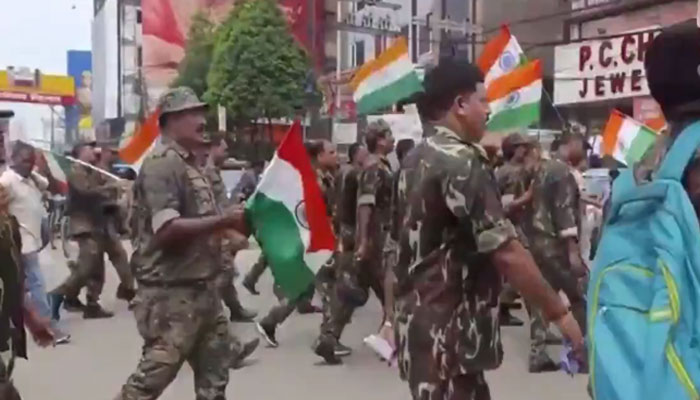
Indian soldiers have started protesting across Bihar due to unmet demands and lack of benefits. The protests began in several cities, including Patna, as soldiers expressed frustration over ignored requests. They warned that if their demands are not met, protests could spread nationwide. This unrest highlights growing dissatisfaction within the ranks.
According to Indian media, soldiers repeatedly requested improved facilities and benefits from the Modi government and Bihar authorities. However, no action was taken, forcing the troops to take to the streets. The protesters demanded fair treatment and better support for their service. Many feel neglected despite risking their lives for the country.
Historic protest by the Indian Army against its own government!
In the Indian state of Bihar, Indian Army personnel, due to unfulfilled benefits and basic needs, took to the streets in full uniform and openly threatened to strike.
This is a unique incident in the world where a… pic.twitter.com/tLVp4x9U8t— Eagle Claw (@EagleClawStrike) September 13, 2025
National security expert Syed Muhammad Ali explained that morale issues plague the Indian army. Soldiers feel political leaders use the military for short-term political gains, risking soldiers’ lives unnecessarily. This misuse has lowered motivation and trust in leadership, affecting overall army efficiency and unity.
He also pointed out that recent aggressive actions against Pakistan, Kashmir, and minorities have hurt the morale of soldiers from those communities. Furthermore, the sacrifices of fallen soldiers go unrecognized by both military and political leaders, causing frustration within the ranks. This lack of appreciation deepens the soldiers’ discontent.
Ali added that any army needs strong support from its government and people. However, in India, the army is often used for political purposes, including false flag operations. This misuse fuels unrest among soldiers, which is now visible in ongoing protests. If ignored, the protests could impact India’s national security.