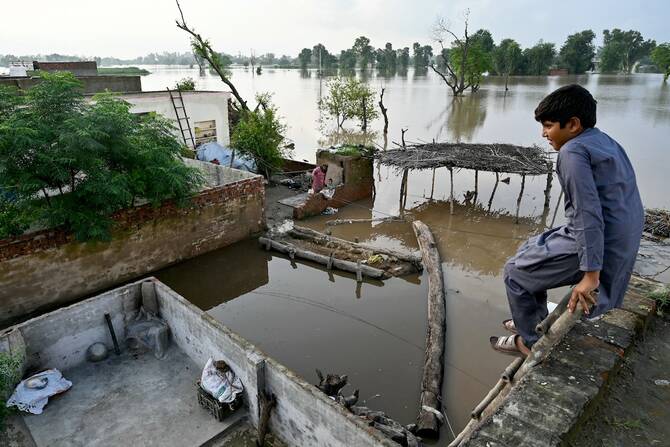
The devastating floods in Punjab have affected 4.45 million people, leaving widespread destruction across the province and claiming 97 lives. Authorities reported that over 4,500 villages are severely damaged, forcing thousands of families to leave their homes. These floods have become one of the most significant natural disasters in Punjab’s recent history, disrupting livelihoods, damaging crops, and creating urgent humanitarian needs for food, shelter, and medical assistance.
Moreover, the Provincial Disaster Management Authority (PDMA) confirmed that floodwaters continue to threaten rural and urban communities. Officials warned that the rising water levels in several rivers have worsened conditions, leaving many areas inaccessible. Rescue teams are working tirelessly to reach affected families, but damaged roads and strong currents have slowed operations. Despite the challenges, relief efforts remain ongoing, aiming to prevent further loss of life and property damage.
Additionally, Relief Commissioner Nabeel Javed announced that 2.451 million people trapped by the floods have been successfully relocated to safer areas. Authorities have established 396 relief camps across flood-affected districts to provide shelter, clean drinking water, and medical care. These camps have become lifelines for displaced families who have lost their homes, belongings, and sources of income, offering them temporary refuge during this critical time.
Furthermore, officials highlighted that recent heavy rains have filled major reservoirs to dangerous levels. Tarbela Dam has reached 100 percent capacity, while Mangla Dam is currently 92 percent full. These conditions have increased the risk of additional flooding in low-lying areas if water levels continue to rise. Authorities are closely monitoring the situation and have advised residents in vulnerable regions to stay alert and follow evacuation orders when necessary.
Finally, the Punjab government has appealed for national solidarity and support to help the millions affected by the disaster. Relief teams, local charities, and volunteers are working together to deliver food supplies, medicines, and essential goods to the hardest-hit areas. As floodwaters slowly recede, rebuilding efforts will take months, and authorities are calling for long-term recovery plans to restore homes, infrastructure, and livelihoods across the province.