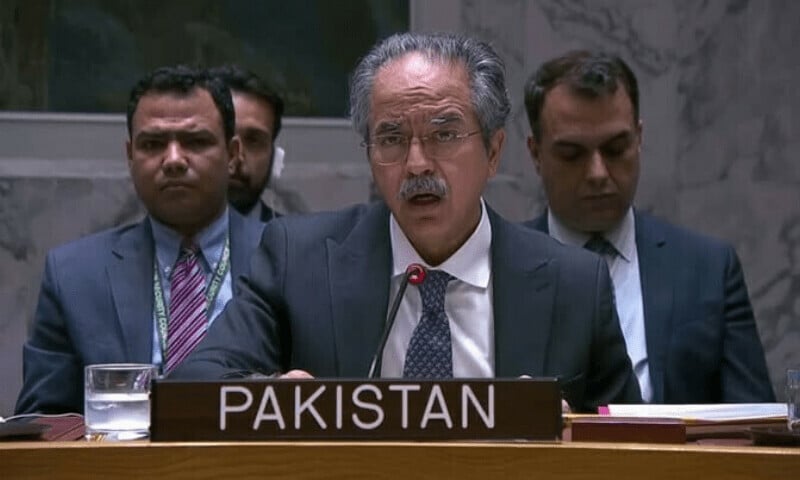
Pakistan has called for strengthening the role of United Nations peacekeeping missions to help resolve global conflicts, especially Kashmir. Speaking at a UN Security Council session, Pakistan’s UN Ambassador, Munir Akram, stressed that peace missions must support political processes that tackle root causes. He said the long-standing Kashmir dispute needs urgent and meaningful UN involvement.
Pakistan joined the UN shortly after its independence in 1947 and has remained a major contributor to peacekeeping. Since 1960, over 235,000 Pakistani personnel have served in 48 missions across 29 countries. Pakistan is also the host of the UN Military Observer Group in India and Pakistan (UNMOGIP), monitoring the Line of Control in Kashmir.
Statement by Ambassador Asim Iftikhar Ahmad
Permanent Representative of Pakistan to the UN,
At the Security Council Briefing on “Adapting Peace Operations for the Pursuit of Political Solutions –
Priorities and Challenges”
(July 29 2025)
******I thank Under-Secretary-General… pic.twitter.com/42powZxfZM
— Permanent Mission of Pakistan to the UN (@PakistanUN_NY) July 29, 2025
Ambassador Akram emphasized that the Security Council must ensure peace missions have clear mandates linked to political efforts. He argued that Kashmir, on the Council’s agenda for decades, deserves focused UN attention.
According to him, peacekeeping cannot succeed without credible diplomacy and commitment from the Council’s members.
Pakistan also highlighted its sacrifices for global peace. It remains one of the top troop-contributing nations, with 182 Pakistani peacekeepers having lost their lives in the line of duty.
Akram said peace missions offer a proven model for reducing violence and protecting civilians but need reform to stay effective.
He warned that when the UN or Security Council steps back, dangerous power vacuums form. These spaces are often filled by mercenaries or armed groups, worsening instability. Pakistan urged the UN to invest in peacebuilding on the ground, combining security efforts with trust-building and inclusive political dialogue.