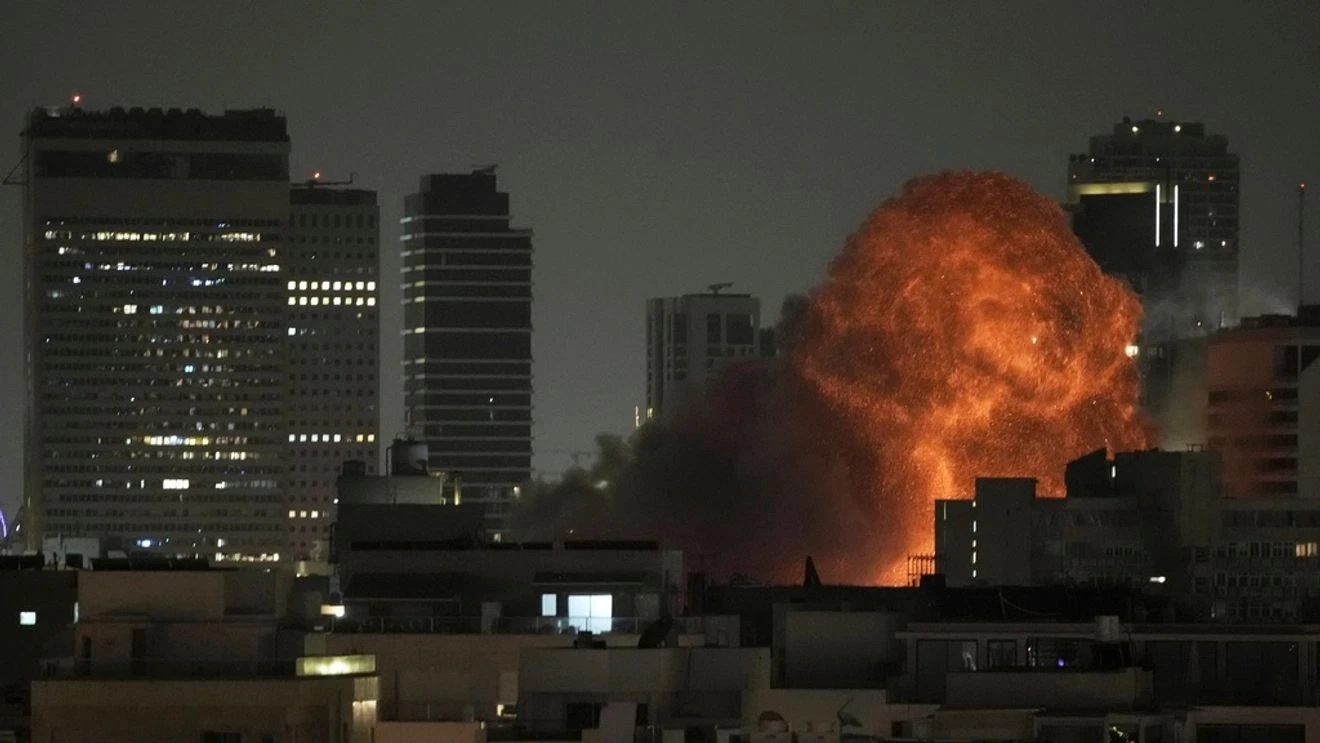
Israel launched new airstrikes on Monday targeting key Iranian government facilities in Tehran, including the infamous Evin Prison and the Revolutionary Guard’s security headquarters. These strikes followed Iran’s third wave of missile and drone attacks on Israel, escalating an already dangerous regional conflict.
In addition to striking Evin Prison, the Israeli military said it targeted roads around Iran’s Fordo nuclear facility to prevent access. This came a day after the U.S. carried out heavy strikes on Fordo, Natanz, and Isfahan nuclear sites using powerful bunker-buster bombs.
The International Atomic Energy Agency (IAEA) confirmed on Monday that Iran’s Fordo facility likely suffered major damage. IAEA chief Rafael Grossi revealed that Iran may have moved sensitive nuclear materials before the attack, although official confirmation is still pending.
Meanwhile, Iran launched more missiles at Tel Aviv, Haifa, and Jerusalem as part of its operation “True Promise 3.” Although explosions were heard in several cities, no major damage was immediately reported. Iran’s military leadership warned the U.S. that further retaliation could target American forces stationed across the Middle East.
Global leaders are now urging restraint. The European Union expressed concern about the risk of a wider war and emphasized the need for renewed diplomacy. Officials warned that any attempt to close the vital Strait of Hormuz could severely disrupt global oil supply and worsen the crisis.
Iran continues to insist its nuclear program is for peaceful purposes. However, following the U.S. withdrawal from the 2015 nuclear deal, Tehran has significantly increased uranium enrichment levels and limited international monitoring—moves that have only deepened international mistrust and tension.