
Aisha* was born to a fair-skinned Kashmiri mother. Since before her birth, there was a buzz amongst her family regarding her anticipated beauty. How was it possible for her to not be beautiful? Despite being born to the fairest couple in the family, her mother had coconut every night, during the pregnancy, to make sure her baby girl would be beautiful and white as milk. But when a dusky skinned baby with olive green eyes was brought to her after twenty hours of labour, the mother was a little shook and plenty upset. This was not what she had planned for.
Aisha* was first rejected as a two-days old baby. It’s hard to believe, but when she was brought home from the hospital and when her grandmother saw that she was not the perfect, fair skinned baby granddaughter she had hoped for, she refused to pick her up in her lap. Being the only child and born after ten years of intense prayers and begging at shrines of various pirs [saints], the disappointment at Aisha’s* complexion followed her for many seminal years of her life.
On her twelfth birthday, her father joked that the best present for her would be a tube of Fair and Lovely, a fairness cream that promises lighter complexion after four weeks of continuous use. Aisha* was not sure what her father meant and why everyone laughed at that joke, so later that night, she asked her mother if she was pretty. Her mother replied saying “Of course you are; you just need to be a little fairer.”
“It was just a little hard knowing that you were expected to be a certain way and it was even harder coming to terms with the fact that I can probably never look the way my parents want me to. I think I gave up on trying to look pretty because no matter what I do, I will always be tan,” Aisha* said.
Fair complexion has often been marked as a standard of beauty in many South Asian and Middle Eastern societies. This obsession dates back, at least, to European colonization, which enforced the idea that fair skin is prettier, as compared to earlier notions of beauty which were not restricted to fair complexion. It is alarming as these imposed standards of beauty have been picked up by corporate cosmetic giants for financial interests. Economically incentivized corporations build vast advertisement campaigns gaming this insecurity with complexion and body, indifferent to the social standard they are setting.
Universal markers of beauty and what it takes to be a truly attractive woman are now used as integral tools in advertising beauty products that claim to make you look like women who are impossible to emulate in real life.

A common feature of beauty standards these days is the homogeneity in the portrayal of perfect women, including traits and features that are not indigenous to many regions. But then where do these standards come from and why are they still a part of our society?
Mohammed Reza Pirbhai, associate professor at Georgetown University School of Foreign Service in Qatar, believes that these globalized beauty standards are a result of Western influence, and on a more grass-roots level, they originate from the colonial era. While in pre-colonial times, all complexions were represented equally on the beauty question, there is an absolute difference between beauty standards of then and now, he said.
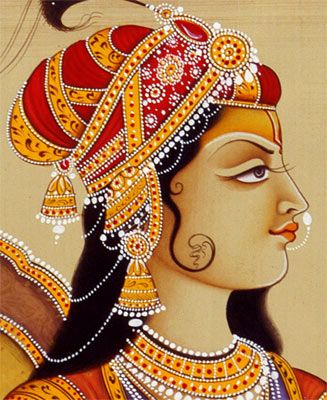
The representation of the “perfect beauty” in most colonies like India and Pakistan has qualitatively changed over time. In earlier times, the standards of beauty most definitely included fairness but they were not restricted to just that. There is an old phrase (YaSamra) in Arabic – that was specifically used to acknowledge a beautiful dark-skinned woman. However, Pirbhai explained that the post-colonial beauty standards are less inclusive of diverse types of beauty anymore.
“Statuary from the Gupta period never showed skinny woman; you had very full-bodied women. You can see right there what the standard of beauty was.”
These statues stand completely opposite to the beauty standards we see today; fair skinned, skinny women with sparkling white teeth.
“In statues like that you see Egyptian statues and then you see that some are depicted skinny, others full-bodied, some are depicted fair, others dark. The same thing exists in South Asian statuary and that is what has changed in post-colonial times,” Pirbhai said.
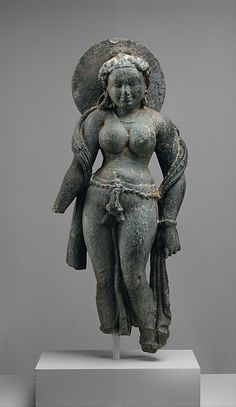
During colonization, fair skin was not just a marker of beauty but also the dividing line between civility and incivility. The dominance of the colonizers led to the colonized feeling the need to emulate them in all manners, especially in terms of physicality because that was the primary differentiation.
“In my opinion, it is about power. If we have a Western world that is so assertive on a global scale – economically, politically and culturally – that means that the values and standards of that world are going to be emulated among those who are less powerful,” Pirbhai said.