• Skip to primary navigation
  • Skip to main content
  • Skip to primary sidebar
  • Skip to footer
Trending:
  • Kashmir
  • Elections
Sunday, June 7, 2026

Daily Times

Your right to know

  • HOME
  • Latest
  • Iran-Israel war
  • Gilgit Baltistan Election
  • Pakistan
    • Balochistan
    • Gilgit Baltistan
    • Khyber Pakhtunkhwa
    • Punjab
    • Sindh
  • World
  • Editorials & Opinions
    • Editorials
    • Op-Eds
    • Commentary / Insight
    • Perspectives
    • Cartoons
    • Letters to the Editor
    • Featured
    • Blogs
      • Pakistan
      • World
      • Lifestyle
      • Culture
      • Sports
  • Business
  • Sports
  • E-PAPER
    • Lahore
    • Islamabad
    • Karachi

AFP

Climate change may boost Arctic ‘virus spillover’ risk

Published on: October 19, 2022 3:19 PM

A warming climate could bring viruses in the Arctic into contact with new environments and hosts, increasing the risk of “viral spillover”, according to research published Wednesday.

Viruses need hosts like humans, animals, plants or fungi to replicate and spread, and occasionally they can jump to a new one that lacks immunity, as seen during the Covid-19 pandemic.

Scientists in Canada wanted to investigate how climate change might affect spillover risk by examining samples from the Arctic landscape of Lake Hazen.

It is the largest lake in the world entirely north of the Arctic Circle, and “was truly unlike any other place I’ve been”, researcher Graham Colby, now a medical student at the University of Toronto, told AFP.

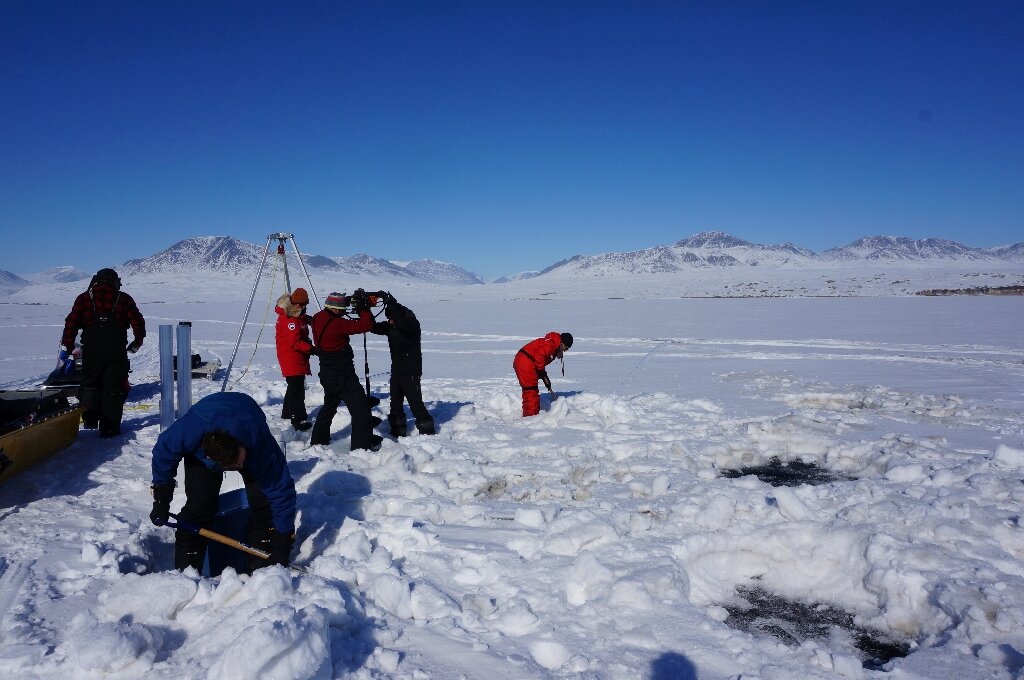
The team sampled soil that becomes a riverbed for melted glacier water in the summer, as well as the lakebed itself — which required clearing snow and drilling through two metres of ice, even in May when the research was carried out.

They used ropes and a snowmobile to lift the lake sediment through almost 300 metres (980 feet) of water, and samples were then sequenced for DNA and RNA, the genetic blueprints and messengers of life.

“This enabled us to know what viruses are in a given environment, and what potential hosts are also present,” said Stephane Aris-Brosou, an associate professor in the University of Ottawa’s biology department, who led the work.

But to find out how likely they were to jump hosts, the team needed to examine the equivalent of each virus and host’s family tree.

“Basically what we tried to do is measure how similar these trees are,” said Audree Lemieux, first author of the research.

Similar genealogies suggest a virus has evolved along with its host, but differences suggest spillover.

And if a virus has jumped hosts once, it is more likely to do so again.

– ‘Very unpredictable’ –

The analysis found pronounced differences between viruses and hosts in the lakebed, “which is directly correlated to the risk of spillover,” said Aris-Brosou.

The difference was less stark in the riverbeds, which the researchers theorize is because water erodes the topsoil, removing organisms and limiting interactions between viruses and potential new hosts.

Those instead wash into the lake, which has seen “dramatic change” in recent years, the study says, as increased water from melting glaciers deposits more sediment.

“That’s going to bring together hosts and viruses that would not normally encounter each other,” Lemieux said.

The authors of the research, published in the Proceedings of the Royal Society B: Biological Sciences journal, caution they are neither forecasting an actual spillover nor a pandemic.

“The likelihood of dramatic events remains very low,” Lemieux said.

They also warn more work is needed to clarify how big the difference between viruses and hosts needs to be to create serious spillover risk.

But they argue that warming weather could increase risks further if new potential hosts move into previously inhospitable regions.

“It could be anything from ticks to mosquitoes to certain animals, to bacteria and viruses themselves,” said Lemieux.

“It’s really unpredictable… and the effect of spillover itself is very unpredictable, it can range from benign to an actual pandemic.”

The team wants more research and surveillance work in the region to understand the risks.

“Obviously we’ve seen in the past two years what the effects of spillover can be,” said Lemieux.

Filed Under: Health, World Tagged With: Arctic ‘virus spillover’, climate change, Latest

Submit a Comment


Primary Sidebar


Latest News

Israeli strike threatens fragile Lebanon truce

Pakistan, Russia sign major security accords

Saudi Arabia condemns Iran missile attacks

Five killed in South Waziristan firing

Revival takes shape as Pakistan football rebuilds under Mohsen Gilani

Pakistan

Pakistan, Russia sign major security accords

Five killed in South Waziristan firing

PM Shehbaz reviews Tehran visit with Naqvi

No talks with agitators, says AJK PM

Pakistan urges UN action on Kashmir

More Posts from this Category

Business

Govt considers tax relief for salons, gyms in Budget 2026-27

PESCO approves one-month salary bonus for employees

SBP’s ‘Go Cashless’ campaign saw Rs 34bn in digital transactions on Eid

Short-term inflation down by 0.56%

Saudi-Pak Business Council shows interest in infrastructure investment

More Posts from this Category

World

Israeli strike threatens fragile Lebanon truce

Saudi Arabia condemns Iran missile attacks

Palestinian infant killed in West Bank shooting

More Posts from this Category


Footer

Home
Lead Stories
Latest News
Editor’s Picks

Culture
Life & Style
Featured
Videos

Editorials
OP-EDS
Commentary
Advertise

Cartoons
Letters
Blogs
Privacy Policy

Contact
Company’s Financials
Investor Information
Terms & Conditions

Facebook
Twitter
Instagram
Youtube

© 2026 Daily Times. All rights reserved.

Manage Consent
To provide the best experiences, we use technologies like cookies to store and/or access device information. Consenting to these technologies will allow us to process data such as browsing behavior or unique IDs on this site. Not consenting or withdrawing consent, may adversely affect certain features and functions.
Functional Always active
The technical storage or access is strictly necessary for the legitimate purpose of enabling the use of a specific service explicitly requested by the subscriber or user, or for the sole purpose of carrying out the transmission of a communication over an electronic communications network.
Preferences
The technical storage or access is necessary for the legitimate purpose of storing preferences that are not requested by the subscriber or user.
Statistics
The technical storage or access that is used exclusively for statistical purposes. The technical storage or access that is used exclusively for anonymous statistical purposes. Without a subpoena, voluntary compliance on the part of your Internet Service Provider, or additional records from a third party, information stored or retrieved for this purpose alone cannot usually be used to identify you.
Marketing
The technical storage or access is required to create user profiles to send advertising, or to track the user on a website or across several websites for similar marketing purposes.
  • Manage options
  • Manage services
  • Manage {vendor_count} vendors
  • Read more about these purposes
View preferences
  • {title}
  • {title}
  • {title}
We use cookies to ensure that we give you the best experience on our website. If you continue to use this site we will assume that you are happy with it.