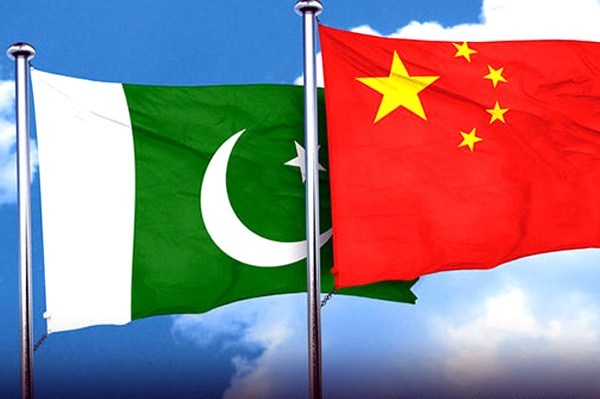
 Pakistan-China cooperation program on cotton improvement is underway, China Economic Net (CEN) reported on Tuesday.
“While Pakistan is still struggling to cope with the problems of insect pests, diseases, fiber quality and yield in the cotton industry, China has already made a significant breakthrough to overcome these problems long ago, said agriculrure scientist Muhammad Shahid Iqbal.
Shahid is currently working as a Ph.D. scholar on the program initiated by Cotton Research Institute (CRI), Chinese Academy of Agricultural Sciences (CAAS) in collaboration with Cotton Research Institute Multan, Ayub Agricultural Research Institute, and several Pakistani agriculture universities. He is part of the Pakistan-China joint research program aimed at cotton improvement especially for fiber quality and yield, which is beneficial to both countries.
Since the last few years, especially with the introduction of CPEC, China and Pakistan have developed many collaborative activities and joint projects in the agricultural sector where the scientific staff of both countries can work together. “It’s beneficial for both sides because the geological proximity and similar weather conditions in some parts of the countries mean more convenience and efficiency in conducting field experiments,” Shahid said.
Pakistan has seen a lower production of cotton for the past several years because of frequent extreme weathers, the scourge of insect pests, and insufficient technological investment in the cotton industry. “So the objective of the program I’m working on is to crossbreed a new variety of cotton that may have better performance for yield, quality, and resistance across diverse environments,” Shahid said in an interview with CEN.
For textile usage, there are three major types of cotton in a broad sense. They include: Egyptian cotton (G. barbadense), known as extra-long staple cotton, is highly sensitive to environment and mostly cultivated in Egypt and a few other areas American upland cotton (G hirsutum), making up about 90 percent of the world’s cotton crop, is comprised of relatively shorter fibers and widely used in a variety of consumer products where manufacturers are looking for quality and purity in an all-natural fiber.
Asiatic Cotton (G. arboreum), existed since prehistory and have been under cultivation mostly in China, India, and Pakistan, has a lot of good qualities including resistance to diseases and tolerance to extreme weathers but has coarse fiber and very low yield. There are also landraces that have grown hundreds of years to adapt to local conditions. For example, Pakistan’s Asiatic Cotton has evolved with the quality of high resistance to heat, drought, saline-alkali, and Cotton Leaf Curl Virus (CLCV), while China’s land cotton takes an edge in yield, quality, and precocity. “Based on previous studies and extensive research activities a huge diversity has been found in germplasm collection from China and Pakistan, which can possibly be used for the development of varieties with a blend of characters to get highly acceptable cotton for the fiber sector of both countries.
So a program has been initiated by our group to cross varieties from China and Pakistan for Asian cotton as well as American Cotton,” Shaid said.
So far, substantial achievements have been attained with 1000 new crosses of shared parentage having many desirable characters are currently under screening at the experiment field in Anyang city, Henan Province of Central China. “Selected lines from these crosses will be further evaluated across various locations of China and Pakistan to choose the best varieties having the ability to grow well with high yield and fiber quality under diverse climatic conditions of China and Pakistan,” Shahid noted.
Entering into the next phase of the research, Shaid will bring the latest research findings and outcomes, a bag of crosses with desirable characters from varieties of both countries, to Cotton Research Institute Multan, Ayub Agricultural Research Institute, Pakistan as he finishes his Ph.D. study and returns to Pakistan in July this year. “We will continue further evaluation by growing these seeds in different locations of Pakistan and see how it ends.”
Apart from variety, Shahid pointed out management is equally important, including appropriate fertilizer, chemical control, advanced machines, etc., and that’s also what Pakistan needs to learn from China. About his expectations for the experiment, Shahid said, “as a Scientist, I don’t work for myself or a specific interest group, but for our nations as well as humanity in all. So I also hope the results of the experiment can not only bring benefits to the two countries but also the world.”