
 Understanding how to control price is one of the most complex issues in Pakistan. As always, we look at rising prices for all the essentials such as fruits, vegetables, grains, oil and more. According to inflation figures the Pakistan Bureau of Statistics (PBS) rose from 8.2 per cent on August 9 per cent in September this year.
Pakistan Bureau of Statistics examines the Sensitive Price Index (SPI) based on the prices of 51 key items from 50 markets in 17 cities in the country. In the low-income group earning less than Rs 17,732 per month, SPI increased by 1.56pc, while the SPI of the highest paid group, those earning more than Rs 44,175, recorded an increase of 1.08pc.
Things that have seen an increase in prices over the past few weeks: tomatoes up to 16.39pc; onions up to 12.78pc; eggs 10.78pc; chicken 5.34pc; Bag of wheat flour 2.78pc; potatoes 2.64pc; moong drives 1.21pc; and sugar 1.03pc. A look at the PBS data reveals that prices have been rising in the country over the past one year mainly due to disruptions in food supply chains and rising increases in targeted electricity and gas prices instead of the flow of demand for goods and services.
Price controls are defined as official government rates / higher prices set for certain assets. They are often used as a means of direct economic intervention to manage the acquisition of certain assets.
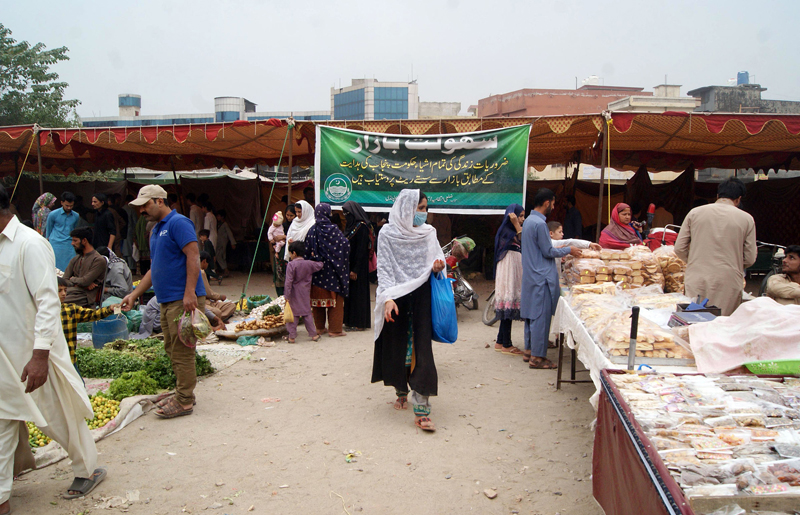
Each market and store has different prices for essentials, fruits, vegetables. One store clerk sells tomatoes for Rs 100 kg and there is another shop about 200 meters selling the same thing for Rs. 130. Can no one ask them? What is the role of the Regional Valuation Committee? Like any other institution, tariff committees at national, provincial and regional levels are completely unable to control inflation.
In government, there is the Price Control and Prevention of Profiting and Hoarding Act, 1977 which aims to regulate prices, sales and distribution, transport and inter-provincial transport and the holding of shares of key assets. Apart from this action, important items are being collected but the provincial government cannot know what the reasons for the pleasure are and why daily prices are rising.
In addition, section 6 (2) of the Act states that “no person shall sell or re-sell any valuable asset at a higher price than the prescribed price.” In addition, section 7 of the Act also provides for penalties that “if any person violates any provision made under section 3 or a notice issued, or an order made under section 6 shall be liable to imprisonment for a term not exceeding three years and to a fine.”
In Punjab, there is The Food Stuff Control Act, 1958, the Punjab Agricultural Produce Markets Ordinance, 1978 and the Registration of Godowns Act, 2014. stability and availability of significant assets respectively.
In price control, there are many Sindh laws and regulations such as The Sindh Essential Commodities Price Control and Prevention of Profiting and Hoarding Act, 2005, The Sindh Wholesale Agriculture Produce Markets (Development & Regulations) Act 2010 and Sindh Registration of Gods Act, 1995. Occupation their control over pricing, sale and distribution, transportation and transportation and the holding of shares of various ‘essentials’, the establishment of independent agricultural market sectors and preventing revenue collection and ensuring the sustainable acquisition and acquisition of valuable assets.
In Baluchistan and KPK, there is the Baluchistan / West Pakistan Foodstuffs Control Act, 1958 and the Baluchistan Agricultural Markets / KPK Act, 1999/2007. This aims for the various powers within the provincial government to regulate the supply, distribution and distribution, as well as trade and trade, food supply and control of the purchase and sale of agricultural products.
As a government measure, price controls can be done for very good purposes, but in reality, they often do not work. Most price control efforts are often difficult to overcome the economic power of supply and demand at any given moment. When prices are established by trading in the free market, prices change to maintain a balance between supply and demand. However, when the government imposes price controls, the result could be the creation of an excessive demand in the inflation situation, or an excessive supply in the form of inflation.
It is important to control inflation in the country not only from a political and economic point of view, but also from maintaining food security and nutrition in the country. Although the role and extent to which government must directly regulate food prices remains questionable, it is clear that the current system of price control is facing challenges. The weakness of the structure is very great throughout the agricultural chain, and the information available to all government departments remains fragile. However, some recent policy measures look like direct measures.
In addition, national and provincial governments are now using digital solutions to disseminate pricing data and regulate the benefit of essential food. For example, the National Information Technology Board (NITB) developed an application for “DurustDaam” in October 2019, which would review consumers’ daily food prices as approved by regional authorities. The app also shows the local fruit and vegetable delivery system at official retail prices.