Haven’t I seen this very cat pass by this very hallway already? Sometimes, as we experience a new event or place, we get that creepy feeling that it’s not the first time. We call that sensation déjà vu, a French phrase that means “already seen.” But what is déjà vu, and can science explain why it happens?
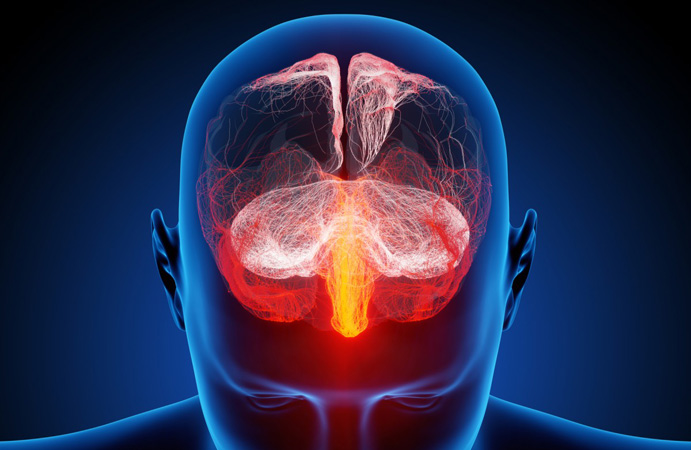
It’s estimated that more than 70 percent of us experience some form of déjà vu — a French word meaning “already seen.” It’s a puzzling phenomenon that’s been blamed on everything from parallel universes temporarily coming together to your “future self” attempting to guide you in life. Or, as Keanu Reeves’ character learned in “The Matrix,” it’s all just a computer glitch.
Understanding déjà vu means delving into human memory and neurology, and over the years scientists have developed many possible explanations for the mechanism, all of them pretty plausible. In a review of the science in 2003, the Psychological Bulletin outlined four major schools of thought about why déjà vu might happen. The first is the simplest: that the event has in fact already happened, and that for some reason you had forgotten this and are being reminded. The second is that it’s brought about by a processing error in the brain, in which two elements are trying to operate simultaneously and something gets out of step.
Back in 2006, scientists at the Leeds Memory Group thought they had gone some way to recreating the sensation in a lab by using hypnosis to trigger part of the brain’s recognition process.
The experiment was based on the theory that two key processes happen in the brain when we recognise something or someone familiar.
Firstly, our brains search through our memories to see if we’ve observed the scene before, and if it comes up with a match, a separate area of the brain identifies it as familiar. In déjà vu, the second part of the process could be triggered by accident.
The researchers recruited 18 volunteers, who were asked to look at 24 common words. Then they were hypnotised and told that when they were presented with a word in a red frame, it would feel familiar. Words in green frames would make them think the word was in the original list of 24.
After being taken out of hypnosis, the subjects were given a series of words in different coloured frames, including some words that didn’t appear in the original list.
In the group, 10 said they felt a peculiar sensation when they saw new words in red frames, and 5 said it felt like they were having déjà vu.
According to New Scientist, O’Connor and his colleagues began by devising a technique to artificially trigger déjà vu. To achieve this, they presented study participants with a series of connected words, without revealing the one word that links them. For instance, in one trial the words bed, pillow, dream and night were all presented, yet the term sleep – which clearly connects all of these words – was omitted.
To make sure participants registered that they hadn’t heard the word sleep, the researchers asked them whether or not they had heard any words beginning with an “S”, to which they obviously replied in the negative. However, when they were later grilled on which words had been presented, most tended to think they could remember hearing the word sleep, despite knowing that they hadn’t, resulting in an eerie sense of déjà vu.
Using functional magnetic resonance imaging (fMRI), the team observed that when this occurred, the most active regions of participants’ brains were not those normally associated with memory, such as the hippocampus. Instead, the frontal areas, which are typically involved in decision making, were activated during the déjà vu experience.