Every day, thousands of people get killed on roads, in their homes or even at their workplaces while others suffer from serious diseases, which can sometimes lead to a permanent disability.
The major cause of death worldwide is road accidents. According to statistics, every year, over 1.2 million people die and as many as 50 million people are injured on roads around the world.
In 2004, road traffic injuries were the ninth leading cause of death in the world. According to a World Health Organisation (WHO) report, by 2030 road traffic injuries will be the fifth leading cause of death, killing an estimated 2.4 million people per year worldwide.
The world body says road accidents claim over 30,000 lives in Pakistan annually which means approximately 20 people out of 100,000 die in a year.
CAUSES OF ACCIDENTS – according to experts the major causes of road accidents are speeding, reckless driving, especially by the uneducated and thick-skinned public transport drivers, distracted driving, untrained/unlicensed drivers, deliberate jumping of traffic filters, poor maintenance of overused vehicles, lack of awareness among drivers, double overtaking, undertaking, and using motorcycles without helmet etc. In majority cases, the victims are alone when they meet an accident. Being alone at the time of a life-threatening or serious situation is a big disadvantage that multiplies the victim’s chances of death or permanent physical disability before specialised treatment could arrive. Young children and the frail elderly are particularly more vulnerable when alone. Even if one is not alone but in the company of colleagues at the workplace or family members at home, which are considered comparatively safer, the victim still is not safe unless some colleague or family members trained in first aid is around to rise to occasion.
QUICK RESPONSE SAVES SITUATION – a quick response to an emergency situation by a first aider before professionals reach the scene can not only save a precious human life in case of a fatal accident or save a person from slipping into a serious situation, but also shorten the patient’s healing time enabling him/her to regain their feet and get back to work sooner than expected. Keeping in view the importance of first aid in everybody’s daily life, the International Federation of Red Cross & Red Crescent Societies (IFRC) introduced the World First Aid Day in 2000. Each year over 100 Red Cross & Red Crescent Societies around the world organise events and ceremonies to highlight the significance of the day. The sole purpose of this annual campaign of immense importance is to promote the importance of first aid training in one’s life and to ensure that almost every citizen trains in these skills to handle serious and life-threatening or non-life-threatening situations while proper medical response is still on the way.
PRCS LAUNCHES FAT PROGRAMME – keeping in view the importance of first-aid training in everyday life, the Pakistan Red Crescent Society (PRCS) introduced the First Aid Training (FAT) programme in 1980. The programme offers a wide variety of first aid and CPR training courses, empowering the trainers to act on, prevent and manage emergency situations. It is one of the largest programmes of the PRCS running successfully in 91 districts countrywide. Under the slogan of First Aider in Every Home, the FAT team under the guidance of programme manager has been imparting training to the traffic police, law-enforcement agencies, school, college and university students, officers and lower staff of industrial workers and common citizens since its inception. Around 2,500 training sessions have been conducted so far benefitting over 100,000 people.
WHO COULD BE A FIRST AIDER? – everybody who is physically fit and mentally agile could be a first aider and there’s no bar on anyone in this regard. School, college and university teachers and students, police and law enforcement agencies’ personnel, workers of industrial and commercial units, housewives to name but a few can train in first aid.
WHAT ARE TRAINEES IMPARTED – the trainees are imparted critical skills like placing an unconscious casualty into the recovery position, performing cardiopulmonary resuscitation, using an automated external defibrillator, stopping bleeding using pressure and elevation, bandaging injuries, keeping a fractured limb still and preventing the worsening of the patient’s condition and promoting recovery. The training equips its beneficiaries with knowledge, confidence and ability to effectively manage emergency situations. The trained first aiders know exactly what’s in their first aid kits, how to use them and how to react in an emergency situation.
RECOMMENDATIONS – the following are the recommendations which can go a long way towards reducing mortalities and saving precious human lives. First aid training should be declared mandatory for the students of 9th and 10th class and the students should also be issued a certificate along with the HSSC certificate.
Production of a first training certificate must be declared mandatory for all the citizens applying for a driving license.
The traffic police departments must arrange first aid training sessions for the public transport drivers and their data should be maintained to ensure their participation in the future trainings.
The traffic police departments must install speed guns and CCTV cameras almost on all inter-city roads and highways to discourage speeding, deliberate jumping of traffic lights and distracted driving.
The number of pedestrian bridges must be increased on the busy roads and highways to save pedestrians from traffic accidents.
Use of helmets by motorcyclists, installation of side view mirrors and must be declared mandatory and the laws in this regard must be strictly enforced.
The traffic police must conduct surprise checks on road ability of cars and motorcycles. The latter also cause road accidents due to absence of indicators and side view mirrors.
Deliberate violation of traffic rules must entail heavy fines as deterrence.
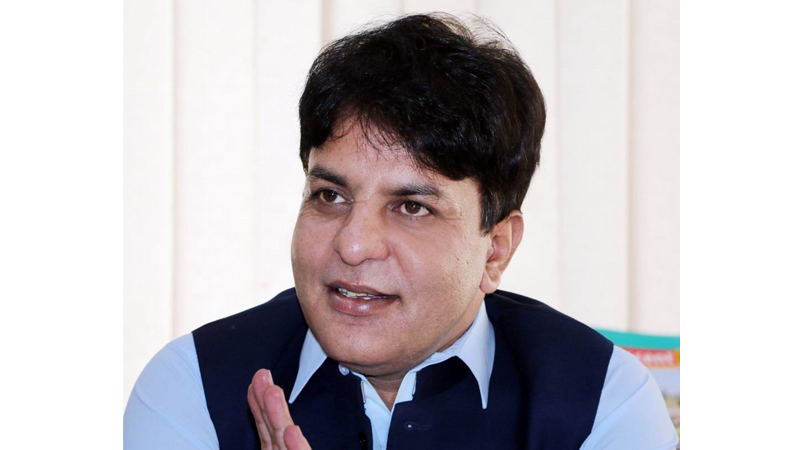
The writer is Pakistan Red Crescent Society secretary general
Published in Daily Times, November 18th 2018.