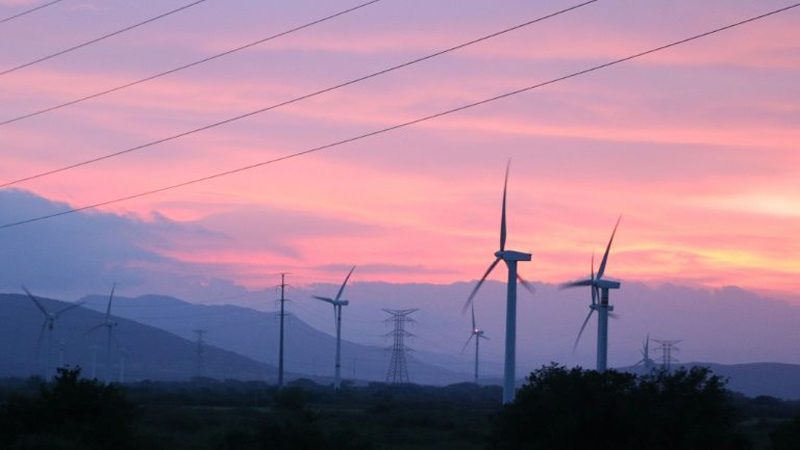
Wind farms act as a top “predator” in some ecosystems, harming birds at the top of the food chain and triggering a knock-on effect overlooked by green energy advocates, scientists said Monday.
Wind is the fastest-growing renewable energy sector, supplying around four percent of global electricity demand.
Close to 17 million hectares — an area roughly the size of Tunisia — is currently used for generating wind energy worldwide, and researchers warned that developers had “greatly underestimated” the impact the technology has on wildlife.
In new research, an international team of scientists studied the effects of wind turbine use in the Western Ghats, a UNESCO-listed range of mountains and forest spanning India’s west coast region and a global “hotspot” of biodiversity.
They found that predatory raptor birds were four times rarer in areas of plateau where wind turbines were present, a disruption that cascaded down the food chain and radically altered the density and behaviour of the birds’ prey.
In particular, the team observed an explosion in the raptors’ favourite meal, fan-throated lizards, in areas dominated by the turbines.
Furthermore, they saw significant changes in lizard behaviour and appearance, living as they were in an essentially predator-free environment.
“What was remarkable to us were the subtle changes in behaviour, morphology, and physiology of those lizards,” Maria Thaker, assistant professor at the Indian Institute of Science’s Centre for Ecological Sciences and lead study author, told AFP.
As the levels of raptors fell around the turbines, so too did the rate of predatory attacks the lizards had to deal with.
As a result, the team found that lizards living in and around wind farms had lessened their vigilance against possible danger.
Simulating “predator attacks”, humans in the study could get up to five times closer to a lizard in the wind farm zones than one living away from the turbines before the creatures fled.
‘Be smart with green energy’
After testing, the lizards near windmills were found to have lower levels of a stress hormone, something that must have emerged in the two decades since wind farms were built in the Western Ghats.
Wind farms are known to be harmful to birds, disrupting their migration patterns and causing above average death rates.
Thaker said her research, published in the journal Nature Ecology & Evolution, showed that wind farms replicated the role of the top predator in the food chain by keeping the raptors at bay.
“They trigger changes to the balance of animals in an ecosystem as if they were top predators,” she said.
“They are the ‘predators’ of raptors — not in the sense of killing them, but by reducing the presence of raptors in those areas.”
As man-made carbon emissions continue to rise, Thaker said wind energy was vital in mitigating the effects of climate change.
But with evidence that the impact of wind farms reaches further into Earth’s ecosystems than previously thought, she called for greater consideration of the environmental impact of the vital green energy source.
“It took decades for scientists to realise that wind-turbines were negatively affecting animals that fly,” Thaker said.
“We need to be smart about how we deploy green energy solutions.
Let’s reduce our footprint on the planet and put turbines in places that are already disturbed in some way — on buildings for example.”
Published in Daily Times, November 7th 2018.