
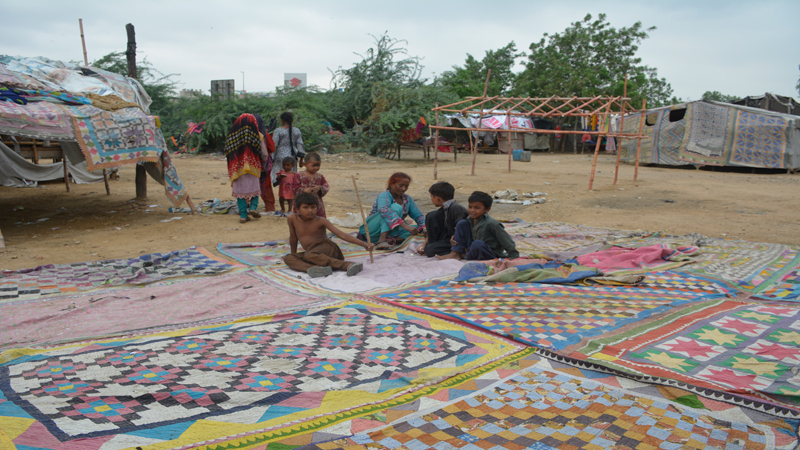
KARACHI: It has been around eight years now since Amina Khoso and her family started living in a huge slum that runs parallel along Super Highway that connects country’s port city of Karachi with the upcountry.
Before that Khoso and her family were living in a small hamlet in Jacobabad district in northern Sindh, where they once owned a small piece of agricultural land that was a major source of livelihood. But in August 2010, a massive flood that is now known as ‘Pakistan Super Flood’ washed away not just her village but several other villages too forcing them to leave their native town and “settle” in a slum in Karachi along with other climate change refugees.
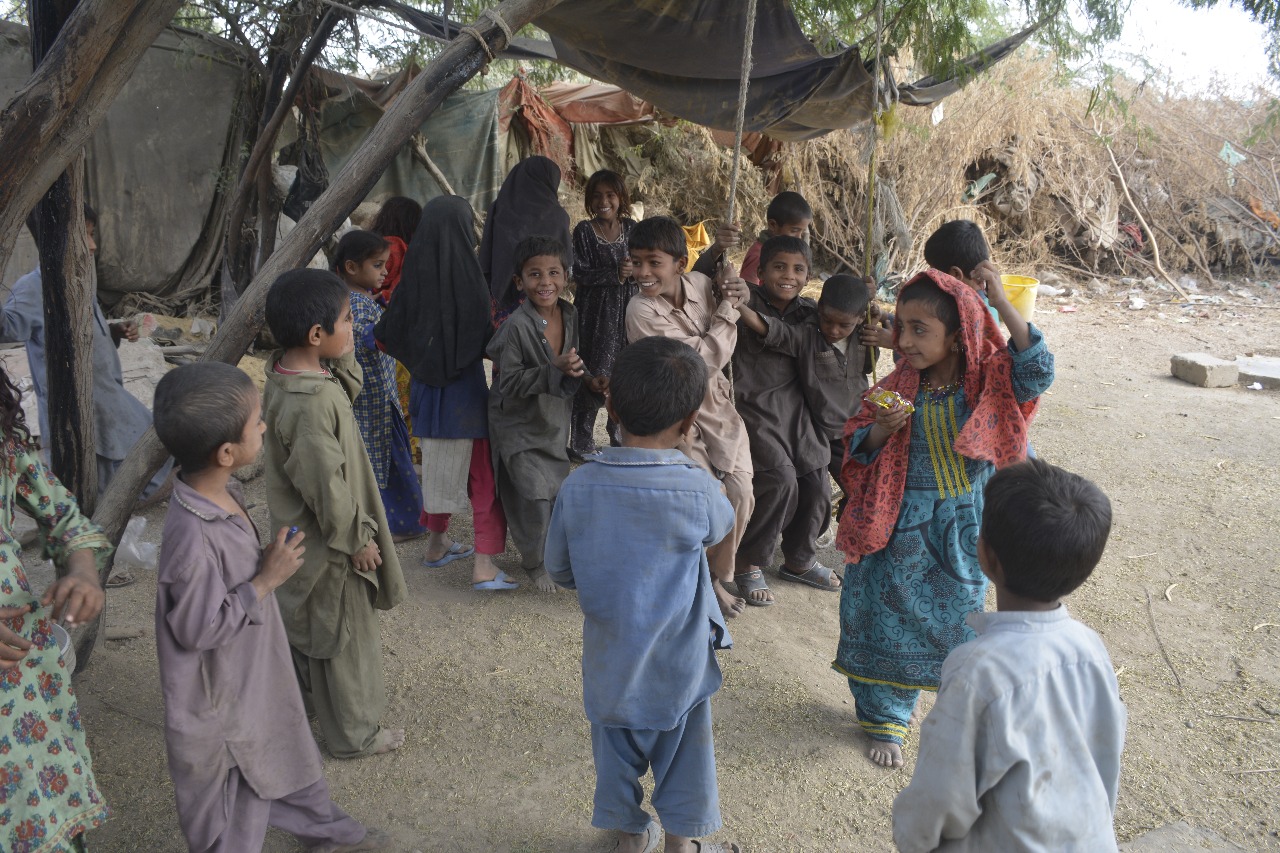
They started living a new life in 2010 in a slum with a hope that one day they would be resettled. However, their hopes waned and they were still waiting for a miracle that might change their life.
“We left the village to find a shelter when another flood victim family sitting on a truck offered us to go with them and thus we reached Karachi. When the truck stopped in city’s outskirts we found ourselves under the open sky. There were hundreds of the families without money and food waiting to get a shelter,” she recalled.
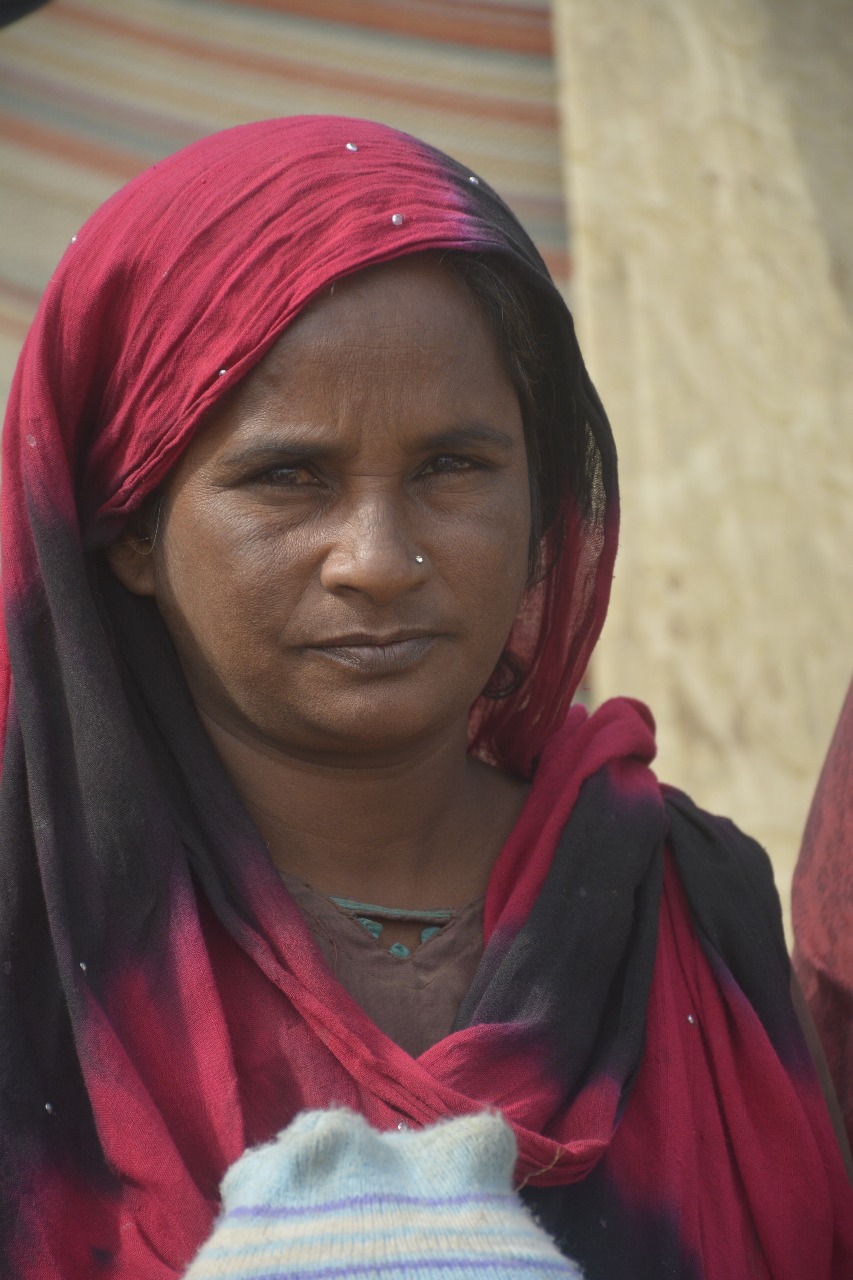
She continued: “Disaster united us and we started building huts along Super Highway and thus the slum, Sindhabad, now comprising more than 1000 families, was built.”
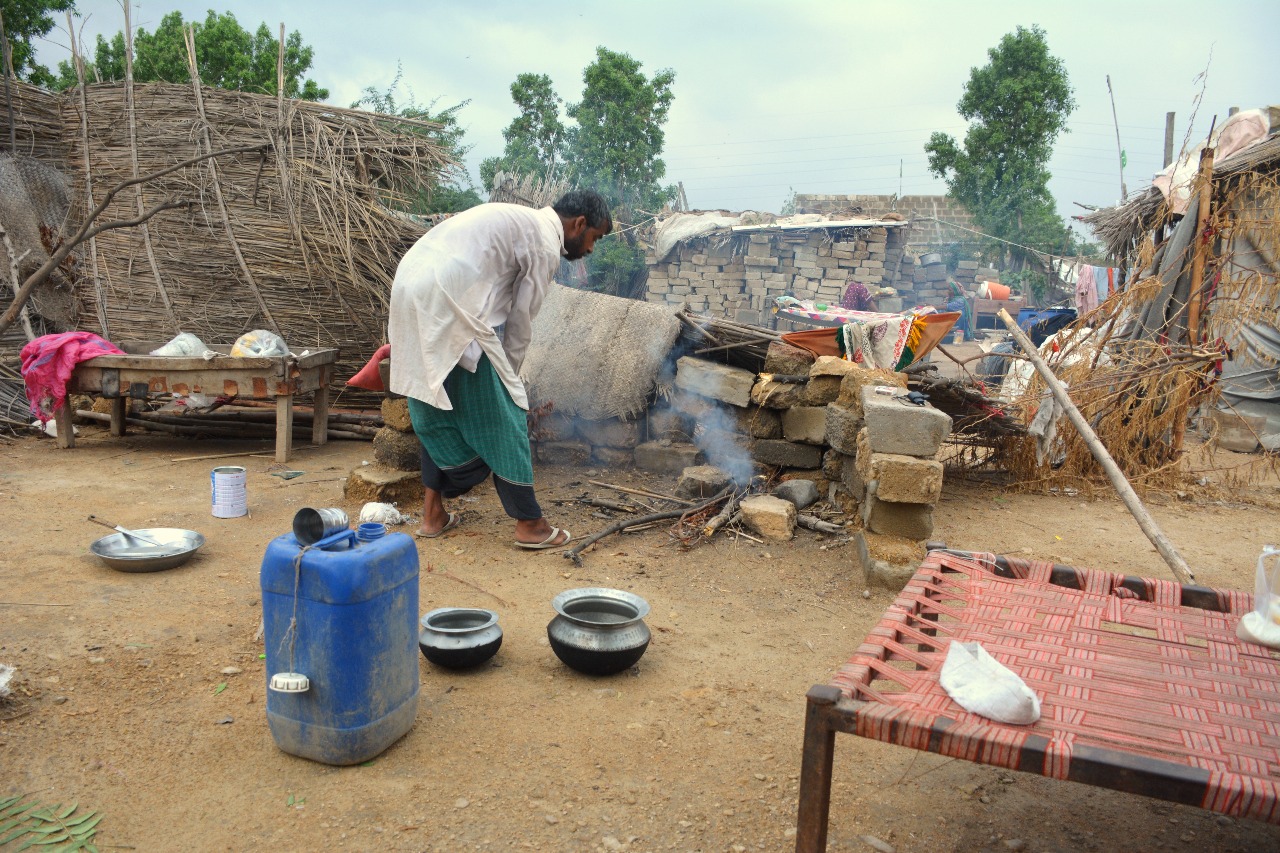
There is no electricity in the slum, as the power company has denied providing them power connections on the pretext that the slum resident will claim the ownership of the land by showing the power bills.
Barefooted children spend time playing in the streets as there is no school in the slum. Previously, a non-governmental organisation (NGO) opened a school but the project bit the dust after some time.
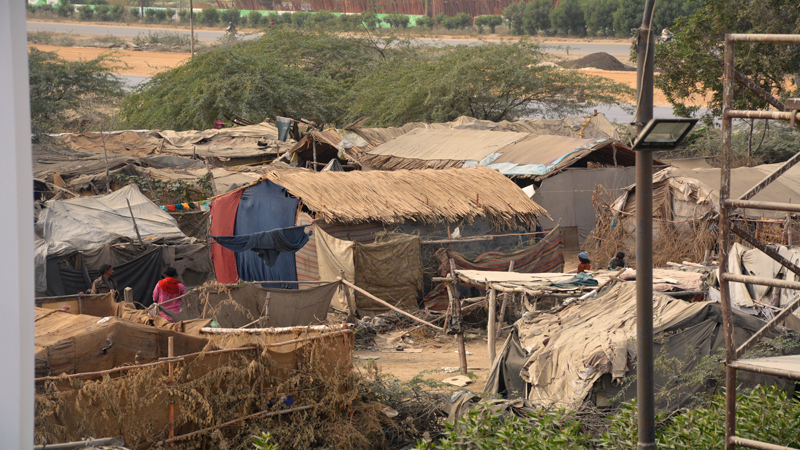
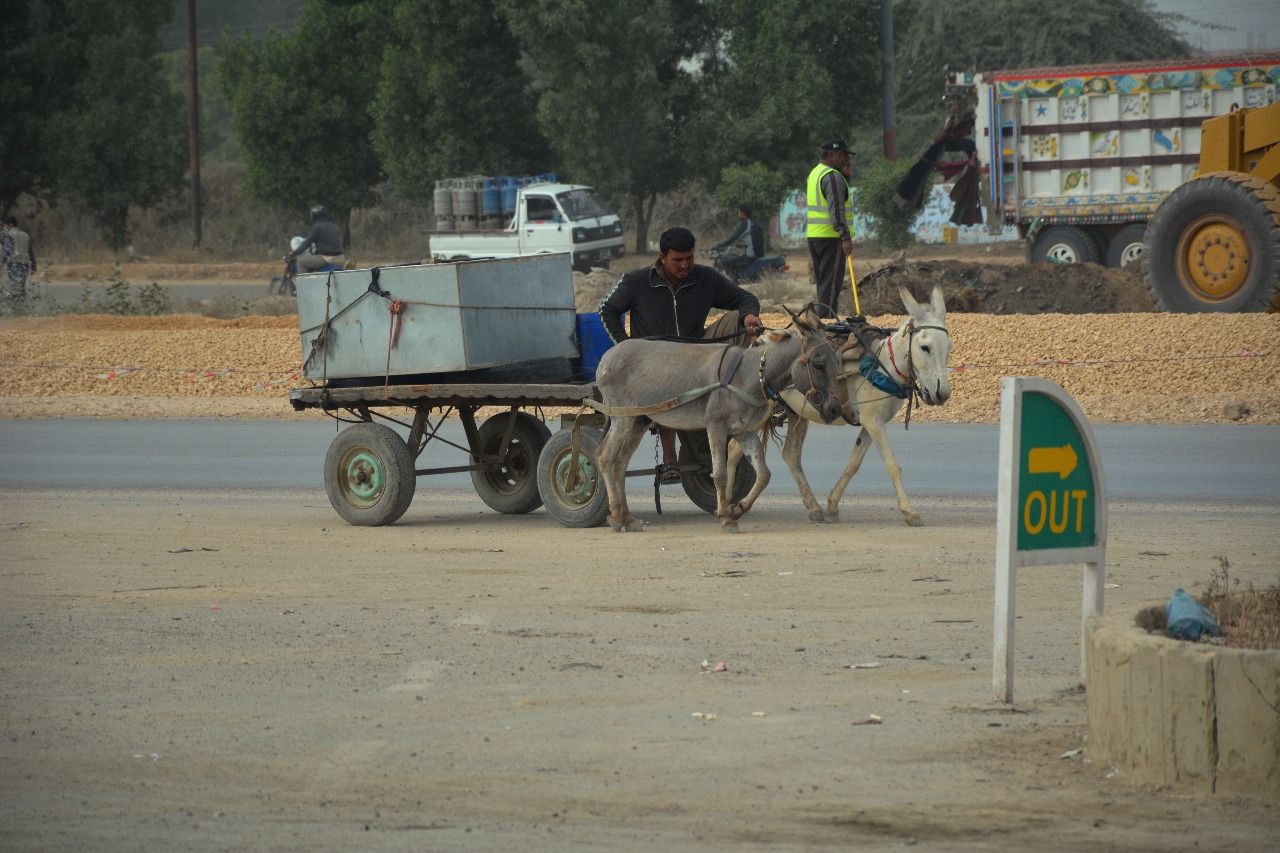
The slum also lacks water connections and women have to walk miles on the country’s busiest road to fetch water. Moreover, there is no hospital or even dispensary near the slum and if someone fall ill, people shift the patient to the Jinnah Postgraduate Medical Centre (JPMC), located at a distance of around 30km. “There is no ambulance and we carry patients into rickshaw or taxi to the hospital,” said Muhammad Sultan, another resident of the slum.”
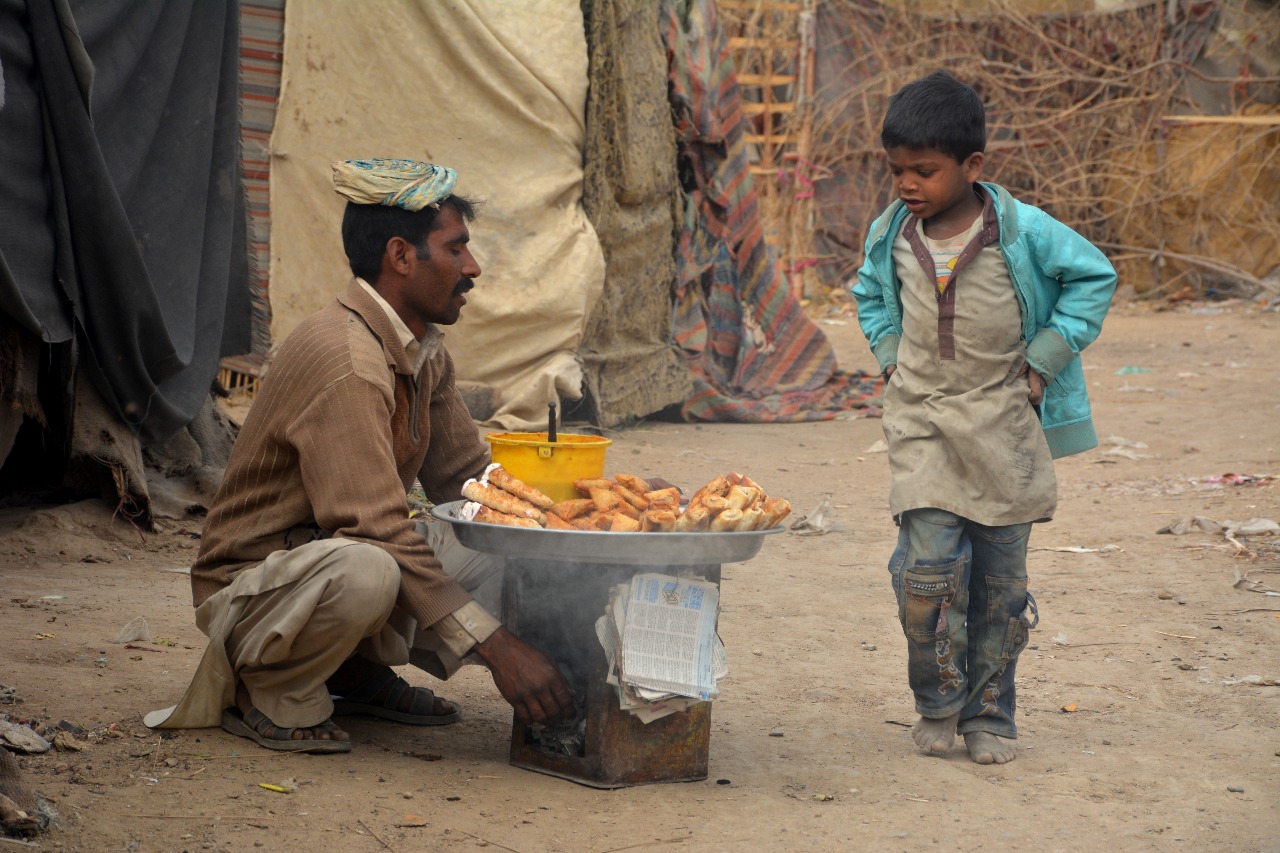
Besides lack of basic facilities, there is no source of livelihood for the residents, as almost all of them are farmers and peasants and don’t have skills to work in a city like Karachi.
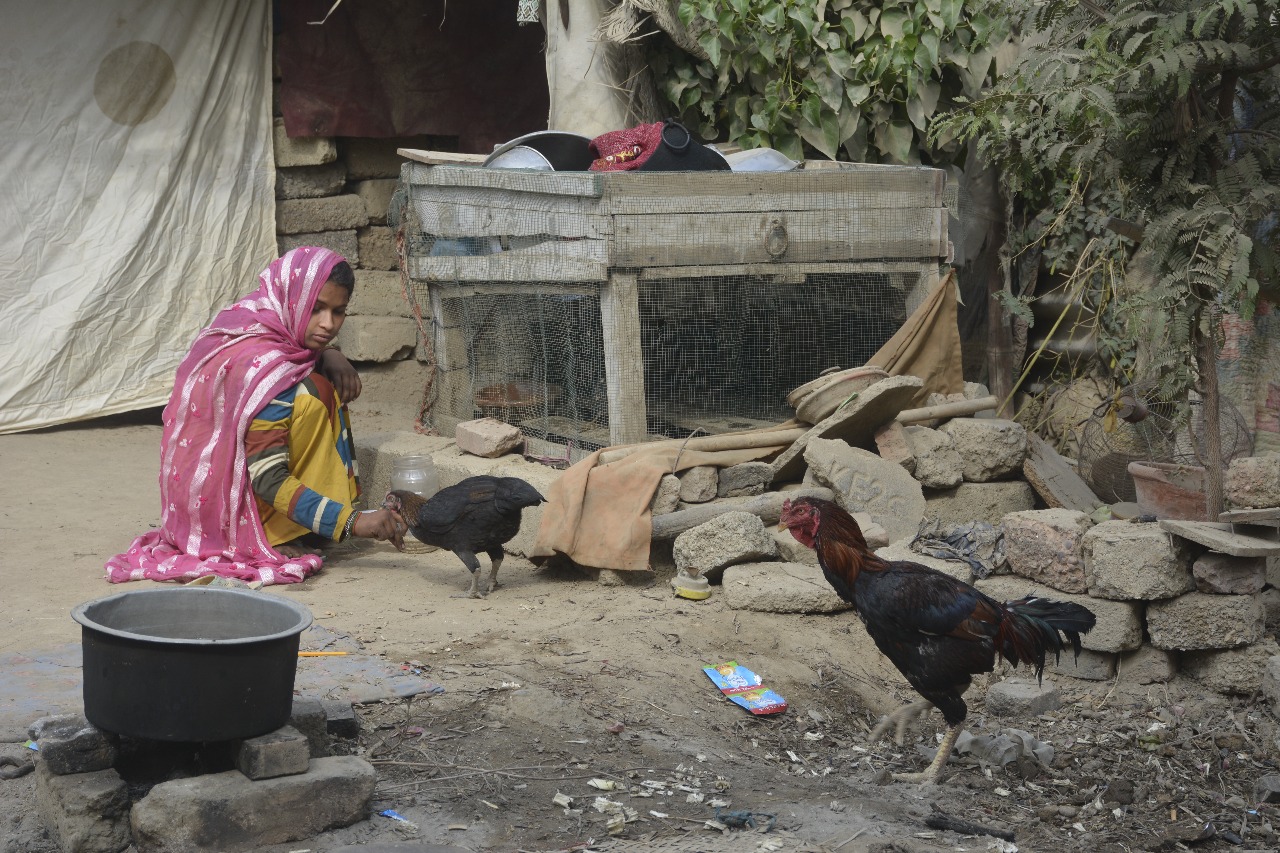
“Few residents have started working as labourers, others are driving rickshaws but most of them are jobless,” said Radha Bai, another resident.
Pakistan is one of the worst victims of climate change and severe drought, floods, shrinking agriculture, desertification and reducing water sources has so far displaced millions of people from their native areas.
A recent World Bank report “Groundswell – Preparing for Internal Climate Migration”, had warned that without urgent global and national climate action, Sub-Saharan Africa, South Asia and Latin America could see more than 140 million people move within their countries’ borders by 2050.
Radha Bai, Amina Khoso and other women have pinned high hopes on PM-in-waiting Imran Khan’s 100-day reform agenda. “We have heard that Imran Khan has vowed to provide 10 million jobs and five million houses and we are sure that his government will consider our colony, as we really deserve it,” said Khoso.
Published in Daily Times, August 6th 2018.