
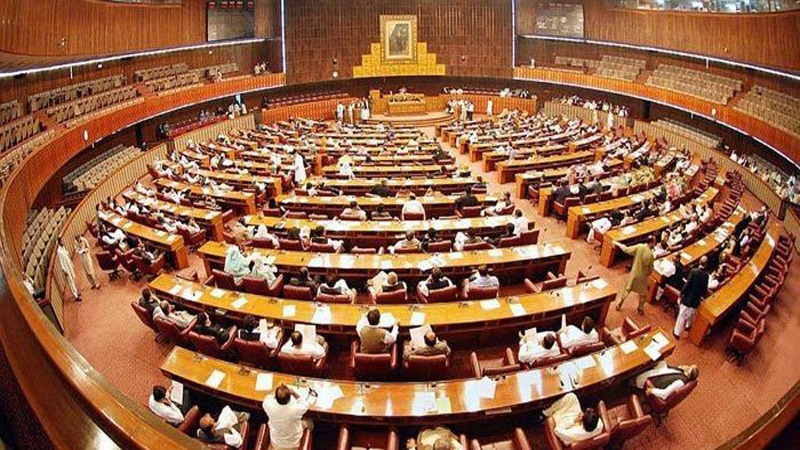
Voters in Balochistan will send 51 representatives to the Provincial and 16 to the National Assembly on July 25.
The election campaign has begun in the restive province, and candidates are making overtures to woo the voters. Traditionally, there have been three distinct vote banks in Balochistan: ethno-nationalist, religious and a third category of voters who side with the so-called electables. Both ethno-nationalist and religious blocs are party-based vote banks. Federal parties like the Pakistan Muslim League-Nawaz, Pakistan Tehrik-e-Insaf and Pakistan Peoples Party do not have any consolidated vote bank in the province, and they rely on electables who join a federal party based on its chances of getting into power in Islamabad.
In elections in the past, the major competition has almost always been between ethno-nationalist forces – both Baloch and Pashtun – and electables. In 2013 elections, the nationalists won 29 seats and electables secured 27. Religious parties managed to win the remaining nine seats. However, in terms of vote shares, electables were much ahead of the nationalists with 48 percent of the votes against the latter’s 32 percent.
The traditional tripartite division of votes is likely to be the case in July 25 election as well. The ethno-nationalist vote bank will be divided amongst Akhtar Mengal’s Balochistan National Party-Mengal (BNP-M); BNP-Awami, Hazara Democratic Party (HDP), National Party (NP), Pukhtunkhwa Milli Awami Party (PkMAP) and Awami National Party (ANP).
The bulk of the religious vote bank will go to the recently revived Mutahida Majlis-e-Amal (MMA), a coalition of five religious political parties led by Jamiat Ulema Islam-Fazl.
The vote bank of electables will end up going to the newly-formed Balochistan Awami Party (BAP). While still in stages of infancy, this king’s party is being dubbed to be the next ruling party of the province.
In the Pashtun belt, the main competition will be between MMA and PkMAP. In other words, election in the Pashtun dominated areas of the province will be a contest over religious and ethno-nationalist votes. Barring a few seats, the region doesn’t have many electables. Hence, BAP isn’t likely to win many seats in the Pashtun belt.
In the Baloch belt, the major fault line is between electables and the Baloch ethno-nationalists. Past elections have proved to be a mixed bag, with voters swaying towards one camp in an election, and moving to the other in the next election. Religious vote bank is not significant in the Baloch belt.
There are a few constituencies in the province where neat divisions among vote banks and parties get convoluted. PB-25 Quetta II is one such seat. Luqman Kakar, an ethnic Pashtun, is contesting elections here on the ticket of Baloch nationalist BNP-Mengal. The PB-25 seat has a Pashtun majority electorate and Kakar believes that he can enhance his share of votes significantly using both ethnic and party ties. “I can get Pashtun votes due to my ethnicity and Baloch votes due to the party [BNP-Mengal] I am representing,” He tells Daily Times. However, Kakar’s candidature can prove to be a double-edged sword for BNP-Mengal if the plan doesn’t come through on the polling day.
Shahzada Zulfiqar, a senior analyst based in Quetta, believes that voting along ethno-nationalist lines will continue in the province. “The share of nationalist votes among parties can fluctuate but this vote bank is solid and it will remain intact,” he says, adding that the loss of votes one nationalist party would be the gain of another.
Regarding religious vote bank, he says it has always existed as a minor bloc in the Baloch belt without ever having played a decisive role. “In the Baloch belt of Balochistan, religious vote bank has always been a balancing factor. Religious voters alone can’t win you any seat in the belt,” he says. Thus, in the Baloch belt, religious parties can win only if they’re in an alliance with nationalist parties, or if nationalist vote bank is divided. Unlike the Pashtun belt, there is no constituency in the Baloch belt which can be considered a stronghold of religious parties.
Zahir Mengal, who teaches Political Science at University of Balochistan, explains that ethno-nationalism has been the primary marker in the political identity formation process in Balochistan. The nationalistic vote bank is a product of that phenomenon. “Ethno-nationalists have discredited themselves whenever they have been in government and that has affected their vote bank,” he says. About the origins of the religious vote bank, he says it is a product of Balochistan’s proximity with Afghanistan and state’s patronage of religious parties. “These voting patterns are not changing significantly anytime soon,” he says.
Political pundits predict a post-election scenario with the traditional pattern of a coalition government of parties representing all three kinds of vote banks. Which one of the three type of parties will lead the alliance will depend on what particular type of vote bank gets capitalised the most on the Election Day. One possibility endorsed by the pundits is for the BAP to lead the coalition with JUI-F and BNP-M as partners.
Published in Daily Times, July 1st 2018.