
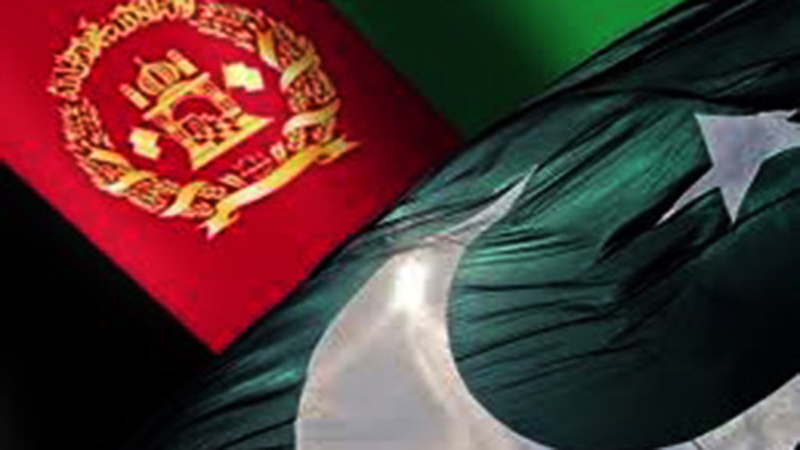
 Pakistan has formally reopened the Ghulam Khan crossing point — a major trade route with its landlocked neighbour, Afghanistan, after nearly four years. Pakistan’s Prime Minister (PM) Shahid Khaqan Abbasi travelled to Waziristan on April 30 for the inauguration ceremony of the newly constructed terminal.
It is one of the eighteen border crossing points between the two countries that connects Pakistan’s North Waziristan tribal region with North-Eastern Khost Province of Afghanistan. It is also the third-largest official crossing point on the nearly 2,600-kilometer, mostly porous frontier between the two countries.
The route serves as the shortest one from Karachi to Kabul, reducing the total distance by more than 400 kilometres, as compared to Torkham.
The re-opening of the Ghulam Khan trade route has been a long-standing demand at Centre for Research and Security Studies’ (CRSS) meetings, where Pak-Afghan delegates have highlighted the issue to concerned authorities on numerous occasions. Mozamil Shinwari, Advisor to Afghan CEO Dr Abdullah Abdullah, and former Deputy Minister for Trade and Commerce also stressed on the need for operationalising the Ghulam Khan point due to its economic viability, while speaking at a Pak-Afghan Youth Dialogue organised by CRSS in Islamabad in September 2017.
Trade will benefit both countries, ensuring regional stability and sustainable peace
With the trade route opened, officials and the business community on both sides have welcomed the resumption of trade through the crossing, hoping the move will ease political tensions and increase bilateral trade.
Afghan and Pakistani traders have long urged their respective governments to delink economics from politics to promote mutual trust. Pakistani Military officials have pronounced that the Waziristan region has been almost completely secured; rehabilitation as well as reconstruction activities are currently under way. Authorities had closed the remote Ghulam Khan border crossing in North Waziristan in 2014, after launching a major army-led counter-militancy offensive in the tribal belt, once condemned as the breeding ground for international terrorism.
While Afghanistan shares a common religion, race, history, ethnicity and geography with Pakistan, bilateral relations have always been strained. These troubled relations have prompted Afghans to look for alternate routes and they have turned their attention to the India-funded Iranian port of Chabahar for transit trade, bypassing Pakistan. Despite this, the Pakistani ports of Karachi and Gwadar are still the most economical routes for Afghan transit trade. This has been confirmed by business leaders in both countries.
Pak-Afghan trade volume, despite having a potential of $5 billion, has fallen from $2.5 billion to $1.4 billion lately. Additionally, recent figures are showing a rise in Afghanistan’s trade with Iran (both transit and bilateral) and a corresponding decline in business with Pakistan, due to disturbing political ties accruing since long.
Nonetheless, the latest engagements between the top leadership of Pakistan and Afghanistan, initiated by Pakistan’s Army Chief General Bajwa have gone beyond just rhetoric to shed light on required actions on areas of mutual concern.
This is the first time such maturity has been observed after a long time. General Bajwa’s move was reciprocated by President Ghani, with an invitation to Pakistan’s PM Abbasi to visit Kabul, which materialised last month and resulted in productive meetings with the Afghan leadership.
Afghanistan and Pakistan need to realize that the geopolitical realities have changed. Trade will benefit both countries, ensuring regional stability and sustainable peace. Both nations need to improve trade facilitation through streamlined payments settlement and improved insurance mechanisms, the use of bonded carriers, trade financing, tax collection, and documentation.
Moreover, people-to-people contact is crucial for sustainable trade relations; therefore the business visa policy needs to be relaxed further. Various options, such as visa-on-arrival, long-term, multiple-entry visas, and investment-friendly visas for businessmen and skilled workers, should be explored and implemented in letter and spirit by both sides.
It is a high time that Pakistan and Afghanistan follow the global shift from geo-politics to geo-economics for a sustainable and progressive common future.
The writer is a Research Fellow at Center for Research and Security Studies, Islamabad, while pursuing his MPhil. in Public Policy from School of Public Policy, Pakistan Institute of Development Economics, Islamabad. He tweets @saddampide
Published in Daily Times, May 9th 2018.