
A nation is said to be lucky if it possesses natural blessings. Pakistan certainly stands at a high position in this regard for it has a diverse climate and natural resources including massive coal reserves, valuable minerals, fertile land at both plain field level and at high altitudes, rivers and an almost 1120 kilometer long coastline.
The Agriculture sector is also a vital component of Pakistan’s economy as it provides the raw materials to downstream industries and helps alleviate poverty. In Pakistan, nearly 70 percent of the masses are engaged in agriculture practices, contributing 19.8 percent to GDP. Agriculture, moreover, remains by far the largest employer absorbing 42.3 percent of the country’s total labour force.
Unfortunately, livestock remains underutilized in the country. For example, Pakistan is endowed with rich fishing potential which is not fully exploited. This may be due to the use of conventional facilities.
Most of the fishing boats in use in Pakistan are made of wood, and are unable to meet the demands of the industry. There is thus a dire need to increase the safety of these boats and to equip them with technologically advanced tools that can be used for deep sea fishing.
In Pakistan, the Water and Power Development Authority (WAPDA) oversees the development of fisheries. It is reported that the production of fish can be increased through stocking of hatchery-raised seeds (rohu, silver carp, grass carp, catla, mrigal carp and common carp). About 23,000 mt of fish, valued at Rs.118 million, are being caught by 5,000 fisher folk for their living, and 13,000 anglers as game fishermen.
The total yield is around 15.5 kg/ha but it is thought that this can be increased to 100 kg/ha. It is also claimed that presently only about 35 percent of the 8.6 million ha of freshwater bodies (rivers, reservoirs, lakes and flood-plains) is being utilized.
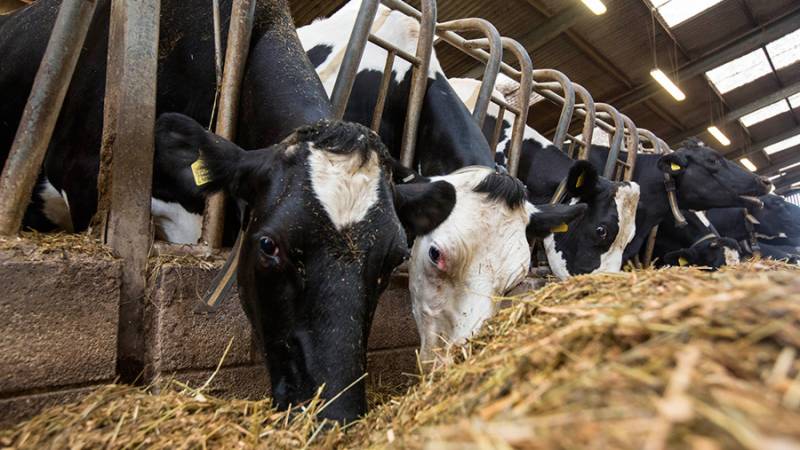
Besides fisheries, cattle also remain underutilized in Pakistan. The current population of farm animals in Pakistan consist of 23.34 million buffaloes, 22.42 million cattle, 24.24 million sheep, 49.14 million goats and 0.77 million camels. Pakistani buffaloes are riverine type and belong to two breeds i.e. Nili-Ravi and Kundi. Nili-Ravi is the best dairy buffalo breed of the world.
Most of these animals are reared by rural masses who lack the advanced knowledge of animal husbandry and do not possess the required capital to invest in prevention, treatment and control of animal ailments.
Moreover, the livestock sector is plagued by many substantial issues. Livestock health is a limiting factor in increasing productivity. Either there is lack of knowledge or the sector is plagued by a paucity of capital to purchase treatment stuff. The people also pay little attention to breeding practices. Mostly bulls with low genetic potential are used which restricts improvements in production.
It is high time we compare products from local breeds with the rest of the world.
In Pakistan, Sahiwal is ranked as the best milking cattle breed, which yields about 8-10kgs per day, with a fat content of 4.5 %, and an average lactation period of 10 months. Comparatively this is very low milk yield and can be increased by adapting certain measures such as adequate nutrition and worm control through regular drenching etc.
Adequate nutrition is another major challenge in livestock production. Without providing the essential nourishment to animals, we cannot increase hereditary potential. We need to develop a national policy that stipulates decide how much nutrients animals need to utilize their maximum genetic potential.
Another hindrance the livestock sector faces is the lack of technologically well-equipped laboratories for accurate diseases diagnosis. Moreover, limited facilities do not reach farming communities in remote areas.
Pakistan’s population is increasing at an alarming rate while the livestock population is not keeping up. Demand for milk and meat is projected to grow by at least 5.0 % and 6.5 % respectively in the coming years. This can result in a tremendous gap in supply and demand that can only effectively be addressed through a concerted public-private effort.
It is must be said, however, that Pakistan’s poultry sector is doing very well. The poultry sector is an important and vibrant segment of agriculture in Pakistan with a significant contribution to national GDP (1.3%). Commercial poultry production in Pakistan started in the 1960’s and has been providing a significant portion of daily proteins to the Pakistani population ever since. During its evolution, the industry enjoyed promotional policies of the Government, but has also faced several challenges such as disease outbreaks and retail price fluctuations.
Despite the poultry sector’s important role in the country’s economy, not a single scientific study is available on its evolutionary history. The data available in this regard is scattered and lacks reliability.
Keeping in view the increasing demand for animal products, there is a dire need to develop workable plans. For that purpose, attention must be focused on (a) conservation of pure germplasm by establishment of resource centers throughout the country (b) grass root level counseling and awareness programs for farming community aimed at proper nutritional plants for milk and meat breed to achieve maximum output (c) nation-wise surveillance of infectious and non-infectious diseases aimed at prophylactic approach for health animals (d) starting programs aimed at improvement of genetic potential by selective breeding between potential poor and potential rich animals and (e) creation of transgenic animals for better productive output.
The author is Chairperson, Department of Parasitology at Sindh Agriculture University