 Pakistani film industry has been blessed with a powerful sister duo. Mala, or Nasim Nazli was the famous playback singer and Shamim Nazli was the only female music composer in Pakistani film Industry. Both hailed from Faisalabad and were nicknamed as Shammo and Kalo because of their respective fair and dark complexions. Shamim Nazli was the niece of Mirza Sultan Beg, alias Nizam Din, who was born in village Modde, District Jallundher (now in Indian Punjab). Nizam Din worked with Noor Din for many years in their evening programme ‘Jamhoor Di Awaz’ (voice of democracy) at Radio Pakistan, Lahore. Thus, Shamim and Nasim inherited the culture of broadcasting from their uncle.
According to Wikipedia, Mala was interested in singing from a very young age. Fortunately, her elder sister happened to be her first music teacher. On Shamim Nazli’s request, music composer, Baba Ghulam Ahmed Chishti recorded two songs in Nasim’s voice for 2the Punjabi film ‘Aabroo’ (1961). However, the film flopped. Despite the fact that her elder sister got her a break in films, it was Anwar Kamal Pasha who persuaded Nasim to try her luck by singing for Pakistani films. Her first major break in films came in 1962 when she changed her name to Mala and sang a simple Urdu composition, ‘Aaya Re Daikho’ for the film ‘Sooraj Mukhi’ (1962). The music was composed by Master Abdullah and the film became a memorable hit. In 1963, Mala rendered her voice to a heart-rending Urdu composition, ‘Dil Daita Hai Ro Ro Duhai, Kisi Sei Koi Pyaar Na Karey’ for the film ‘Ishq Par Zor Nahin’ (1963). The music was composed by Master Inayat Hussain and the song was picturised on Yasmin. This song is even popular today after it had become a mega hit at the time of its creation in 1963. Lyricist was none else than Qateel Shifai.
Despite her competence, Shamim Nazli was not encouraged and was not given more assignments to prove her credentials. She believed in creating her own original music and did not accept the cheap demands of certain producers that approached her
Shamim Nazli’s films
Shamim Nazli composed the music of two Urdu films ‘Baharen Phir Bhi Aaein Gi’ (1969) directed by S Suleman and Masroor Anwarand ‘Bin Badal Barsaat’ (1975). From the songs I heard, I found the tracks original, tuneful having rich instrumental support and treatment. Unfortunately, Shamim was born in the male dominated musicians’ society of Lollywood with big music composers working twenty four hours a day. Despite her competence, Shamim Nazli was not encouraged and not given more assignments to prove her credentials. She believed in creating her own original music and did not accept the cheap demands of certain producers that approached her. It is rumoured that Tafo brothers that dominated the instrumental scene of Lollywood would refuse to cooperate if they found any music composer threatening their dominance.
The story of Pakistan’s women directors and producers is one that needs to be further explored and told. One notices that many female producers and directors appeared in the Sub-continent’s film industries like Nurjehen, Shamim Ara, Zeenat and Sangeeta but somehow there have been no noticeable music composers. Another such neglected music composer is Ishrat Sultana aka Bibbo (first female film composer of the sub-continent). She composed the music of ‘Adal-e-Jahangir’ in 1934. Jaddan Bai (Nargis’ mother), Saraswati Devi and Usha Khanna were few female composers in Bollywood. Among these, only Usha Khanna could be considered commercially successful to certain extent. Usha Khanna was a very talented music composer. I remember she aided Muhammad Rafi’s comeback in Bollywood playback scene by composing poet Nida Fazli’s song ‘Tu Iss Tarha Sei Meri Zindigi Main Shaamil Hei’. It was a mega hit song.
Shamim Nazli’s film ‘Bin Badal Barsaat’
This movie was a successful venture starring Mohammad Ali, Zeba, Shahid and Sangeeta. The film released in March 1975. It ran for 54 weeks in Karachi and attained the sought-after Golden Jubilee status. Much credit went to its outstanding music composed by Shamim Nazli.
Pakistani film with the same title is based on a couple Zarina (Zeba) and Judge The critics observe that though this film was a big hit, the only redeeming factor is its music by Shamim Nazli and good acting by Sangeeta.
The most versatile element of this film is the use of qawwali by Shamim Nazli. In a critical scene near the film’s climax, Nazli inserts one of the Sabri Brothers’ most popular qawwali ‘Bhar Do Jholi Meri Ya Muhammad’ in the backdrop of Zeba and Muhammad Ali’s emotional prayers on a shrine. ‘Bin Badal Barsaat’ may not be top quality cinema but as a study of the role of women in Lollywood, both on and off the screen, it is a film worth viewing.
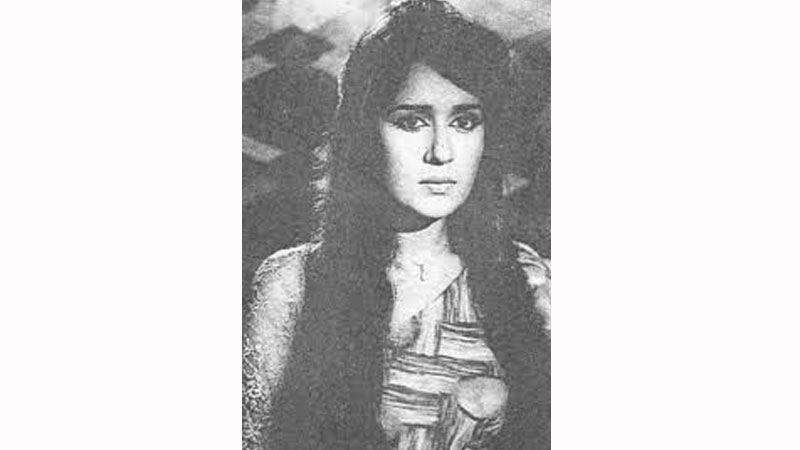 Home Production — ‘Baharain Phir Bhi Aaein Gi’
This movie was produced by Mala. Here I must mention Mala’s song ‘Ghairon Sei Pyar Kiya’ filmed on Zeba that created the feelings of empathy through the use of Shehnai. The odd note on the word ‘Zalima’ adds fuel to the fire. A sad but lilting melody ‘Mere Liye Jahan Main’ by Mehdi Hassan creates a melancholic impact. The best melody of this film is ‘Tere Baghair Zindigi’ by Mehdi Hassan — melodious in all ways. There was a deviation as far as choice of singer is concerned. Shamim picked Runa Laila for a song ‘Zundigi Kitni Haseen Hai, Haath Mera Tum Pakar Lo, Maut Ka Bhi Ghum Nahi Hei’ — a number not much of my liking due the crooner’s shrieks.
Contributions at PTV and Radio Pakistan
Shamim Nazli was selected by music producer Rafiq Ahmad Warraich for his series ‘Bazm-e-Nagh’. Shamim Nazli also composed songs for Central Production Unit, Radio Pakistan, Lahore.
Unfortunately, exact date of Shamim’s demise is not known but she died recently, two or three years ago.
Published in Daily Times, April 18th 2018.