
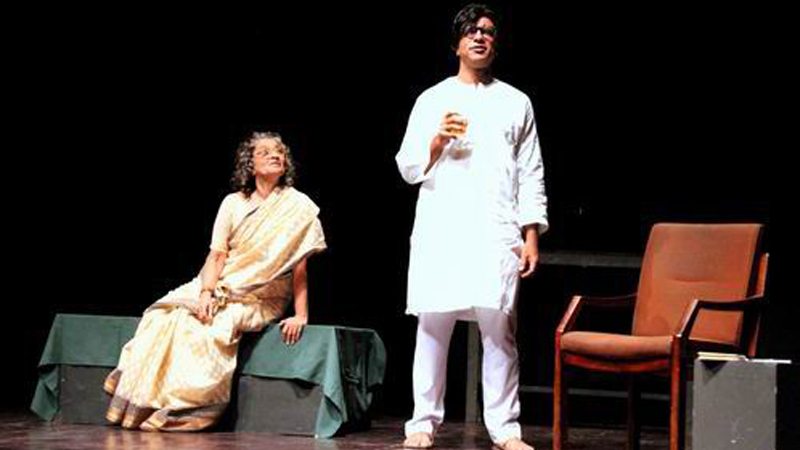
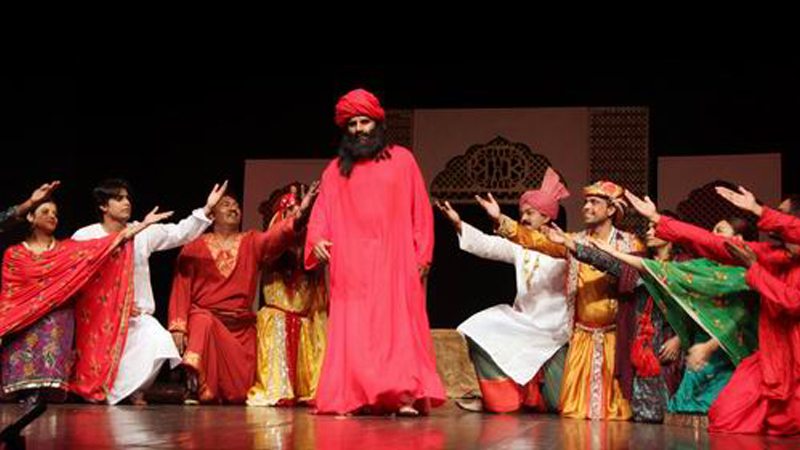
 Islamabad: Pakistan’s largest National Theatre Festival concluded on November 30th with the staging of its 53rd play ‘Manto Mera Dost’, a production by well-known artiste and activist Sheema Kirmani from Karachi, at the Pakistan National Council of the Arts (PNCA). The 12th National Theatre Festival was organised to mark the 70th anniversary of the Pakistan’s Independence and 45th anniversary of the PNCA.
The largest ever theatre festival in the 70-year history of Pakistan continued for 31 days despite the notorious sit-in for 28 days that had blocked the main entry points to the capital city. While routine life was stuck up, the capital city rolled on with the only cultural activity at the Pakistan National Council of the Arts (PNCA).
Theatre groups emerged from every nook and corner of the country to Islamabad, where a very efficient PNCA team under the supervision of the Director General took care of their safety and smooth performance.
The 12th National Theatre Festival has been a big feather in the PNCA crown that started on October 30th with the play Dekh Tamasha, a short story adaptation of one of the classic Urdu fiction writers Krishan Chandar, directed by A.D. Baloch from Quetta.
The staging of the last play of the festival was followed by a closing ceremony. Speaking on the occasion, PNCA Director General Syed Jamal Shah said, “Theatre is a very strong medium and has played a vital role in social change. The history of theatre is as old as human life. The short comings and dark side of societies have always been reflected through theatre. Theatre has always been a source of social change and the writers, directors and actors have used this medium for the betterment and uplift of the society.”
“PNCA is striving hard for the promotion of art and is providing opportunities to artists of different genres to showcase their talent on a national platform. The theatre festival is part of these cherished goals, and theatre groups from all over Pakistan were invited to present their plays. Participation in the festival is encouraging, as groups from far-flung and backward areas took part in the festival and presented their plays,” he added.
About fifty plays played their part and the drama lovers experienced a variety of themes and topics during this period. The aim of the festival was to promote serious theatre and help artists in the field nourish their talent and get the encouragement they deserved for their future endeavours.
The National Theatre Festival shined with every colour and theme that our society has experienced over the years or is likely to experience. Here are the briefs of some of the plays:
Dekh Tamasha
The 12th National Theatre Festival kicked off with the staging of ‘Dekh Tamasha’, a play adopted by A.D. Baloch from a short story by renowned fiction writer Krishan Chandar. The play was performed by the drama artistes of the Sangat Theatre Group from Quetta.
The play revolves around the misery of a person stuck beneath a tree-log when a tree falls down on him during a rainstorm. Every department shifts the responsibility of cutting the tree and rescuing the victim on the other department. Finally, a drug addict helps the victim escape his fate. The play well depicted the declining human values and insensitivity in society towards helping others while they are in an untoward situation.
The cast of the play included Sadaqaut Baloch, Aurangzeb Zebi, Maqsood Qureshi, Manzoor Sabir, Asif Sahar, Ibrahim Raaz, Zulfiqar Chaudhary, Savera Shahzadi and Samreen Rana. They performed different characters in the play with just the right amount of expressions.
The NAPA plays
The National Theatre Festival pulled a large audience, as the students of the Karachi-based National Academy of Performing Arts (NAPA) staged two plays, ‘Guriya Ghar’ and ‘Yahudi Ki Larki.’ Both plays rightfully entertained the audience with a classical flair of theatrical performances. ‘Guriya Ghar’ is an adaptation of the classical play ‘A Doll’s House’ written by Henrik Ibsen in 1879 in Danish language. The actual characters included Nora, Torvald Helmer, Krogstad, Mrs. Linde, Dr. Rank and two children Anne-Marie and Helene. The play premiered on 21st December 1879 at the Royal Theatre in Copenhagen, Denmark.
The thematic play revolves around the awakening of a middle-class wife and mother about their roles in the socio-cultural context. Through different untoward situations in the play, the female characters contest in favour of women to give them voice in the general essence of their struggle that will lead to their positive role in societal development.
‘Yahudi Ki Larki’ on the other hand, is an Urdu classical play written by Agha Hashar, belonging to the Parsi tradition of theatre. Parsi theatre is a generic term for an influential theatre tradition, staged by Parsis and theatre companies largely owned by the Parsi business community which flourished between 1850 and the 1930s.
‘Yahudi Ki Larki’, directed by Khalid Ahmed, is a symbolic play that reflects the diverse connotations of oppression and aggression in society. The play suggests that actualities could differ from what we may usually presume about people based on conventional notions about them. Some Jews could be better human beings than Romans and justice values could be different for people living in different tiers of society. The play also reflects the undue influence of religion on the justice system.
The cast of the play included Kashif Hussain, Kulsoom Aftab Ahmed khan, Maria Sa’ad faridi, Samhan Ghazi, Harris Khan, Akbar Islam, Nazar ul Hassan, Mahjabeen Rehman, Aamir Naqvi, Farhan Alam, Zarqa Naz, Muhammad Farazchotani, Usman Mazhar, Hammad Khan and Aisha Hassan.
The play was enriched by classical music played by a group of students including Mahjabeen Rehman, Hammad Khan, Asia Alam, Raheel Ahmed and Zarqa Naz. The tabla and harmonium were played by Saagar and Julian Qaiser respectively. Jamil Afridi designed the sets while dances were choreographed by Mohsin Babar with the costumes designed and prepared by Maha Ali and Pervaiz Iqbal.
Kaun Hae Ye Gustakh
The lifelong struggle of the great Urdu fiction writer Manto was staged with the play ‘Kaun Hae Ye Gustakh’, written by Shahid Mahmood Nadeem and directed by Madiha Gohar. The play was presented by the very well-known Lahore based Ajoka Theatre. The cast included Usman Raj, Kamran Mujahid, Nayab Faiz, Anam Zaheer, Suhail Tariq, Muhammad Qasim Khan, Muzammil Shabbir, Ali Haider, Frhad Hashmi, Kamran Khokhar, Usman Chaudhary and Usman Zia.
The play turned to be a source of great joy and inspiration for the audience as all performers did justice to their characters skilfully knitted in the script. The play deals with Manto’s struggle with his detractors and an increasingly conservative and intolerant Pakistan which he foresees in his writing and amazing prescience. Manto had migrated because of family pressures (his wife and her relatives had already gone to Pakistan) and his disillusionment at the Hindu Muslim tensions in Bombay which had adversely affected the atmosphere of the Bombay film industry. What Pakistan has become today was well predicted by Manto with great vision in his short-stories.
The play included enacted extracts from Manto’s short stories, essays and court cases on charges of pornography. The enactment of scenes from these writings is followed by the hostile reception Manto got from both the rigid Left and the intolerant Right as well as a conservative establishment. Manto was denounced by the leftists as a reactionary enemy of the people while the rightists accused him of being a pornographer and a Communist lackey. Manto was a mild-mannered person, but he was an impudent gustakh writer indeed. He never minced words when it came to calling a spade a spade. At a time when eminent writers were hiding behind ideologies or use of flowery language, Manto broke the taboos, tore through barriers and exposed them.
Likhay Jo Khat Tujhay
Sania Saeed went on to the dramatic reading of letters written by legendary writers Faiz Ahmed Faiz, Josh Malihabadi, Col Muhammad Khan, Amrita Pretam, Majeed Amjad, Fikr Taunsvi, Safia Jan Nisar and Shafiq ur Rehman. The performance attracted a huge crowd at a time when the security situation caused by the Islamabad sit-in had the roads blocked.
Co-starring with Tajdar Zaidi, Sania Saeed turned to be the centre of attraction and admiration for the right amount of emotional flow. The specially designed lights on stage created a mysterious and mystic environment for the performers who went all out to take advantage of it. The versatility of rendering expressions is Sania Saeed’s core potential and it was at high node. The spellbound audience applauded every other moment to appreciate their favourite artiste who had especially flown from Karachi to take part in the festival.
La’hu aur Qaleen
A classic short story by Meerza Adeeb entitled ‘La’hu aur Qaleen’ was staged by the Batin Farooqi Production House. Directed by Batin Farooqi, the cast of the play included Farooqi himself and Sabir khan in the main roles. The supporting artists included Nasir Walliam, Imtaiz Ali Kashif, Mishal, Sobia, Imran Rushdi, Shahzad Pappu, Mona, Javed Chaudhary, Karim Khan, and Seema Jatt.
The play is a story of a marginalised painter Akhtar who cannot make any paintings when he is adopted by a rich person, Tajammal. Another poor artist, Niazi, helps Akhtar by making art on his behalf that earns them sufficient money for two. At the drop scene, Akhtar tells the rich man that all the paintings were made by Niazi who has now committed suicide after hearing news that Akhar won the prestigious award on his artwork.
 Kafan
Kafan
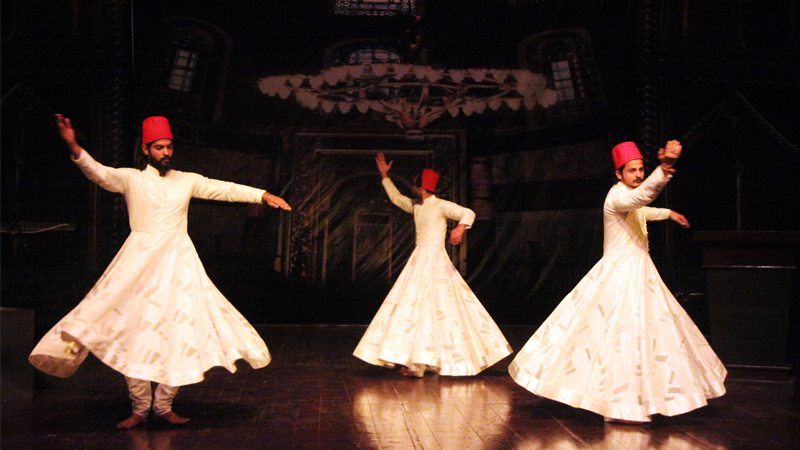
Another marvellous play was ‘Kafan’, staged by the Lahore-based Mass Foundation. The play was an adaptation from the classic short story by renowned Urdu fiction writer Munshi Premchand. The play was directed by Aamir Nawaz, while the cast included Dr Zoya Qazi, Safina Malik, Muhammad Zaheer Taj, Afzaal Nabi, Aamir Ali, Tanvir Khalid, Ahmed Ali and Mujtaba Sheikh.
‘Theatre is a very strong medium and has played a vital role in social change. The history of theatre is as old as human life. The short comings and dark side of societies have always been reflected through theatre’
Shah Hussain – The Weaver
The devoted artistes of Lahore based Azad Theatre Group left the audience spellbound with their performance on the poetry of Shah Hussain that reflected social insensitivities. The play ‘Hussain – The Weaver’ reflected the ironic social and religious differences based on discriminatory practices by the influential.
Written by Shabir Ji and directed by Malik Aslam, the play was a production of all the right ingredients of a perfect theatre performance. Sufi singer and actor Sarfaraz Ansari played the role of Shah Hussain in a very realistic manner shedding light on the great message of social harmony and peace. He also composed the music of the play that turned to be the backbone of the story. Folk singer Faiz Ali Chishti mesmerised the audience with his singing potential. The rest of the cast included Zohaib Haider (Dullah Bhatti), Naina Baloch (Ladhi), Waseem Ali (Akbar Badshah), Nadeem Abbas (Bahlool Dayai) and Aliya Abbasi as Raavi ,the narrator of the story. The versatile Nadeem Abbas designed the costumes, choreographed the dances and also performed a dance number as well.
 Akhiyan Waleo
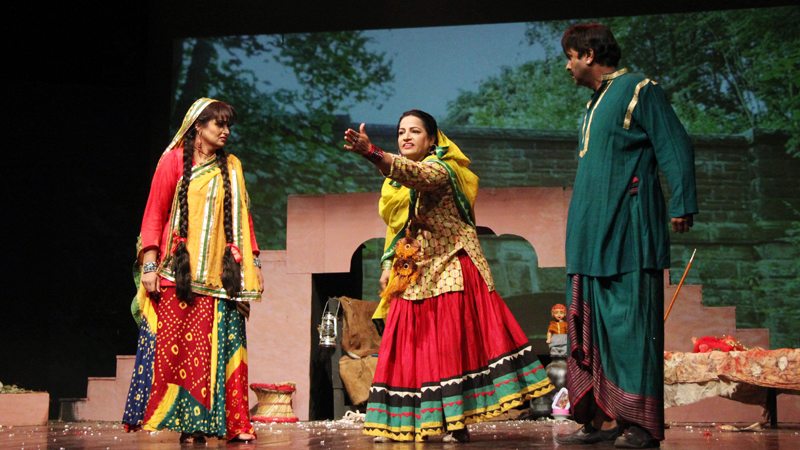
Social insensitivities were also highlighted in the play ‘Akhiyan Waleo’. Written and directed by Walliam Pervaiz, ‘Akhiyan Waleo’ reflected the miseries of the general public caused by the insensitivity of the so-called political and religious leadership towards solving common and pity problems.
Enriched with the guiding philosophical poetry of great Sufi Bulleh Shah, the play showed the other side of societal behaviour – pretending to be good while there’s always some vested interest that’s running their good deeds. Moving a stone from the centre of a road turned out to be a key conflict among the social and religious leaders. Everyone wanted to be given credit for removing the stone in order to receive political mileage and not actually benefit the people. Finally, the stone was removed by three blind people.
The play also highlighted the marginalised role of women in domestic and social affairs. It suggested that while women are equal partners in life it was a shame that they could not be part of the decision making at home and at community level.
The cast included Batin Farooqi, Faqeer Hussain, Zabir sarhadi, Javed Ali Sajid, Shahzad Mughal, Ali Shan, Waqar Wikki, Shahzad Pappu, Rizwana Khan, Reeha Yousaf and Sajid Sajju Baba.
The jam-packed house every weekend reflected the increasing interest of common people in traditional theatre in a city where quality cultural events are not a frequent deal
Mein, Tum aur Hum
Written and directed by Yaar Muhammad, ‘Mein, Tum aur Hum’ was another routine play based on the theme of terrorism, it reflected how the lives of people get disturbed when they lose their dear ones. Starring in the play were Masood Khawaja, Jhalak Ali, Sapna Shah, Hameed Babar, Shagufta Qureshi, Anjum Abbasi, Ali Zeb, Saeed Anwar and Dildar Khan.
Ghar To Aakhir Apna Hae
‘Ghar To Aakhir Apna Hae’ (at least the home is ours), written by Nisar Razmi and directed by Tahir Siddiqi was staged on a Thursday evening. Starring in the play were Afzaal Latifi, Batin Farooqi, Arshad Minhas, Saeed Anwar, Faqeer Hussain, Lubna Shahzadi, Zeenat Abbasi, Rana Kashif, Nasir Walliam and Tahir Siddiqi. The play was presented by The Islamabad Art Production.
The story of the play was about the sensitivities of social ailments that prevail in our society that the people usually don’t care about. Different sequences of events knitted in a story made the audience realise that we need to check our social behaviours, not only to improve our own civilised role in the grooming of our society but also show ourselves as a role model for others.
Mian Ji (Batin Farooqi), comedian Nasir Walliam and the charming young lady Lubna Shahzadi were able to attract the audience in the formula stage play with an exaggerated tone of their characters. The old film music played in the backdrop of a few moving scenes added the extra flair too.
Aik Boon Zindgi
‘Aik Boon Zindgi’ (one drop life), written by Arshad Chehaal and directed by Sabir Khan, was staged by Super Vision Production. The cast included Mahboob Ilyas, Zeshan Khan, Lubna Shahzadi, Shagufta Khan, Mushatq Nadeem, Areeba Khan and Saleem Shah. Naeem Tota, who enacted a servant’s role in the play, remained an attraction for his overplayed comedy and timely reactions in different situations. Areeba also inspired the audience by playing the moving role of a sister at the scene of her brother’s dead body. Lubna Shahzadi as a larking girl also registered herself quite well in an overdone play comprising ordinary Punjabi film music.
Umar Maarui
Bhittai Art Council Hyderabad presented on a Sunday evening a popular Sindhi folk tale in the Sindhi language play ‘Umar Maarui’, highlighting women’s struggle in the contemporary context. It was a rare opportunity of sight for a large number of Sindhi speaking audience living in the twin cities of Rawalpindi and Islamabad.
The jam-packed house every weekend reflected the increasing interest of common people in traditional theatre in a city where quality cultural events are not a frequent deal. The live depiction of one of the most famous folk stories of Sindh was written by Shahnawaz Bhatti and directed by Rafique Essani. The play is about a woman’s fight for her self-respect and honour and how she deals with everything she faces with courage and valour.
The cast of the play included Israr Leghari, Murk Shah, Ghazala Ali, Sidra Sheikh, Ayesha Mehak, Parri Mughal, Noor Memon, Akaash Ansari, Mushtaq Chandio, Firdous, Aashiq Hussain and Allah Bukhsh Otho.
Sheh Mureed
The Quetta-based and highly motivated theatre enthusiasts of the Al-Faiz Theatre Group presented the great love tale from Balochistan, Hani Shah Mureed. Directed by Ghafoor Shaheen and Riaz Ahmed Saghir, the play was well performed by the young cast from Quetta.
A beloved epic ballad of Balochi folklore has the same importance for Balochistan as Romeo and Juliet has for English-speaking lands. The story mirrors the life of Baloch heroes, their emotions and philosophical ideas (God, Evil, and Predestination). The hero of the story Sheh Mureed (or Shaih Moreed) and the heroine, Hani, are symbols of pure and tragic love. The story dates back to the 15th century which is considered to be the heroic age of Balochistan and the classical period of Balochi literature.
Shama Aur Parwana
‘Shama Aur Parwana’, written and directed by Ishtiaq Ahmed Atish, presented the youthful and soft emotions and feelings in the backdrop of struggle for freedom. The story of the play also has the reflection a folk tale from Kashmir, but feelings of the young woman in the play are more conditional for her lover as she will only continue with him if he joins the army in the struggle for the freedom of Indian occupied Kashmir.
The performers included MD Lone, Altaf Nadeem, Akhlaq Bokhari, Waqas Awan, Naila Shahzaman, Invesha Raja, Shabana Shahzaman, Komal Raja and four young men from the army.
 Plays on women exploitation
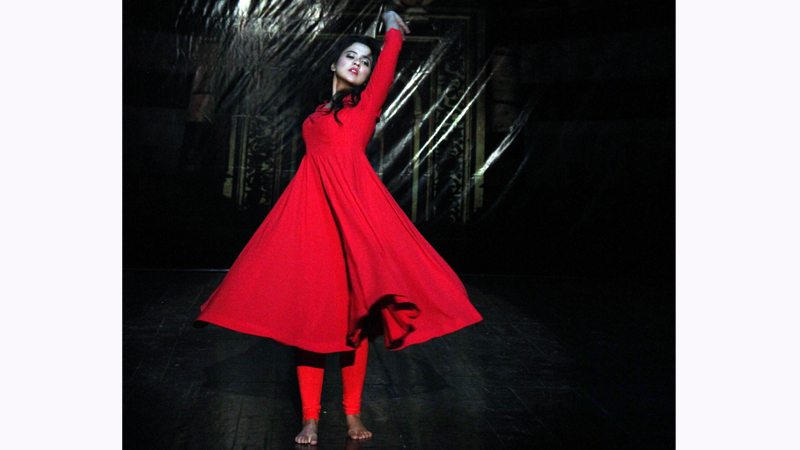
The marginalisation and exploitation of women in our society was the main theme of the two plays, ‘Har Gharri Mera Imtehan Liya’ and ‘Raees Khana’.
Written by Z.A. Zulfi and directed by Asma Butt, the play ‘Har Gharri Mera Imtehan Liya’ was a realistic depiction of the apathy of a woman having no male support and shelter after her divorce. Played by an experienced local artiste Shagufta Khan, the divorcee goes through a series of rape incidents, first at the ad agency when she goes for an employment opportunity, then at the police station when she wants to have an FIR registered of the incident. She is also raped by the newspaper owner who is to support her in her voice for justice. Finally, she kills the rapist and herself and seeks justice from God after she reaches her final destination.
Undoubtedly, Shagufta Khan plays her character very well with the right amount of expressions, postures and dialogue delivery. Meanwhile, Asma Butt described her play as a reflection of society’s inappropriate behaviours. She said that the play was more relevant today than it was when it was written some two decades back.
The rest of the cast included Salman Sunny, Ghayyas Mastana, Shahid Bhola, Ali Shan, Arshad Khan and a few others.
‘Raees Khana’, adapted by William Pervaiz from a short story by renowned fiction writer Ahmed Nadeem Qasmi and directed by Zabir Sarhadi, was a story of a poor family living in a hilly resort as caretakers. Having a paid guest was very rare for them while the nearby official residence was always fully occupied, this made the servants of the government facility earn comparatively much more.
A rich man living in the government’s guest house relocates himself to the ‘Raees Khana’ – the private lodging that makes the caretaker family very happy. However, he demands a woman’s company every night to chat with about his late wife. One night, the caretaker of the Raees Khana sends his wife to the guest for lust of some money, only to find out that she has been raped and the guest has fled away.
Another talented actress Lubna Shahzadi played the character with precise margins against an experienced artiste Sabir Khan. The other performers included Zabir Sarhadi, Arif Bhatti, Seema Javed, Rizwana Khan and Zain ul Abedien Khan.
Pagalpur
The Lahore-based curtain call staged ‘Pagalpur’, a meaningful experimental play with young artistes from different universities. The young team of dramatists quite successfully unfolded the people’s madness for money, power and discrimination, as well as violation of the basic rights of the marginalised. Written and directed by Muhammad Anis and Aziz Zulfiqar, the play turned to be one of the best in terms of performance and content, it also depicted the ‘the haves and the have nots’. Starring in the play were Muhammad Amin, Muhammad Nadeem, Muhammad Ahmed and Asad Asif.
The story revolves around the five inhabitants of a mental hospital who reflect upon the crazy behaviours of the people living outside the room in the open world. Symbolically, the play highlights the contrary notions about the people that are making the society hypocritical and insane.
Satroo Nakhan
Another play ‘Satroo Nakhan’ was a grassroots level story reflecting the passion and love for its motherland. Directed by Sabir Khan and adapted from a folk tale by Shabbir Hussain, the play promoted the traditional values and ethnic identity of Gilgit-Balitistan through different situations, costumes and music. The play concluded with the recitation of the national anthem, reflecting the people’s association with the land.
 Sarisht
Written by Imran Khan and Muhammad Ali Farooqi, the play ‘Sarisht’ (nature) reflected the insensitivity of people towards restoring the respect and honour of girls forced to live in a compromised environment, as society girls or whores. The story of the play is spread over the miseries of forced compromises of three generations – a young woman, her mother and her grandmother who was kidnapped and sold for prostitution during the partition of the Indian subcontinent. The young lady wants to get rid of her unwanted living but the man she is in love with refuses to take her out because of social pressure.
Key roles were well-played by Maria Zainab and Muhammad Ali Farooqi. The rest of the cast included Sidra Ansaar, Qudsia Mahboob, Muhammad Esa, Sanaullah Jamal, Qudratullah, Raheel Asghar, Maida, Sohaib Ahmed, Ammara syed, Mahreen Elahi, Mahwish Ali, Javeria Mushtaq, Tahira, Muzammil Hussain, Junaid Iqbal, Kainat Riaz, Kashoon Liza, Farhan Munir, Fahim and Sidra Sarfaraz.
Lao To Qatlnama Mera
‘Lao To Qatlnama Mera’, was an adaptation from an English play and a production by Rauf Afridi, a former student of the National Academy of Performing Arts (NAPA), Karachi.
The lively performance with the embedded situational comedy turned out to be a source of profound amusement for the entire audience during the timespan of the play. The story revolves around the ‘suicide’ of a detained person in a police station who is assumed to be killed by the police during investigation. Apparently, a mentally disturbed person comes to the police station as an inquiry judge where different humorous situations occur. The play reflects the typical behaviour of the high ranks and the dual faces of society towards common citizens and those in need of special attention and care.
The main cast included Ahmar Hussain, Nadir Hussain and Maham Ali, while Uzma Sabeen provided the play with the technical support.
Meray Samnay Wali Khirki
Adapted from a Niel Simon play and directed by Uzma Sabeen, ‘Meray Samnay Wali Khirki’ was a production of the Karachi-based Rang Manj Production. Based on only three characters: two male friends/co-workers and a female neighbour, the play left no stone unturned with their excellent performance to enthral the audience. The energy, perfect reaction timing and dialogue delivery developed a marvellous chemistry between all the characters, performed by Ahmar Hussain, Owais Mubashir and Irum Bashir.
Naqal Makani
‘Naqal Makani’, a play adapted from a short story by renowned Urdu fiction writer Rajindar Singh Bedi, was directed by Khalid Khattak and presented by a Peshawar-based KK Theatre Group. The story reflected the unexpected situations that occurred when a couple started living in a house where a dancing girl used to live. The play suggested that stigmas are associated with places as well and people act according to such presumed notions. The cast included Sabir Khan, Lubna Shahzadi, Nadeem Malik, Zarish Khan and Khalid Khattak.
Other plays
The Brahvi language comedy-play ‘Orsay Maskhrasay, written and directed by Riaz Ahmed Saghir, was a production of the Bolan Theatre, Quetta, staged at the PNCA open air theatre. All the artistes took the audience to ultimate joy and entertainment.
‘Shatranj Kay Khiladi’ (the chess players) staged by the Roshi Theatre, Rawalpindi, was an adaptation from renowned Urdu fiction writer Munshi Premchand. The story revolved around the causes of the fall of states in the united subcontinent and how all the rulers were engaged in wasting time on social curses, while the British army grabbed everything and arrested all the state lords. Directed by Fazia Akhtar, starring in the play were Anjum Malik, Reeha Yousaf, Shabana Kanwal, Naima Wilson, Babar Abbas and Rao Tariq Jameel.
The writer is a freelance journalist, broadcaster, policy advocate and communications consultant. He tweets @EmmayeSyed and can be reached at [email protected]
Published in Daily Times, December 10th 2017.