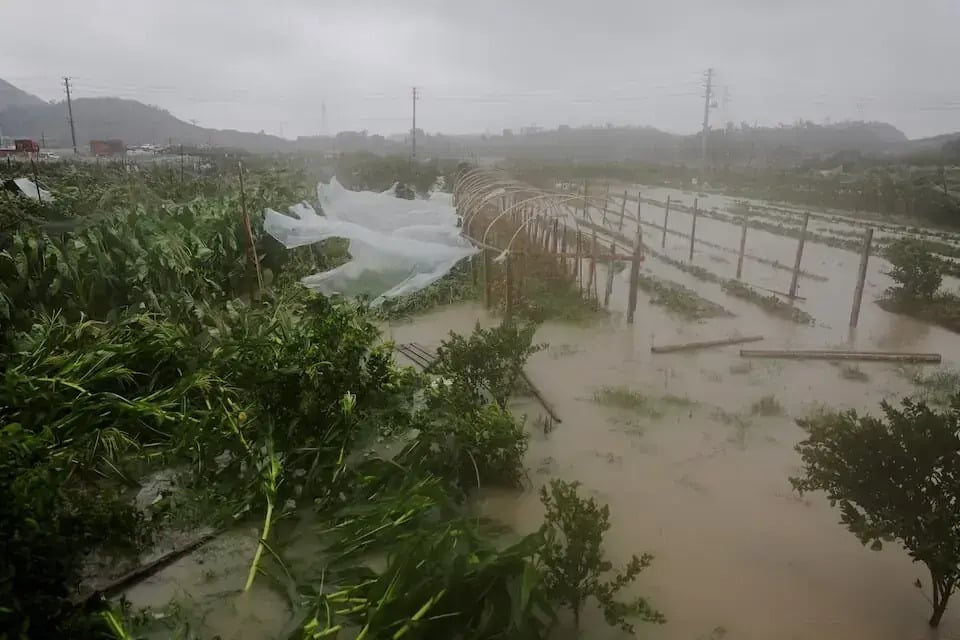
Typhoon Bavi has forced more than 260,000 people to evacuate their homes in China’s Liaoning province. The powerful storm triggered severe flooding and disrupted daily life across northeastern regions. Authorities warned that continued heavy rainfall could worsen conditions for affected communities.
The storm brought intense downpours after making landfall in eastern China on Saturday night. Meanwhile, officials said heavy rain would continue through Tuesday as Bavi pushed large amounts of tropical moisture toward northern China. Several areas faced extreme rainfall and rising flood risks.
Read more: Typhoon Bavi floods northern China, strands thousands
In Shenyang, Liaoning’s provincial capital, flooding disrupted transport services and forced schools and training institutions to suspend operations. A lighthouse also damaged a high-voltage power line and drifted through floodwaters, according to videos shared on Chinese social media.
Bavi remained one of the most powerful storms to hit mainland China this year because of its unusually preserved warm core. The typhoon formed in the Pacific Ocean 13 days ago and covered an area comparable to France, allowing it to retain significant moisture while moving toward the Korean peninsula.
Read more: Typhoon Bavi unleashes floods and widespread disruption
Meteorologists expect Bavi to release more moisture as it slows down, potentially causing further rainfall. However, authorities continue monitoring the situation and have taken emergency measures to protect residents in vulnerable areas.