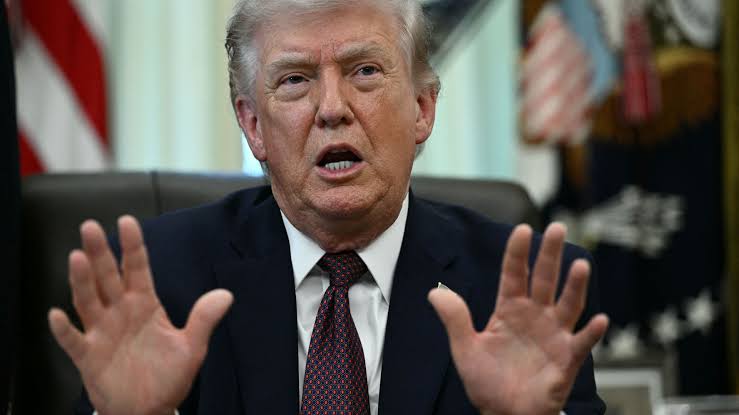
US President Donald Trump has expressed confidence that Washington and Tehran can reach a “fair deal” as negotiations continue under a recently agreed framework aimed at ending months of conflict. Speaking to reporters, Trump said the United States had placed significant pressure on Iran and reiterated that Tehran would never be allowed to obtain a nuclear weapon. He added that discussions were progressing positively and described relations between negotiators as constructive.
The framework agreement has opened the door to broader talks on Iran’s nuclear programme and regional issues. Trump said nuclear inspectors would eventually return to Iran, although he stressed there was no immediate urgency regarding their deployment. According to the US president, Iran had already accepted inspection arrangements as part of the understanding reached during recent negotiations, a claim he said was clearly documented by American officials.
However, Iranian authorities strongly disputed Washington’s version of events and maintained that no new commitments had been made regarding nuclear inspections. Officials from Iran’s foreign ministry stated that Tehran had not accepted additional obligations related to its nuclear programme. The disagreement has become one of the most significant obstacles facing efforts to transform the current framework into a lasting and comprehensive agreement between the two countries.
Meanwhile, access for the International Atomic Energy Agency remains a major point of discussion. Although inspectors visited the Bushehr nuclear power plant earlier this month during a routine mission, the agency has not gained access to several facilities damaged during the 2025 conflict involving Iran, the United States and Israel. Trump declined to provide a timeline for future inspections, saying they would occur when conditions were appropriate.
The Strait of Hormuz also remains central to ongoing negotiations because of its importance to global energy markets. Trump said both sides had agreed to keep the strategic waterway open, while Washington granted a 60-day waiver on sanctions affecting Iranian crude oil and petrochemical exports. He also noted that approximately 19 million barrels of oil moved through the strait in a single day, highlighting its economic significance.
In addition, discussions continue over Lebanon and other regional issues linked to the broader peace framework. Trump suggested progress was possible on those matters, yet both sides continue to present conflicting accounts of what has actually been agreed. As negotiations move forward, uncertainty remains over nuclear inspections, sanctions relief and regional security arrangements, keeping attention focused on whether the fragile framework can evolve into a final settlement.