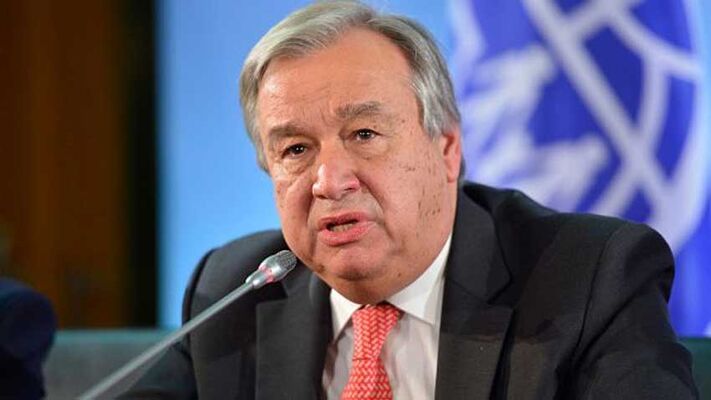
United Nations Secretary-General Antonio Guterres on Tuesday warned that the escalating conflict in the Middle East has triggered what he called the “mother of all energy shocks.” He said the crisis threatens global economic stability and could have severe consequences for vulnerable nations. The warning is significant because rising energy costs can quickly affect inflation, food prices, and economic growth worldwide.
In a statement shared on social media, Guterres said the impact of the conflict extends far beyond energy markets. He stressed that many developing countries face a combination of economic pressures that could worsen existing challenges. According to the UN chief, the crisis is creating risks that reach into debt, food security, and long-term development.
Conflict in the Middle East has unleashed the mother of all energy shocks.
For many developing countries, this is not just an energy crisis. It’s a debt, food & development shock.
Any peace agreement would bring much needed relief, but the impacts are likely to be long-lasting.
— António Guterres (@antonioguterres) June 23, 2026
Guterres noted that higher energy prices often place a disproportionate burden on poorer nations. Increased fuel costs can raise transportation expenses, drive up food prices, and strain government budgets. As a result, countries already struggling with debt and economic instability may face additional hardships.
The UN secretary-general also emphasized that the broader economic effects could persist even if tensions begin to ease. He said any future peace agreement would provide welcome relief to international markets and affected populations. However, he cautioned that the consequences of the conflict are likely to be felt well beyond the immediate crisis.
His remarks come amid growing international concern over the regional conflict’s impact on global supply chains and energy markets. Policymakers and financial institutions are closely monitoring developments as uncertainty continues. Analysts warn that prolonged instability could deepen economic pressures, particularly for developing economies that rely heavily on imported energy.