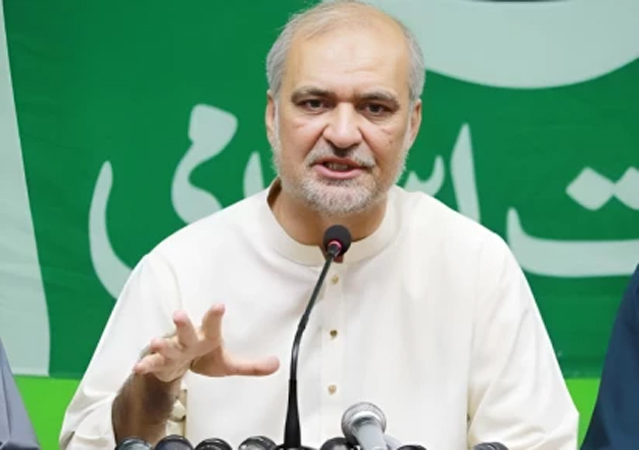
Jamaat-e-Islami Emir Hafiz Naeem ur Rehman has called on the government and employers to increase salaries for private sector workers, arguing that employees outside the public sector have been left without meaningful relief despite rising inflation.
Speaking at a press conference in Karachi, Hafiz Naeem criticized the federal budget, saying it failed to provide substantial benefits to ordinary citizens. He stated that while government employees received a 7 percent salary increase, inflation had risen by around 8 percent, effectively reducing purchasing power rather than improving living standards.
He noted that private sector workers were not given any salary relief in the latest budget and urged authorities to take measures to ensure their incomes keep pace with the rising cost of living. According to him, millions of employees in the private sector continue to struggle with increasing expenses related to food, utilities, transportation, and housing.
The Jamaat-e-Islami leader also criticized the government’s economic policies, claiming that a significant portion of the national budget is spent on interest payments. He alleged that despite directives from higher courts, the government has not shown sufficient seriousness in eliminating the interest-based financial system.
Commenting on governance in Sindh, Hafiz Naeem accused the Pakistan Peoples Party (PPP) of failing to address key issues such as education, healthcare, employment, and public transport. He questioned why residents in many parts of the province still lack access to quality health and education facilities despite the party being in power for nearly two decades.
He further criticized the imposition of petroleum levy charges, arguing that the burden ultimately falls on consumers. Calling the levy unjustified, he demanded its immediate withdrawal and suggested that the government fix petrol prices at Rs225 per litre for the next three years to provide stability and relief to the public.
His remarks come amid ongoing debate over the federal and provincial budgets and growing concerns about inflation and the cost of living across Pakistan.