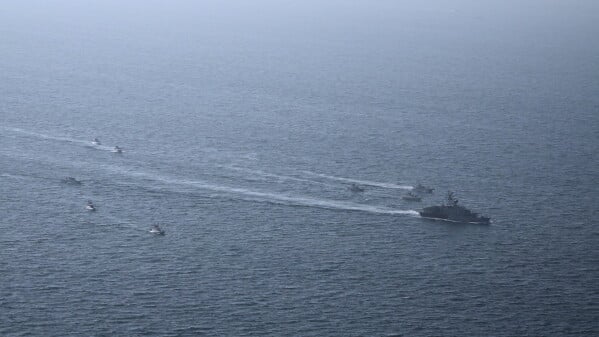
The United States military has rejected Iranian claims that the Strait of Hormuz has been closed, insisting that commercial shipping continues to move through the strategic waterway without interruption. US officials said military forces are closely monitoring the area to ensure safe navigation and maintain stability along one of the world’s most important energy routes.
US Central Command stated that Iran does not control the Strait of Hormuz and therefore cannot unilaterally halt international maritime traffic. Officials emphasized that vessels continue to transit the passage as normal and that American forces remain vigilant to prevent any disruption that could affect global trade and energy supplies.
The statement came after Iran’s Islamic Revolutionary Guard Corps (IRGC) announced that the strait had been closed and warned ships against approaching the area. The announcement raised concerns among international observers because the waterway serves as a critical channel for the transport of oil and gas from the Middle East to markets around the world.
Moreover, the dispute has emerged at a sensitive time as the United States and Iran attempt to preserve a recently agreed ceasefire and move toward broader peace negotiations. Any uncertainty surrounding the Strait of Hormuz could complicate diplomatic efforts and increase tensions in an already fragile regional environment.
Security analysts consider the Strait of Hormuz one of the most strategically important maritime corridors globally, with a significant portion of international energy shipments passing through it every day. Consequently, any threat to navigation in the area often triggers concerns about potential impacts on energy prices, supply chains, and regional security.
Despite the conflicting claims, US officials maintain that commercial traffic remains uninterrupted and that military monitoring will continue. As diplomatic talks progress, attention is likely to remain focused on developments in the Strait of Hormuz, which has once again become a central point in the broader relationship between Washington and Tehran.