
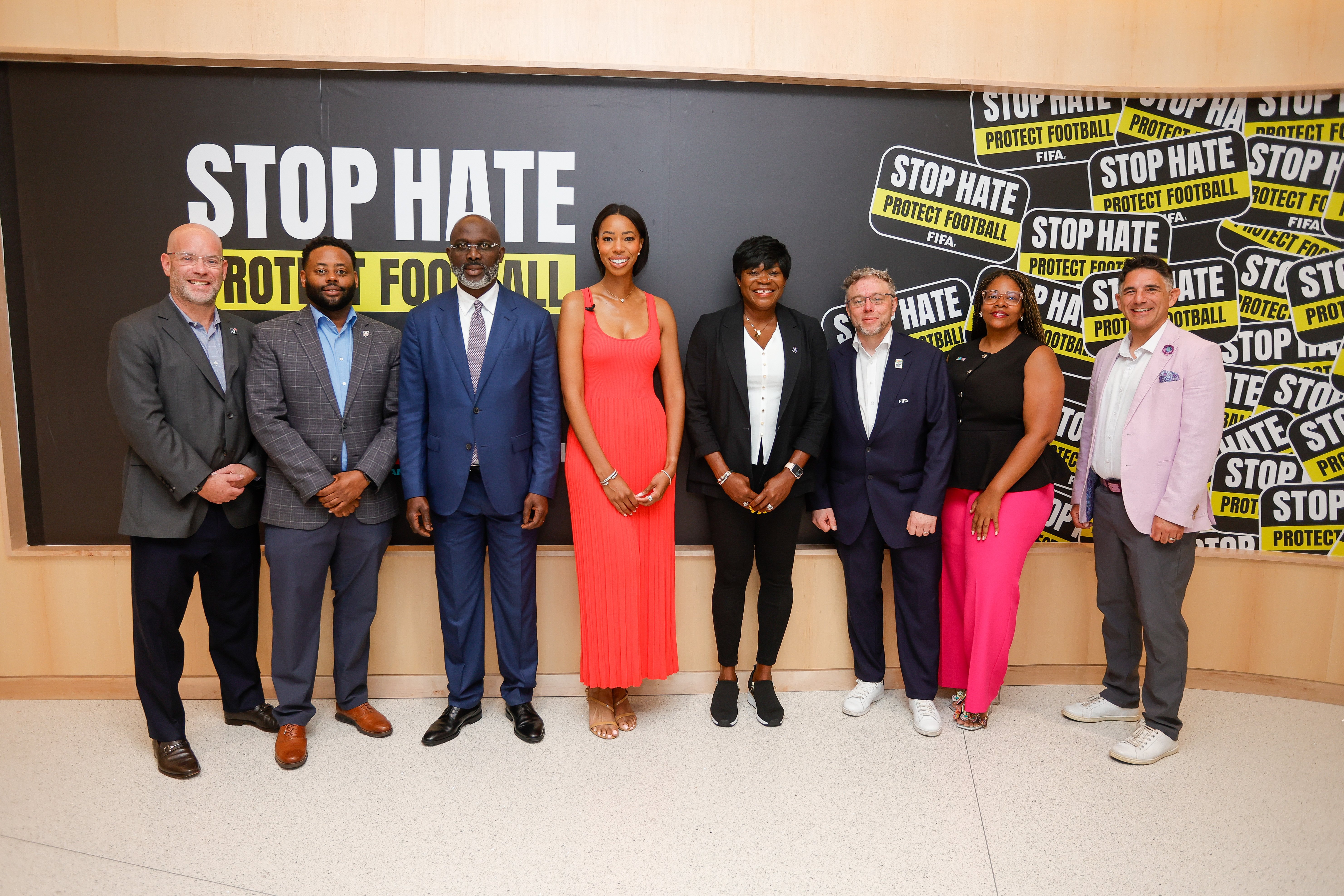
In a landmark initiative to combat hate speech in football, FIFA brought together key global stakeholders in Atlanta on the eve of the International Day for Countering Hate Speech, reinforcing its commitment to safeguarding the sport and promoting unity worldwide.
The high-profile event, titled “Stop Hate, Protect Football – What Actually Works Against Hate Speech?”, was held at the National Center for Civil and Human Rights ahead of the FIFA World Cup 2026 match between Czechia and South Africa at the Atlanta Stadium.
Organised in collaboration with TikTok and the City of Atlanta, the gathering featured an influential panel including football legend George Weah, former Nigerian international Mercy Akide, Atlanta’s Chief Impact Officer Candace Stanciel, TikTok’s Senior Director of Public Policy Eric Ebenstein, and referee mentor David Gerson.
The discussion moved beyond awareness to focus on practical and actionable solutions to tackle discrimination, racism, and abuse both online and on the field. Experts examined the evolving nature of hate speech and highlighted the importance of coordinated global efforts to address the issue effectively.
George Weah stressed that racism remains a persistent challenge in football, calling for urgent collective action. “Football is not just a game—it’s a force for unity and peace. If we fail to act, the beautiful game risks being damaged,” he said, urging education and awareness among younger generations.
A key highlight of the event was FIFA’s Social Media Protection Service (SMPS), which has played a crucial role in combating online abuse. Since its launch during the FIFA World Cup Qatar 2022, the system has reviewed over 250 million posts and comments, identifying more than 30 million as harmful.
During the ongoing FIFA World Cup 2026, the service has already reviewed 3.8 million posts, removing approximately 388,000 abusive messages—demonstrating a significant escalation in proactive digital protection.
Speakers emphasised that tackling hate speech requires a united approach involving players, governing bodies, technology platforms, and local communities. Candace Stanciel highlighted the importance of global collaboration, stating that football provides a unique platform to advance human rights conversations worldwide.
Former player Mercy Akide echoed the sentiment, describing the event as empowering and calling for greater inclusivity and collective responsibility in addressing the issue.
The Atlanta forum forms part of FIFA’s broader Global Stand Against Racism initiative, which focuses on grassroots education, fan engagement, and practical tools for football associations across the world.
The event concluded with a commitment ceremony, where panelists pledged concrete actions to combat hate speech in their respective fields—sending a strong message that eliminating discrimination in football requires sustained, united efforts at every level of the game.