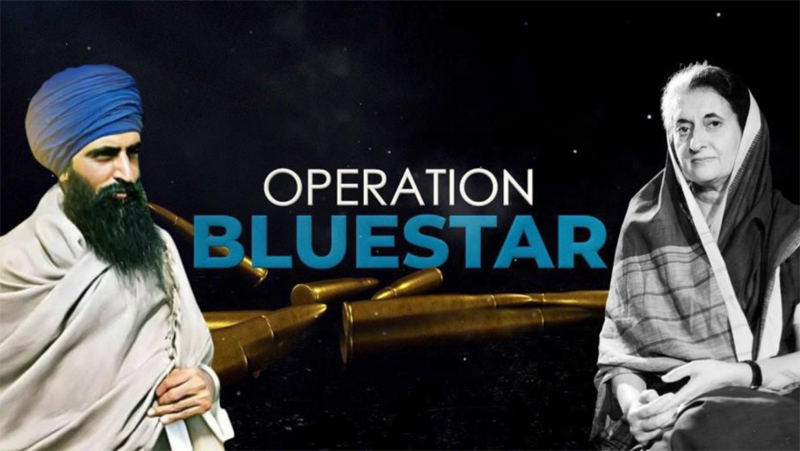
 June 2026 marks the 42nd anniversary of Operation Blue Star, the June 1984 Indian military assault on the Golden Temple (Harmandir Sahib) in Amritsar, Punjab. The event is commemorated globally by the Sikh community as a Ghallughara (holocaust or massacre), serving as a critical turning point that catalyzed decades of friction, human rights concerns, and allegations of state-sponsored persecution.
Operation Blue Star: June 1-10, 1984
Ordered by then-Prime Minister Indira Gandhi, the operation aimed to neutralize the charismatic Sikh leader Jarnail Singh Bhindranwale and armed dissidents who had fortified themselves inside the holiest shrine of Sikhism.
* The Timing: The assault was launched during the martyrdom anniversary of Guru Arjan Dev, a major religious holiday, meaning the temple complex was heavily crowded with thousands of innocent pilgrims.
* The Assault: The Indian military deployed heavy artillery, commandos, and Vijayanta tanks directly into the sacred complex.
* The Aftermath: The Akal Takht (the supreme temporal seat of Sikh authority) was heavily damaged, and the Sikh Reference Library-containing priceless historical manuscripts-was burned. While official figures cited several hundred dead, independent human rights organizations and Sikh groups estimate that thousands of civilians, pilgrims, and fighters were killed.
History of Indian State-Sponsored Sikh Persecution
The assault on the Golden Temple triggered a sequence of state actions, counter-insurgency operations, and human rights violations spanning over a decade.
The 1984 Anti-Sikh Pogroms
n Following the assassination of Indira Gandhi by her Sikh bodyguards on October 31, 1984, systematic violence erupted across India, primarily in New Delhi. Over a four-day period, organized mobs targeted Sikh neighborhoods.
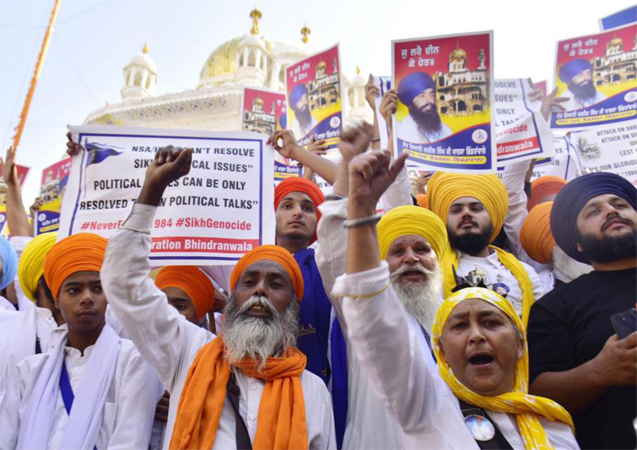
n Government commissions later revealed that political leaders from the ruling party actively incited mobs, and police forces deliberately stood down or aided perpetrators.
Upward of 3,000 to 8,000 Sikhs were killed, and thousands of businesses and homes were systematically razed.
Operation Woodrose (1984)
Immediately following Blue Star, the Indian military launched Operation Woodrose across the rural heartland of Punjab. The stated goal was to prevent public uprisings, but it resulted in the widespread detentions, interrogation, and torture of thousands of young Sikh men simply for wearing traditional religious symbols (like the kirpan or khalsa attire).
Decade of Counter-Insurgency and Enforced Disappearances (1984-1995)
Under the leadership of K.P.S. Gill (the Director General of Punjab Police) and through draconian laws like the Terrorist and Disruptive Activities (Prevention) Act (TADA), Punjab was subjected to heavy militarization.
*Extrajudicial Killings: Police units frequently staged “encounter killings,” where detained Sikh youths were shot in cold blood and framed as armed insurgents killed in crossfire.
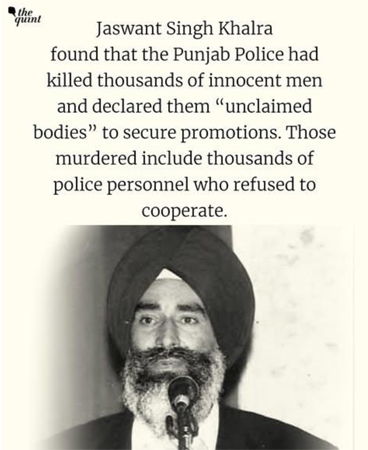
* Secret Cremations: Human rights activist Jaswant Singh Khalra uncovered official logs revealing that Punjab Police had secretly cremated thousands of unidentified bodies. Khalra himself was abducted by state police in 1995, murdered, and his body dumped in a canal.
n Transnational Repression and Modern Grievances Decades after the active insurgency faded, the legacy of state friction continues. The Sikh diaspora and organizations like Sikhs for Justice frequently accuse modern Indian administrations of continuous marginalization.
Activists point to instances of modern “transnational repression”-including allegations by Western governments regarding extraterritorial assassination plots targeting Sikh dissidents abroad-as a continuation of a historical pattern of state policing against Sikh political expression
Jaswant Singh Khalra’s human rights findings exposed a systemic, state-ordered campaign of enforced disappearances, torture, and illegal mass cremations carried out by the Punjab Police between 1984 and 1994. Working as a bank director and activist, Khalra uncovered hard documentary evidence that transformed vague rumors of missing youths into a legally certified record of mass atrocities.
His critical findings and their profound legacy are outlined below.
Core Findings & Evidence Uncovered
* The Firewood Records (The Smoking Gun): Khalra realized that while the police were secretly disposing of bodies, they had to buy firewood from municipal authorities to burn them. By auditing the internal firewood purchase registers and municipal logs of just three crematoria in the Amritsar district (Durgiana Mandir, Patti, and Tarn Taran), he found thousands of logs for bodies brought in by police trucks.
* The “Unclaimed and Unidentified” Label: The data revealed that the police systematically labeled slain Sikh youth as “unidentified” or “unclaimed”. This allowed officers to instantly cremate them without an autopsy, without informing their families, and without registering a First Information Report (FIR).
* 3,100 Cremations in One District: On January 16, 1995, Khalra went public with verifiable evidence of 3,100 illegal cremations in just those three crematoria within the Amritsar district alone.
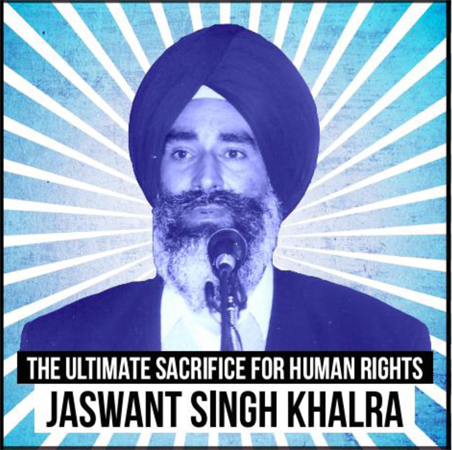
* The 25,000 Estimate: Based on the patterns found in Amritsar, Khalra and his colleagues estimated that upward of 25,000 Sikhs had been subjected to extrajudicial execution, enforced disappearance, and secret cremation across the remaining districts of Punjab.
* Internal Police Purges: Khalra’s research further indicated that the state apparatus had allegedly executed roughly 2,000 police officers who refused to comply or cooperate with the orders to carry out fake encounters and illegal crossfire stages.
Official Verification and Legal Impact
Despite initial state denials and the dismissal of his petition by the Punjab & Haryana High Court, Khalra’s findings were eventually validated at the highest judicial levels:
*Supreme Court and NHRC Certification: Following Khalra’s ultimate disappearance, a subsequent investigation ordered by the Supreme Court of India and conducted by the Central Bureau of Investigation (CBI) confirmed his methodology. The National Human Rights Commission (NHRC) later officially certified and acknowledged over 2,000 illegal cremations in the Amritsar area alone.
* The Bounty System Exposed: The findings helped independent international groups like Human Rights Watch (HRW) and Ensaaf detail a state-sponsored “bounty system,” where police personnel received rapid promotions and cash rewards based on the number of suspected militants they killed.
The Price of Truth: Khalra Assassinated
Khalra’s work made him an immediate target of the state’s security apparatus. Prior to his death, he publicly shared a chilling threat delivered to him by a politician on behalf of the police: “If you do not stop, it is not difficult to make 25,000 plus 1 disappear.”
On September 6, 1995, while washing his car outside his home, Jaswant Singh Khalra was abducted by Punjab Police personnel. He was held in illegal custody, brutally tortured for 52 days, shot dead, and his body parts were dumped into a local canal-the exact method he had spent years documenting.
It took a decade of relentless legal pressure by his widow, Paramjit Kaur Khalra, and human rights lawyers to break through police impunity. In 2005, six Punjab police officials were finally convicted for their roles in Khalra’s kidnapping and murder, a verdict upheld by the Supreme Court of India in 2011. His legacy remains a cornerstone of the modern global Sikh human rights movement.
Transnational Hunting of Sikhs
The transnational targeted killing of Sikhs by Indian intelligence agencies represents a significant globalization of India’s domestic security operations. Western intelligence, law enforcement agencies, and the United Nations have increasingly documented and warned against a systemic campaign of “transnational repression” aimed at silencing pro-autonomy and dissident voices within the global Sikh diaspora. The most prominent cases and mechanisms driving these international operations include:
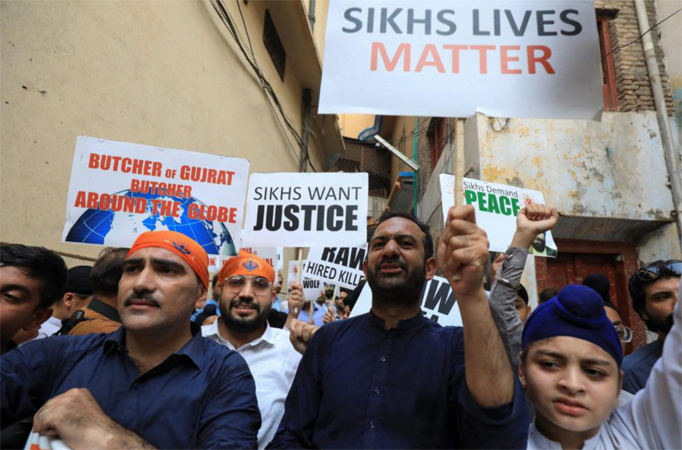
High-Profile International Operations
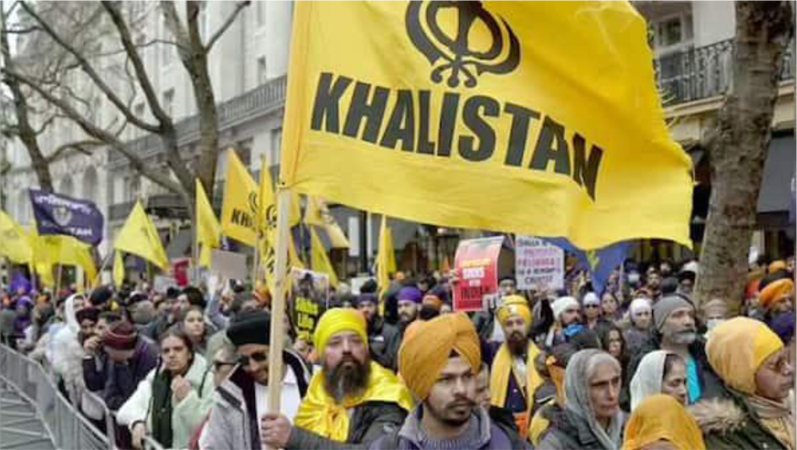
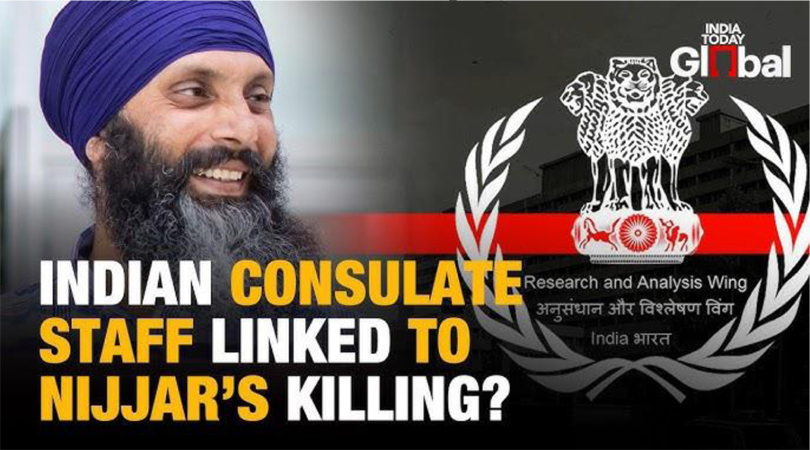
n The Assassination of Hardeep Singh Nijjar (Canada): In June 2023, Nijjar, a prominent Canadian-Sikh activist and leader, was shot dead outside a Gurdwara in Surrey, British Columbia. Canadian Prime Minister Justin Trudeau publicly declared there was “credible evidence” linking agents of the Indian government to the murder, triggering an extensive diplomatic rift. Subsequent investigations led to the expulsion of senior Indian diplomats identified as “persons of interest”.
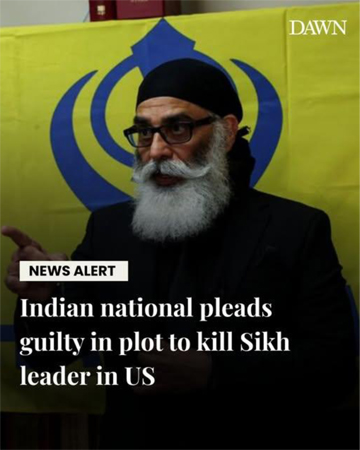
* The Foiled Plot Against Gurpatwant Singh Pannun (USA): In late 2023, U.S. federal prosecutors unsealed indictments exposing a murder-for-hire plot targeting Pannun, a dual U.S.-Canadian citizen and legal advisor for Sikhs for Justice (SFJ). U.S. law enforcement traced the directive back to Vikash Yadav, an officer within India’s external spy agency, the Research and Analysis Wing (RAW).
* Target Killings in Pakistan: In early 2024, Pakistan’s Foreign Secretary publicly accused India of running an extrajudicial assassination campaign on its soil, presenting evidence linking Indian intelligence to the targeted killings of several individuals, including Sikh leaders.
Mechanics of Transnational Repression
* Use of Proxy Criminal Networks: Investigations by Canadian and U.S. authorities revealed that RAW officers systematically outsourced local violence to organized crime syndicates, specifically utilizing the transnational Bishnoi gang to execute extortions, shootings, and hits on their behalf.
* The “Hit List” Strategy: Intercepted communications obtained by Western intelligence agencies (including the UK’s GCHQ) indicated coordinated planning by Indian handlers to hit multiple targets simultaneously across Canada, the U.S., and the UK.
* Coercion of Transnational Families: Human rights monitoring groups, including the USCIRF and the UN Human Rights Council, have highlighted that diaspora activists face systemic digital harassment, passport cancellations, and severe pressure applied to their remaining family members back in India.
The Global Chilling Effect
By hunting political dissidents beyond its borders, international watchdogs state that the Indian government seeks to create a global chilling effect. This campaign aims to deter the Sikh diaspora from utilizing international legal platforms, staging referendums, or demanding accountability for historical human rights violations like the events of 1984.