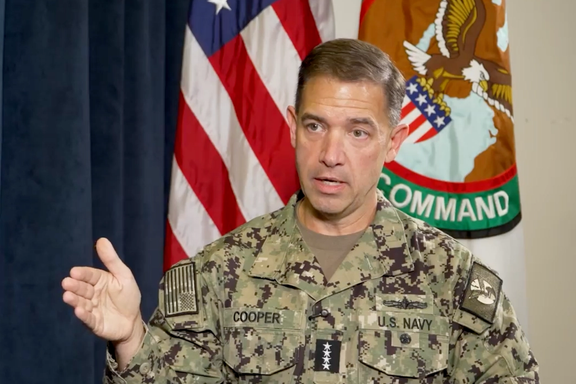
The head of US Central Command (CENTCOM) has said Iran possessed uranium enriched up to 60 percent before the outbreak of its recent conflict with the United States and Israel.
Speaking before the Senate Armed Services Committee, Admiral Brad Cooper confirmed that Iran had uranium enriched to 60 percent, a level widely considered close to weapons-grade material. Responding to lawmakers, Cooper said Iran had reached that threshold prior to the war.
Read More: US intel says Iran was not building a nuclear bomb, denies immediate threat
He noted that uranium enriched to 60 percent has no known civilian use and argued that military actions by the United States and Israel had increased the time Iran would require to potentially develop a nuclear weapon.
Cooper did not comment on whether securing or monitoring Iran’s nuclear material would require US ground forces inside the country.
🚨JUST IN: 🇺🇸 Energy Sec. Chris Wright says Iran was only WEEKS away from weapons-grade uranium with 60% enriched.
“When you’re at 60%, you are, although the numbers don’t sound that way, you’re WAY more than 90% of the way there for the enrichment necessary for weapons-grade… pic.twitter.com/aN3RFDLst1
— Coin Bureau (@coinbureau) May 14, 2026
During his testimony, the CENTCOM chief also addressed Iran’s military capabilities, particularly its missile programme. He claimed Iran had sharply expanded ballistic missile production in late 2025 but said subsequent strikes by the US and Israel had severely weakened that capability.
According to Cooper, Iran’s ballistic missile production infrastructure has been “virtually eliminated,” significantly limiting its ability to rapidly replenish its arsenal. He added that rebuilding missile and drone programmes would likely take years.
The admiral further stated that Iran’s naval capabilities had also been heavily impacted, estimating it could take a “full generation” for the country to restore its navy to previous operational levels.
Cooper additionally claimed that Iran is currently unable to provide logistical and military support to regional allied groups, including Hezbollah, Hamas and the Houthis.
His remarks come amid ongoing but fragile ceasefire discussions reportedly mediated by Pakistan. While both sides have exchanged proposals aimed at de-escalation, no long-term agreement has been finalised so far.
Read More: Iran says ‘ball in US court’, but ready for talks or war
Regional tensions remain high following months of military confrontation, with international observers closely monitoring developments related to Iran’s nuclear programme and regional security posture.
The latest comments from CENTCOM reflect continued US concerns over Iran’s nuclear advancements, missile capabilities and influence through allied armed groups across the Middle East.