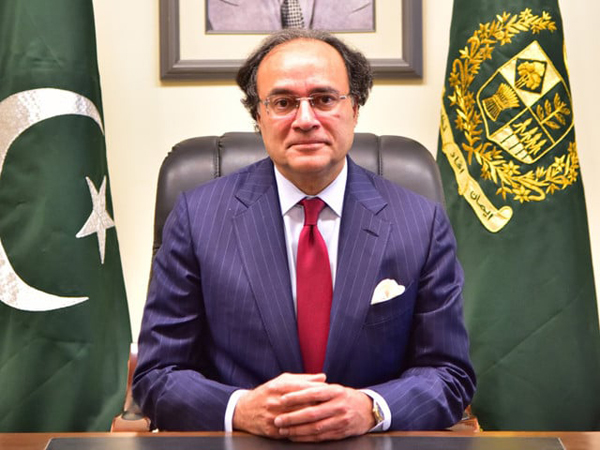
Finance Minister Muhammad Aurangzeb has expressed optimism that the International Monetary Fund (IMF) Executive Board will approve Pakistan’s next $1.2 billion loan tranche during its meeting scheduled for Friday in Washington, DC.
Read More: Pakistan meets most IMF targets, $1.2 billion tranche approval likely
Speaking during a briefing of the National Assembly Standing Committee on Finance and Revenue, chaired by Syed Naveed Qamar, the finance minister said Pakistan’s macroeconomic indicators remain broadly stable despite regional tensions and external pressures.
Aurangzeb stated that key economic sectors, including exports, remittances and information technology exports, are showing consistent growth. He added that Pakistan’s external account is expected to remain in surplus, while foreign exchange reserves are projected to reach around $17 billion by the end of June 2026.
Pakistan’s Finance Minister Aurangzeb announced that the IMF board is set to approve another $200 million under its Resilience and Sustainability Facility (RSF), the latest drip in what has become a dependency drip-feed, with Pakistan having already received roughly $4.5 billion…
— brief. (@brief_pk) May 7, 2026
He also informed the committee that the State Bank of Pakistan has purchased approximately $27 billion from the market over the past three years and recently repaid nearly $5 billion in external obligations. Officials expect reserves to cover around three months of imports by mid-2026.
The finance minister highlighted progress in international financing, noting successful bond issuances worth $750 million and planned issuance of a $250 million Panda Bond. He also pointed to rising inflows through Roshan Digital Accounts, with $260 million received in March and further inflows expected in April.
Aurangzeb acknowledged that higher petroleum imports have increased the overall import bill, while inflation continues to remain a key challenge for households. However, he said the government is taking steps to stabilise prices and maintain macroeconomic discipline.
He reiterated that Pakistan will continue pursuing fiscal prudence, structural reforms and improved external account management to sustain investor confidence and long-term stability.
Separately, State Bank Governor Jameel Ahmad told lawmakers that inflation had recently declined but was affected by geopolitical tensions and rising energy costs. He said monetary policy decisions are based on forward-looking inflation projections and stressed that import flows remain uninterrupted despite external payment pressures.
Read More: IMF, Pakistan reach staff-level agreement to unlock $1.2 billion tranche
The IMF board’s expected decision on the $1.2 billion tranche is being closely watched as Pakistan seeks continued external financing support under its ongoing economic stabilisation programme.