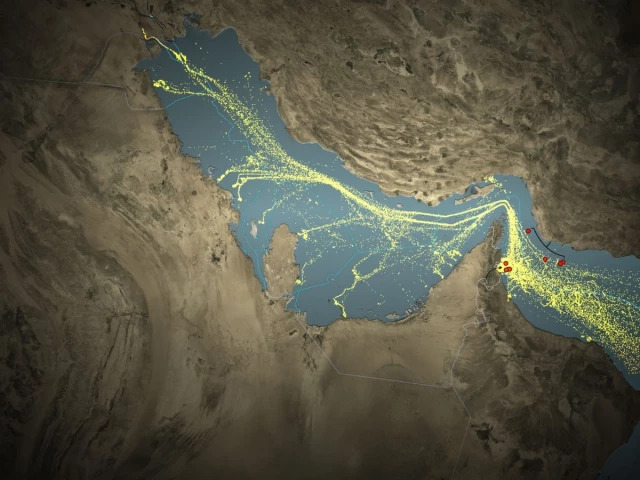
No major commercial vessels passed through the Strait of Hormuz in the past 24 hours as security risks intensified in the region. The development signals a serious disruption in one of the world’s most critical maritime routes. It comes amid rising tensions and reported attacks on commercial shipping in the Gulf.
The halt follows escalating insecurity linked to the ongoing US-Israel war with Iran, which began in late February. Shipping activity through the strait has already declined sharply in recent weeks as operators reroute vessels. Concerns over signal interference, attacks, and transit uncertainty have further reduced traffic.
Read more: Iran Releases New Map Claiming Control of Strait of Hormuz
Reports also indicated an attack on a Chinese-owned oil tanker earlier in the week, marking the first such incident involving a Chinese vessel since the conflict began. China has called for de-escalation and urged all parties to ensure safe passage for commercial shipping. Beijing stressed the importance of protecting global maritime trade routes.
Western-linked shipping has also been affected, with vessels reportedly altering navigation patterns or switching off tracking systems in the area. One French-operated ship reappeared off Oman after temporarily disappearing from tracking signals, suggesting passage through heavily jammed waters. Another French vessel was reportedly attacked during transit, injuring crew members.
Read more: US warns Iran over Hormuz Strait
Iran’s Revolutionary Guard has introduced new transit rules requiring vessels to use designated routes through the strait. Tehran has warned that deviations could trigger enforcement action, while claiming the measures aim to ensure maritime safety. The Strait of Hormuz remains a vital global energy corridor, and continued disruption has raised concerns over oil and gas supply stability worldwide.