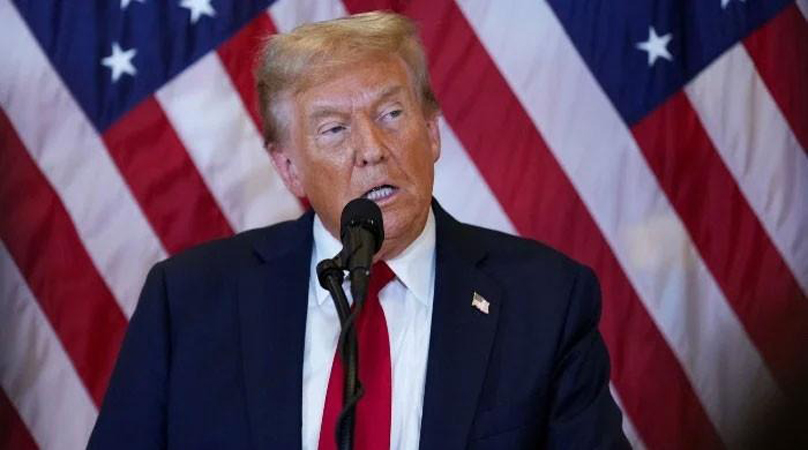
US President Donald Trump has said that telephone negotiations with Iran are ongoing, signaling continued diplomatic engagement despite recent tensions and strong rhetoric between the two countries.
Read More: Trump Signals Talks With Iran After Threatening War Resumption
Speaking to reporters, Trump said discussions with Tehran were continuing while reiterating Washington’s long-standing position that Iran must not obtain nuclear weapons. He stated that any future understanding with Iran would require clear commitments on its nuclear programme and broader regional security issues.
🚨WATCH: Donald Trump said that the U.S. is currently in talks with Iran and prefers to conduct them telephonically rather than flying 18 hr flights to see a Piece of Paper. pic.twitter.com/H1gPvHwwyg
— THE GLOBAL WATCHDOG (@glwatchdog) April 29, 2026
Trump also claimed that US military objectives in the conflict with Iran had been largely achieved, suggesting Washington had significantly weakened Tehran’s military capabilities.
Among his claims, the US president said a large percentage of Iran’s missile capacity had been destroyed and numerous naval assets neutralised during the conflict. He also alleged that Iran’s economy had been severely impacted, pointing to pressure on the national currency and broader economic strain.
The remarks came after Trump had earlier warned of the possibility of renewed military action, creating uncertainty around prospects for de-escalation. Despite those threats, his latest comments about ongoing phone talks were seen as a more conciliatory signal that diplomatic channels remain open.
Trump further revealed that he had held a telephone conversation with Russian President Vladimir Putin, during which both leaders discussed the situations involving Iran and Ukraine. According to Trump, he told Putin that Russia should first work toward ending its own conflict before offering assistance in resolving other international crises.
The US president also claimed Putin had expressed concern regarding Iran’s uranium enrichment activities, underlining continued international focus on Tehran’s nuclear ambitions.
Diplomatic efforts between Washington and Tehran have remained fragile, with disagreements persisting over sanctions, regional security, maritime routes, and nuclear safeguards.
Recent tensions in the Strait of Hormuz and broader instability in the Middle East have increased pressure on both sides to pursue dialogue and avoid further escalation.
Read More: UN chief, Iran envoy commend Pakistan’s efforts for peace talks
Although no breakthrough has been announced, Trump’s confirmation of ongoing communication suggests both countries remain engaged in efforts to manage tensions through negotiation. The future of the talks remains uncertain as both governments continue to maintain firm positions on key strategic issues.