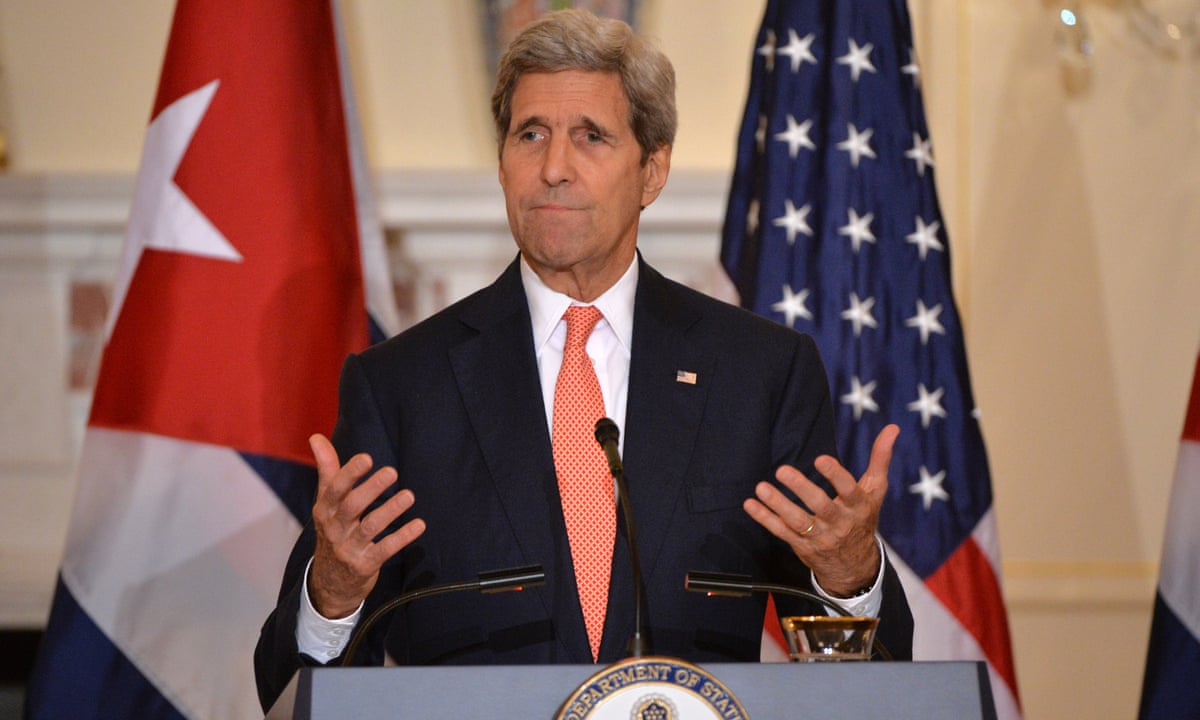
Former US Secretary of State John Kerry has made a significant revelation regarding past proposals for military action against Iran, stating that three former US presidents rejected plans for war involving Israel.
Read More: Kerry meets Russia’s Lavrov on Syria cooperation plan
Speaking amid ongoing tensions in the Middle East, Kerry said that former presidents George W. Bush, Barack Obama, and Joe Biden all declined Israeli proposals related to military escalation against Iran. According to him, each administration preferred diplomatic and peaceful solutions over direct conflict.
Kerry’s remarks come at a time when regional instability remains high and global attention is focused on security developments involving Iran and its relations with Western powers. He emphasized that despite repeated strategic discussions, none of the administrations were willing to proceed with a full-scale military confrontation.
He also reflected on broader lessons from past US military engagements, referencing the Vietnam and Iraq wars. Kerry argued that these conflicts demonstrated the importance of transparency and avoiding public deception when considering military action.
According to his statement, the consistent rejection of war plans by multiple US administrations highlights a long-standing caution within American leadership regarding large-scale military intervention in the Middle East. He suggested that diplomacy has repeatedly been viewed as the more sustainable path in addressing tensions involving Iran.
The remarks have added a new dimension to ongoing discussions about US foreign policy in the region, especially as geopolitical friction continues to influence global markets and security dynamics.
While Kerry did not provide details on specific proposals or timelines, his comments underscore the complexity of decision-making at the highest levels of government when dealing with potential conflicts involving multiple international actors.
Read More: US, Iran eye Islamabad for fresh talks as Hormuz blockade tightens
The statement is likely to fuel further debate over past and present US strategies toward Iran and the broader Middle East.